THE ART OF ENDEAVOUR WITH LUCIEN ANDERSON FOR BARBOUR RE-LOVED VENTILE ENDURANCE
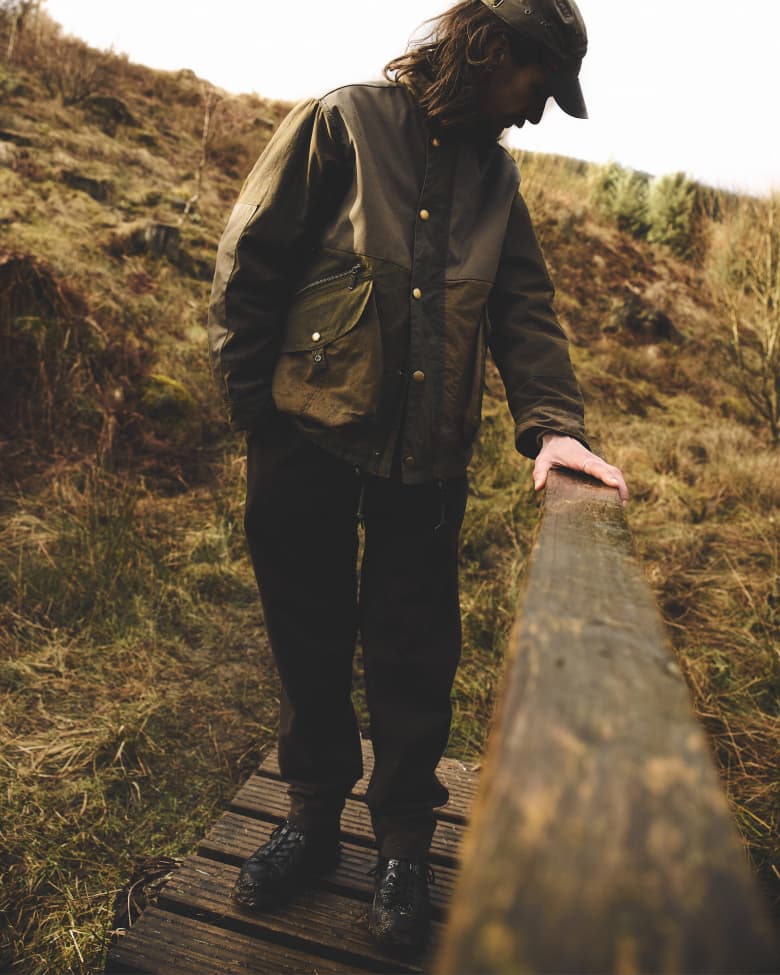
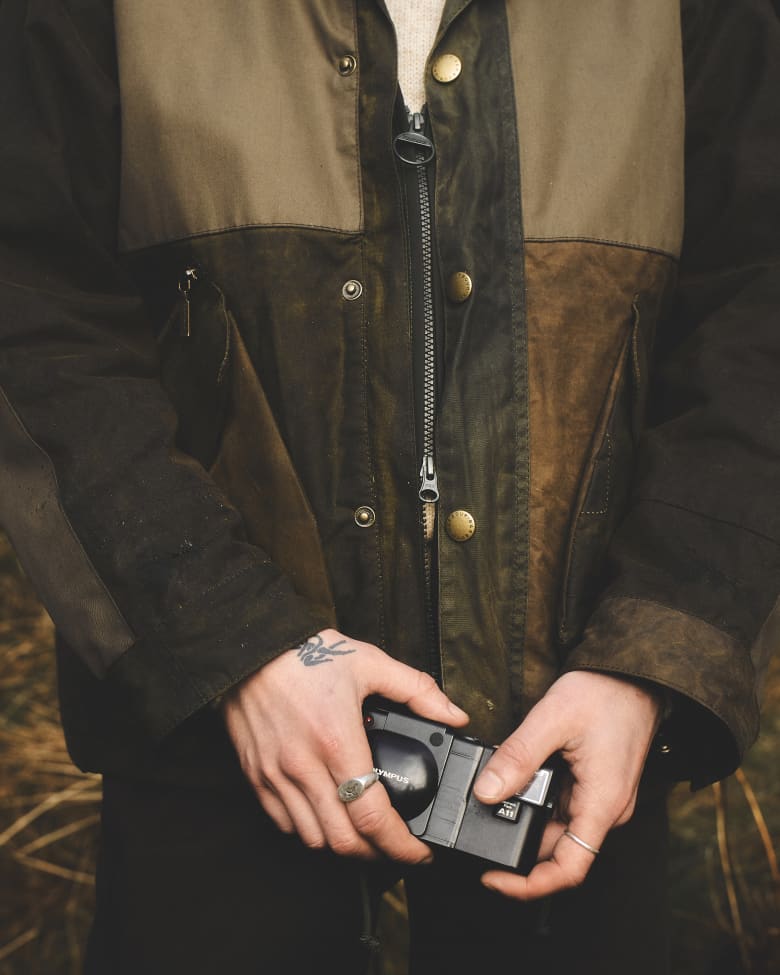
24 February 2026Celebrating the launch of Barbour’s Re-Loved Ventile Endurance END. exclusive jackets, we journeyed to a remote bothy with Newcastle upon Tyne-based artist Lucien Anderson.
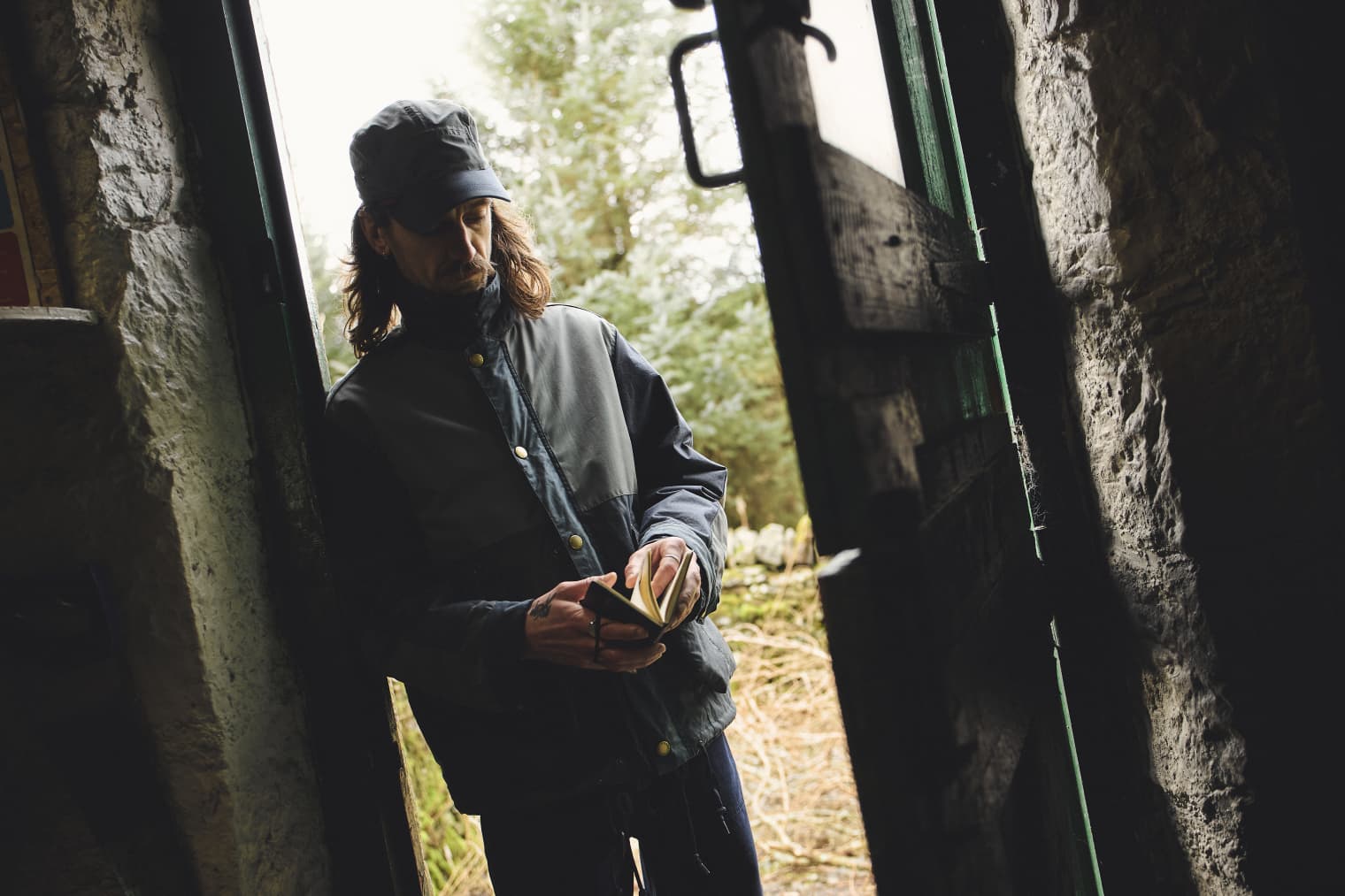
Lucien Anderson’s sculptural work is enshrined in a sense of narrative. Built from pieces found discarded in back alleys, flea markets, and second-hand stores, his works see these repurposed items transformed — still with the gesture of their past lives intact — into new objects that have their own stories to tell.
Echoing the approach championed by Barbour's Re-Loved program, where in which previously enjoyed garmenst are crafted into something unique and new, Lucien's creative practice sees the artist create through re-appropriation of found objects. Born in Huddersfield but now calling Newcastle upon Tyne home, Lucien presented his debut solo exhibition Brief Candle, Splendid Torch at Slugtown gallery in July 2025. Comprised of a series of wall-based sculptural works, totemic in their design, and a large-scale floor sculpture, the exhibition saw the artist examine his fascination with human survival in uncompromising environments, the role of solitary outposts and moments of camaraderie in the face of adversity. Utilising his passion for working with found or repurposed objects, Lucien’s blend of carpentry and woodworking enables him to give these items a new life, one that retains their inherent value through taking on new meaning. Inspired in part by his interest in hiking and staying in remote bothies throughout the North East of England and Scotland, Lucien’s work draws from these experiences, offering incomplete stories that nod to memorable moments of endeavour or endurance, as well as connection to the landscape and the bonds between people who have endured together.
Traversing the hills of Northumberland en route to a bothy with Lucien ahead of the launch of the END. exclusive Barbour Re-Loved Ventile Endurance Jacket at END. Newcastle, we discussed his fascination with using found objects in his practice, the idea of the endeavour and how ambiguous and incomplete narratives are important to his work.
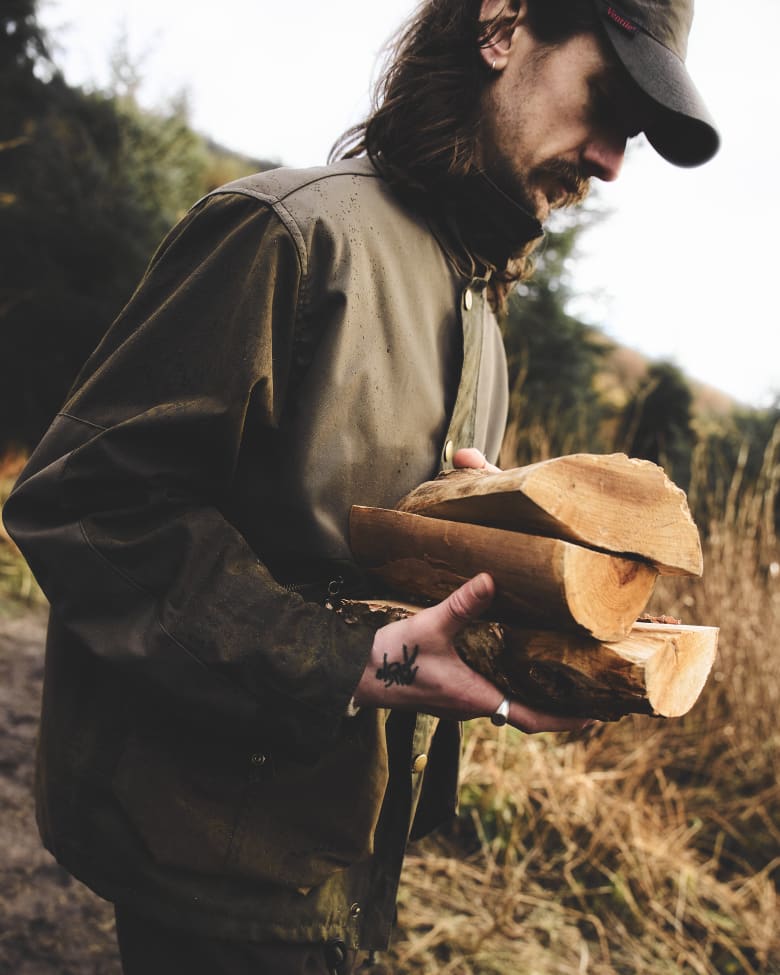
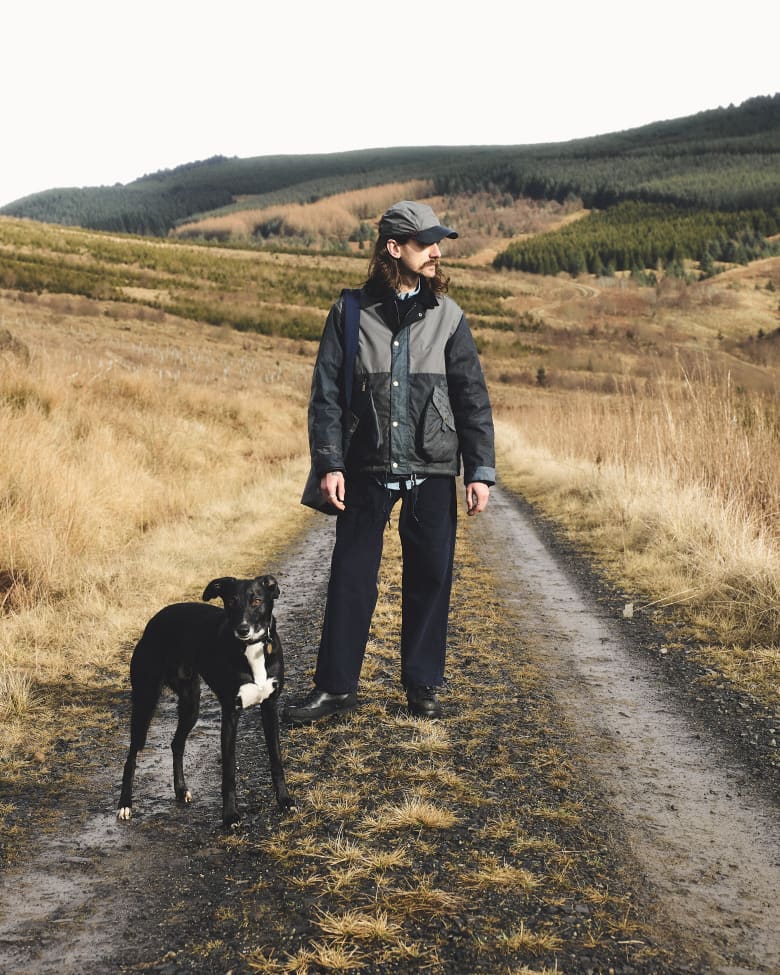
Your work centres around the recontextualization of found objects — transforming them from their original purpose, imbuing them with new meaning and extending their life as an object, echoing the values of Barbour Re-Loved. How did this become a part of your creative process?
It stems from a place of economy more than anything, to be honest. I realised I was quite good at collecting things, and I had a van when my practice started to shift in this direction. I got really good at nipping down back streets and slinging stuff I found into the van. But then I started to think about the objects I was making and what I was trying to do with them. I'm trying to create objects which feel like they've got a history or a story behind them. I tried to make them have the qualities of an artefact and what I was realising was that all these materials that I was scavenging, because I didn't want to have to spend money on new material, carried these qualities as well. They all had these histories, visible through marks and imperfections, that I really started to enjoy working with.
Working with new materials is more like a process of fabrication than an art-making process. Way back when, I would start with a plan, and I'd buy the material for the plan. I'd budget it, assemble it, but I felt that it lacked something. What it removed was the happy accident, the instance of something happening that you didn’t expect to happen. I found that working with objects that already had a story and a past fed really nicely into my interests and made for a significantly more interesting work. There’s an unpredictability in how things are ultimately going to manifest.
When you’re looking for objects, is there a specific criteria that you’re looking for? What draws you to certain materials?
The longer you spend doing it, the more of an eye you develop for the things that are worth collecting or reclaiming. My main material is wood, so if something is made from solid wood or veneer, immediately I'm interested. But I'm also looking for things which have a sense of being used elsewhere before, a sense of a previous purpose or a utility. I'm looking for things that have an aesthetic that I hope carries through to my work — I’m trying to make objects that have a sense of purpose or a utility, but that also have an element of the decorative in them. If a church is getting stripped down or something like that, that's a real goldmine for little ecclesiastical bits of wood carving, which is itself trying to carry some sort of narrative or an idea in it. I'm interested in scale as well. So, anything that's a miniature, I'm immediately drawn to. It’s got to carry a certain amount of qualities that I can't really put my finger on. I know it when I see it. I’m looking for things that are going to carry that sense of having been somewhere else before and having done something else before. There are already enough objects in the world, I don't need to be fabricating new ones. What I'd rather do is work from what already exists.
Well-worn materials tell a story, and throughout your work the past-lives of the materials infuse the narratives that you yourself are weaving through their newfound position. When you’re combining objects to create something new, are you often thinking about their past uses and their imagined histories? How does that past impact their use?
I'm not too interested in what the specific narrative was, it's just the feeling when an object has the sense that it has been somewhere else before. With the works that I make, I'm not telling complete stories. I don't want my work to be obviously point A to B to C, or a linear narrative. I'm wanting to tease a narrative out of them. I don't even know what the narrative is often, but I'm using elements from either my own personal experience or I'm finding objects that have qualities that bring that sense of a story in, and you can bring that out as much as you want or smother it as much as you want and kind of toy around with it like that.
If I'm working with sheet material, I much prefer using an old piece of plywood that I found somewhere just because it brings an authenticity to the work. You can see when something's been made from brand new material and that's a different game to what I'm playing really. Almost like you're inviting there to be some sort of argument in the gallery space about what it is and what its function is.
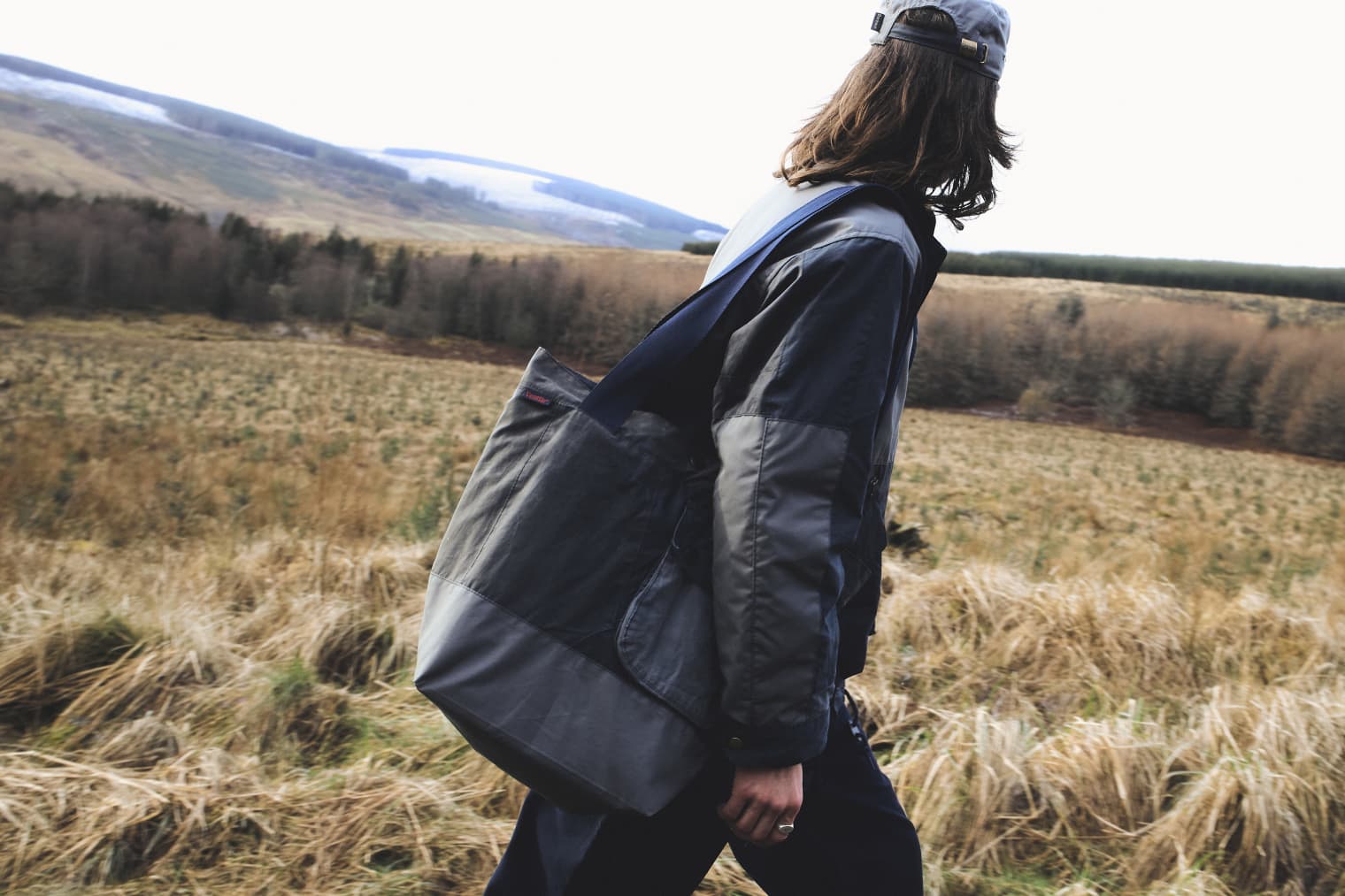
In previous interviews, you’ve mentioned the reference points of shelters and outposts as something that you are drawn to. What is it about these sorts of spaces that interests you? How does that interest then reflect in your sculptural work?
The two things run parallel. My artwork — the things that I'm interested in making — and then there's this other element to my life which is an interest in landscape and these remote places and outposts. Inevitably those two things do intertwine and intersect at moments. But when I'm in the sticks somewhere, I'm not always constantly thinking about how it's going to feed into my practice. I'm just there, experiencing these places and being present. I might go and make some notes, I might do a sketch, or I might see some sort of structure that inspires me. I think there's something about the experience of going back to basics, of paring things right down, and in the contemporary world it's easy to live vicariously and absorb other people's stories and people's anecdotes all the time. You go to these places to construct your own and form your own stories. It’s a great feeling to be able to return to civilization and have this mad anecdote about some bloke that you met there.
It’s about being present. There are places that demand that you return right back to the fundamentals and also make you have to go through a series of processes to be warm, dry, fed and happy. You put yourself in a place where it's very easy to be incredibly uncomfortable, especially in the winter months, and you've got to do this degree of problem solving. You've got to bring all your own wood, all your own kit, your water and the food. You've got to get in to light a fire and then you've got to heat your food up and find a way of providing light because there's no light in them. Bothies are essentially old shepherd's huts or really primitive structures which have sort of been “done up” but done up means sticking a roof on a structure that didn’t have one before and putting in a wood burner.
Described as “loosely allegorical”, what is it about creating narratives, specifically incomplete or ambiguous ones, that you find yourself attracted to?
I'm not trying to answer any questions in the work really. I'm trying to ask more questions than trying to answer them. I think that's a more interesting way of making work. And none of it is absolute. It's all an experiment. Art making is an experimental field. If I wanted to tell a story, I'd probably just write it down. I'm more interested in creating works that aren’t a done deal, they're not finished and sealed. You've got to offer people a way into something and part of that is creating works that leave questions unanswered, ask questions or leave gaps that people are instinctively trying to fill and make sense of. There's something of that in the work that I'm making — I'm trying to capture a quality of something. It's not trying to summarise a whole experience. It’s the combination of these two things: going to bothies, exploring the landscape and surviving in these sorts of outposts, places that feel almost like frontiers, and then my art practice, where I’m trying to find some of those qualities, of that experience. I’m trying to capture them in a work, hint at them or reference them. I'm not just trying to say, “I went here, did this and saw that.”
Also, some of the works are named after specific bothies or specific areas. Some of them are quite allegorical with an overt narrative. Not complete, but sometimes it's much clearer, almost like an illustrative illustration. There are elements within the works that illustrate that, but even then, all the works are this bringing together of different places, experiences and feelings.
Combining craft and sculpture, you utilise woodworking and carpentry as a key medium and approach to creating your works. What is your background in working with the material?
I've always been interested in woodwork. I grew up in a house that was a project, a receding horizon project as these sort of houses often are. I grew up watching my dad fix things, fabricating stuff for the house, a lot of the time out of wood. It's a material that I've stuck with since. I've always stuck with it. It's quite forgiving if you know how to make it forgive. It’s amazing once you really start to understand the material like that. However, I'm still a beginner by any self-respecting carpenter’s level. It's a material that is relatively accessible. It's easy to get hold of. It gets harder when you start looking at specifics, but you can find a lot of it just kicking about. It's very easy to get your hands on. The machinery that is used to use it is less scary than metalwork machinery. It's still pretty terrifying and it's always good to be scared of things like a table saw. Ultimately, it's all very accessible. There's a whole culture around DIY and woodworking. There's so much information. Any problem you've got, someone else has had it and solved it. The palette of it, the qualities it has, the way it machines, the way you can paint it and stain it, the way you can char it. It comes round to the idea that I'm not making furniture, but I'm making pieces that have a domesticity to them. Partly due to the scale of the works I make, but also the materials. I'm trying to make things that feel familiar in some way, or almost recognisable. It can be quite immediate as well. It doesn't take long to knock something together that's quite satisfying. It fulfils that need to be instantly gratified, as well as it fulfils that need to tinker on with something.
The idea of the endeavour — something that has been referenced in the show notes for your exhibition Brief Candle, Splendid Torch at Slugtown — stands present throughout your work. What does the idea of the endeavour mean to you? Why is it an important concept to you, alongside endurance, despite seeming somewhat anachronistic?
I came to it not through those grand routes, but through finding examples on a local or individual scale of people undertaking endeavours. I have this real interest in tinkering as a sort of phenomenon. There's a thing of scale going on there, because tinkering can be me fiddling around with bits of wood in here, or it can be someone like a guy I knew out in a village in Northumberland who was tinkering on a solution for a hydroelectric power plant. I've always been drawn to those examples of local or individual problem solving on a scale, or in a way that perhaps doesn't work globally, but works in a very specific place and in a specific context. Then obviously there are elements of grandeur in these outings that I go on, introducing a degree of peril. Normally when I come back from these things we'll wait a week or two before ringing my mum and telling her how it went, because there'll be some sort of hair-raising moment or report to her. It’s reflected in this interest in outposts as well, as someone has gone out and built that at some point. It wasn't there forever, it's man-made. Someone has been out there and lugged all the stone up across the hillsides and put this thing there because they needed a shelter. It's an endeavour in itself, right? It's not this grand expedition or something, but it's been a heck of an endeavour for someone. It's like when you see drystone walls in the Lake District and they go up a vertical rock face. Someone has spent huge amounts of time and energy just lugging that stuff up there and placing it. I'm interested in that — it has a quietness to it. You don't know the people who've done it, you don't know anything about them, you just sense that endurance. In a day and age where information is readily available, there's a comfort to our lives. I'm interested in self-sufficiency, of seeing how much I can do without relying on external influence.
Around the idea of the endeavour, it's always been quite a low-key thing for me. Sometimes I go on the dog walk and the weather's disgusting, the dog's not listening to me and everything's going wrong. I come back home and think, yeah, that was a bit of an endeavour. It's relative, isn't it? But then you get these structures out in the landscape that seem alien almost, their situations. Getting to them and dealing with all that Mother Nature throws at you – that's forcing you to be present. You’re in the moment and you're alert. You're not thinking about that email you've got to send next week.
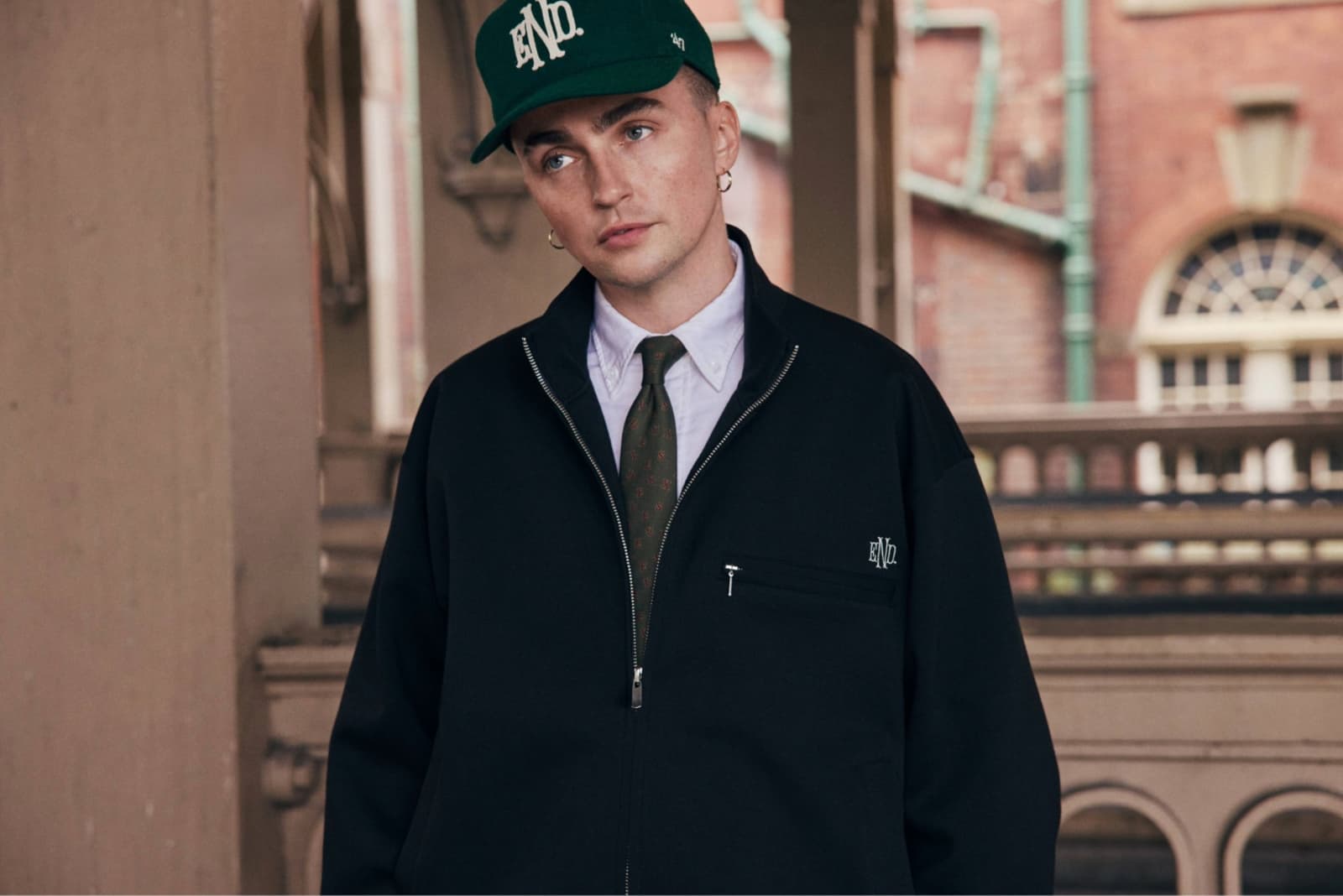
The Barbour Re-Loved Ventile Endurance Jacket END. exclusive jackets, tote bags and caps are available only at END. Newcastle from 27th February 2026.