BRAND PROFILE: PARABOOT
30 July 2026When it comes to footwear heritage, few names carry the weight of Paraboot. Founded in France more than a century ago, the brand has spent generations honing its craft, earning a reputation for hard‑wearing leather shoes built with precision and purpose. In this brand profile, we’re diving into Paraboot’s story — from its early beginnings to its time‑honoured manufacturing methods.
WHAT'S THE STORY? QUICK-FIRE PARABOOT FAQs
What is the history of Paraboot?
Paraboot’s story begins in 1908 in the French Alps, where founder Rémy‑Alexis Richard set out to make his own footwear after working in a local workshop. He launched his first brand in 1910, returning from WWI with refined skills, and built a loyal Parisian customer base. A trip to the US in 1926 introduced him to rubber‑soled boots — a discovery that shaped the brand’s future — and by 1927 the Paraboot name was officially registered. Despite wartime challenges and a downturn in the 1980s, the brand was revived thanks to rising demand for the now‑iconic Michael shoe. Today, Paraboot still operates from its original Alpine village, producing footwear using time‑honoured, largely handmade methods.
Is Paraboot a family business?
Paraboot has stayed in the hands of the Richard‑Pontvert family for more than a century. After founder Rémy‑Alexis Richard, his son Julien and grandson Michel each took their turn guiding the brand. Today, the fourth generation continues to run the business, keeping the family’s craftsmanship-first mindset at the core.
Where is Paraboot from?
Paraboot is from France, specifically Izeaux: a small commune in the Isère department in the South East.
Where is Paraboot made?
Paraboot has stayed rooted in its home region, with the bulk of production still carried out at its factory in Saint‑Jean‑de‑Moirans in southeast France. The brand also works with specialised, trusted partners across Europe, namely in Italy, Spain and Portugal.
Are Paraboot shoes handmade?
Paraboot shoes are classed as handmade thanks to the traditional, labour‑heavy methods used in their production. Techniques like Norwegian and Goodyear stitching are carried out in France, with machines only assisting where needed. Skilled craftspeople handle the key stages — from cutting the leather to stitching and finishing — and each pair takes around six to eight weeks to complete.
Why is it called Paraboot?
The name Paraboot is a combination of two words: ‘Pará’, the Amazonian port that supplied the natural rubber latex used in the brand’s soles, and ‘boot’, the sturdy, rubber‑soled work shoes that Rémy‑Alexis Richard came across in the US. At the time, this kind of waterproof, rubber‑bottomed footwear was unseen in France, so to Richard it was a groundbreaking new discovery — one that would go on to inspire the direction of Paraboot for decades.
Is Paraboot the same as Galibier?
Paraboot and Galibier are both Richard‑Pontvert brands, but they are registered separately. Galibier was established as the specialist, technical brand for hiking, mountaineering and skiing, enjoying its heyday in the ‘60s and ‘70s. In fact, Paraboot often uses the heritage of Galibier to inspire its own urban models, such as the Avoriaz boot, which is derived from a Galibier mountain boot design.
Galibier was reborn in 2025 — long-awaited by its loyal community of mountaineers — but Paraboot remains the key Richard‑Pontvert brand for utility-minded footwear.
Are Paraboot shoes waterproof?
Paraboots are built to handle wet conditions thanks to their signature Norwegian welt, which creates a naturally water‑resistant seal between the upper and the sole. Many styles hold up well in rain and day‑to‑day moisture, but they’re not designed for full submersion. To keep them performing at their best, regular care with a good wax or waterproofing product is recommended.
Is Paraboot good quality?
Paraboot is widely regarded for its exceptional build quality. The brand uses premium full‑grain leathers, robust rubber soles made in‑house, and traditional stitched constructions like Norwegian and Goodyear welts. Each pair is made in France and finished by skilled hands, resulting in footwear that’s durable, repairable, and made to last for years of wear.
Where can I buy Paraboot?
Paraboot is available through select retailers worldwide, including specialist footwear stores and premium fashion stockists.
You can shop the latest styles right here at END., where you’ll find core silhouettes alongside seasonal releases for both men and women.
PARABOOT CRAFTSMANSHIP
With over a century of shoemaking heritage, Paraboot’s painstakingly perfected manufacturing process is arguably what it’s most revered for. The brand selects premium French leathers, relies on time‑honoured construction methods, and keeps skilled hands involved at every stage, meaning its meticulous approach to craft can be felt in every single brogue, shoe and boot.
How is Paraboot made?
An astonishing run of around 150 manual operations go into every pair of Paraboots, with many preserved from Rémy-Alexis Richard’s original processes in the early 20th century. Highly skilled cutters, stitchers and assemblers work to make each pair by hand, remaining faithful to the traditional techniques that the modern world of fast, low-quality fashion has long abandoned. The soles are made with the same vulcanisation processes as the original Paraboot shoes, connected to the upper with a hand-sewn Goodyear or Norwegian welt.
Norwegian Welt
Paraboot is the world leader in the Norwegian welt technique, a true hallmark of its approach to shoemaking. The method uses two visible lines of stitching to secure the upper to the sole, creating a strong and naturally water‑resistant seal. Traditionally developed for mountain boots, it delivers the durability and flexibility needed for tough wear, yet now appears across more casual styles too. Whether the stitching is worked onto a welt or directly into the leather at the base of the upper, the result is the same: a shoe that’s sturdy, comfortable, and built to last.
Goodyear Welt
Another Paraboot signature, Goodyear construction offers a more refined finish than Norwegian welting — while still delivering serious strength. The upper is attached to the sole using an insole, a welt and two rows of stitching — with only the lock stitch on the sole visible from the outside. Traditionally associated with luxury and dress shoes, it creates footwear that’s sturdy, water‑resistant and built for long‑term wear. First developed in 1865 by Charles Goodyear Jr., it remains one of the most respected construction methods in shoemaking today.
What materials does Paraboot use?
Paraboot’s connection to quality materials runs deep. Over generations, the brand has built close relationships with the very best leather tanneries in the world, with 77% of its raw materials coming from its native France. And at Paraboot, the true beauty of the leather lies in its imperfections. With no synthetic topcoats, every single skin is totally natural and displays slight marks, wrinkles and veins that makes it totally unique. As a result, your Paraboot shoes are totally one-of-a-kind and will only get better the more you wear them.
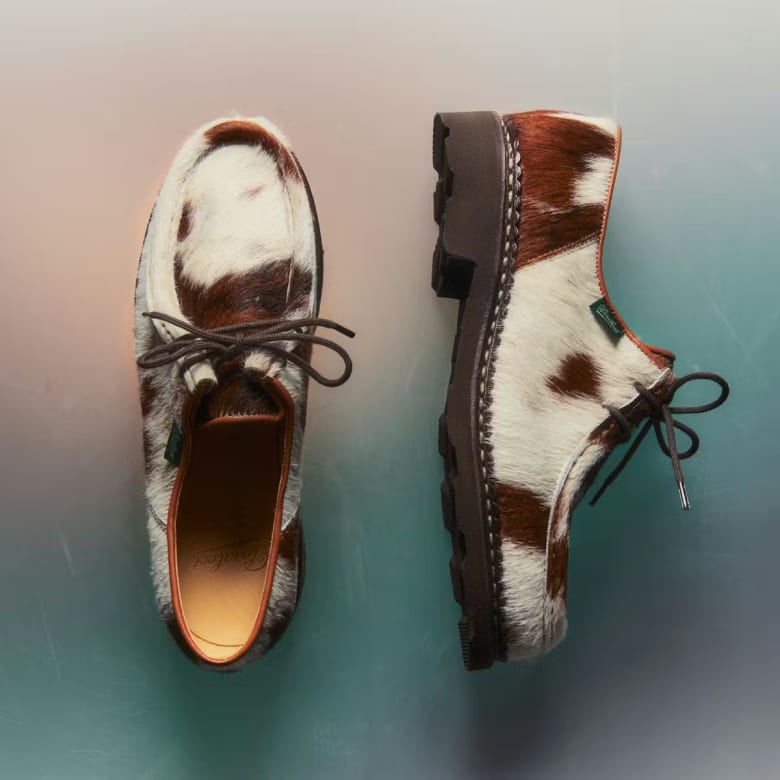
From smooth and full‑grain to suede and hair‑on finishes, Paraboot works with leathers that set its footwear a cut above the rest.
What’s the difference between full-grain, top-grain and split grain leather?
Paraboot shoes aren't designed to look their best on day one. In fact, the opposite is often true. The French shoemaker has built its reputation on creating footwear that improves with age, developing character through years of wear rather than losing it. The secret lies largely in the leather.
Full-Grain Leather
For Paraboot, full-grain leather is the gold standard. Taken from the outermost layer of the hide, it retains all of its natural grain, markings and unique characteristics. Nothing is corrected, sanded away or disguised. Instead, the leather is left to tell its own story, developing a rich patina as it absorbs oils, sunlight and everyday wear. The result is a finish that becomes increasingly individual over time. No two pairs age quite the same, which is precisely the point.
Top-Grain Leather
Top-grain leather also comes from the upper layer of the hide, but undergoes sanding and finishing to create a smoother, more uniform appearance. It's softer and often more pliable from the outset, but much of the hide's natural character is removed during the process. While prized by many manufacturers for its consistency, it lacks the depth and evolving nature that make full-grain leather so appealing to brands like Paraboot.
Split Leather
Split leather is produced from the lower layers of the hide once the outer grain has been removed. Because it lacks the dense fibre structure of full-grain leather, it is generally softer but less robust. It is often embossed, coated or treated to mimic the appearance of higher-grade leathers. While perfectly suitable for certain applications, it doesn't offer the same longevity, character or patina potential that defines Paraboot's approach to shoemaking.
So, why buy Paraboot?
Paraboot’s quality speaks for itself, so you probably don’t need us to do much more convincing. But if you’re looking for dependable and stylish footwear, there really is no better. The real value shows over time; it’s footwear that won’t need replacing every season and only gets more comfortable as it breaks in. Paraboot is one of the smartest investments you can make.
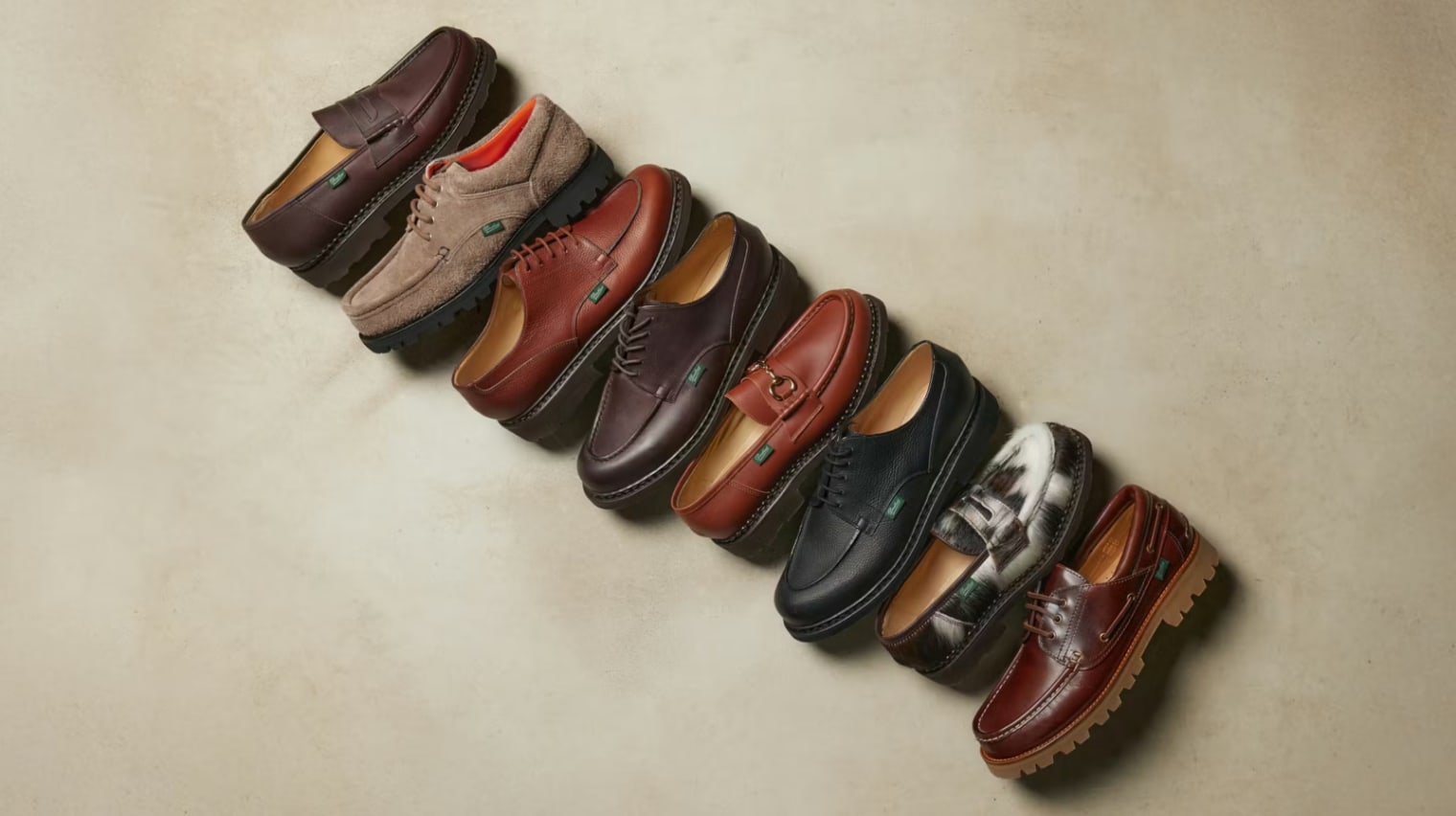
Discover Paraboot loafers, brogues, hiking boots and ankle boots in the men's collection at END.
“The shoe must adapt to the foot and not the opposite. Our models are the result of our quest for balance and simplicity.”
MOST POPULAR PARABOOT STYLES
Paraboot Michael
First released in 1945, the Michael is the style that helped define Paraboot’s identity — and, at one point, kept the brand afloat. Designed by the second generation of the Richard‑Pontvert family, it was created during a period of post‑war scarcity. The brief was straightforward: two eyelets, a strong lace, thick leather with a protective piped seam, durable stitching, a comfortable insole and a natural rubber sole. Its name came from the birth of Michel Richard — now Paraboot’s Chairman — at a time when anglicised names were popular. From Michel to Michael, an icon was born.
The Michael is built using Paraboot’s Norwegian welt, with two visible rows of stitching securing the upper to the sole. This method was originally used for hiking shoes in the Tyrolean Alps thanks to its strength, flexibility and waterproofness, qualities that remain central to the style today.
In the decades that followed, the Paraboot Michael found an unexpected cultural home in Italy. As the country moved away from sharp tailoring and slim dress shoes, a new casual‑tailored uniform took over: tweed jackets, corduroy trousers, roll‑neck jumpers. The Michael slotted into this shift perfectly. It became the finishing touch for a new generation of men redefining European style, helping lift Paraboot out of financial trouble and cementing the silhouette as its biggest icon.
Although the Michael in its most classic form is made from premium leather in a derby profile with a cushioned rubber sole, it’s frequently reworked in new materials. Hair‑on hides, denim, raffia and embroidered finishes bring new looks each season, alongside full reinterpretations through collaborations with Hermès, Yohji Yamamoto, Ermenegildo Zegna, Christophe Lemaire, Études, United Arrows and BEAMS.
More than 75 years on, the Michael remains a genuine cult favourite, with demand higher than ever. You can shop the Paraboot Michael for both men and women here at END.
Paraboot Clusaz
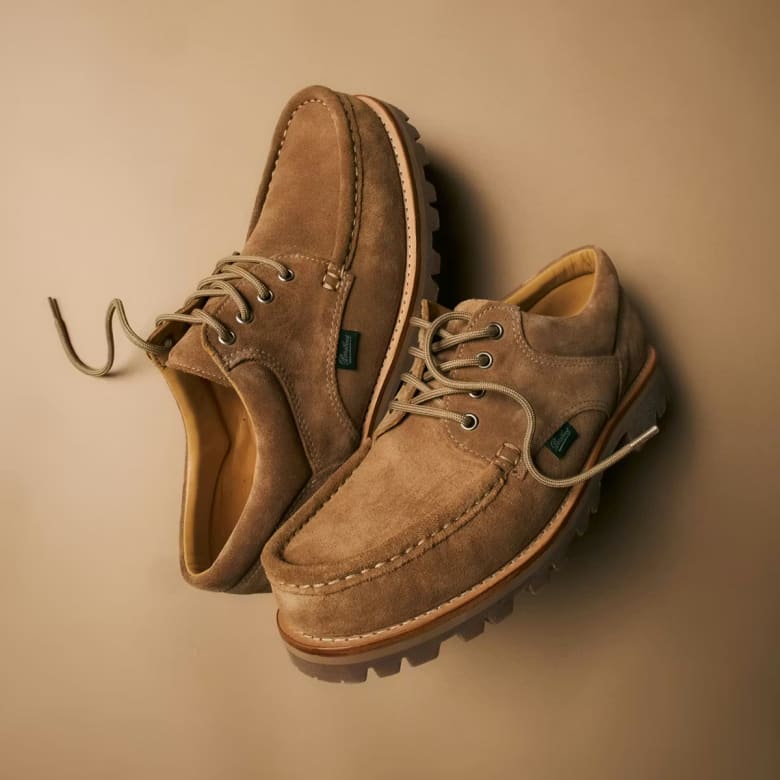
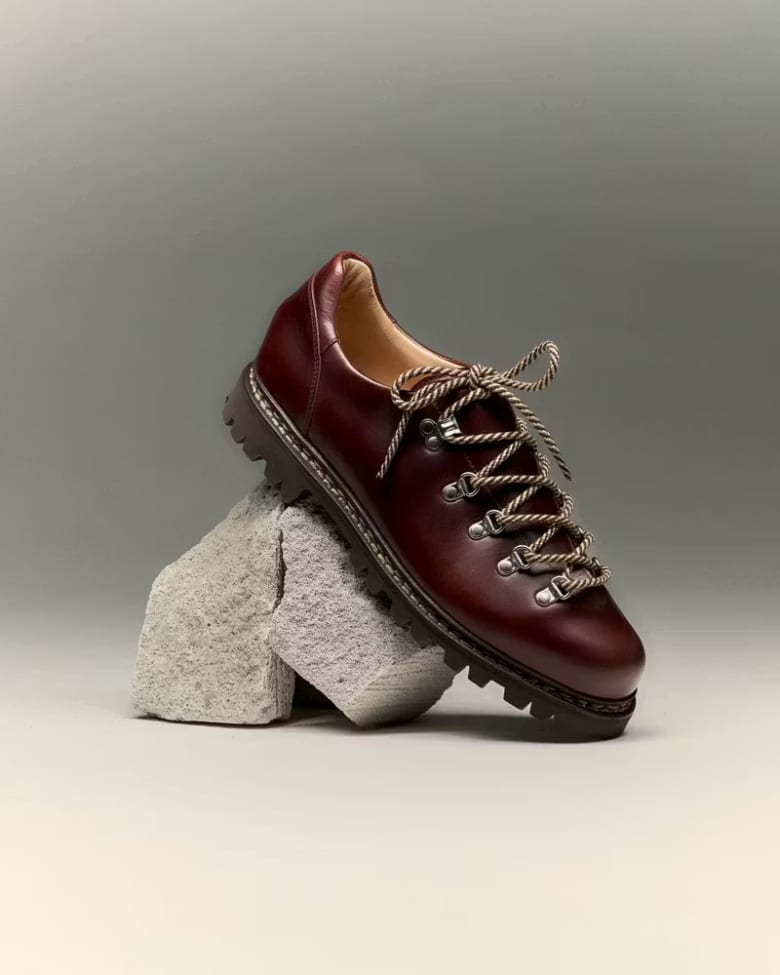
Named after the Alpine commune and mountain village of La Clusaz, the Paraboot Clusaz is a shoe that brings the mountain air along with it. The Clusaz pulls together details from the hiking shoes worn across European outdoor culture in the ’60s and ’80s — think the Paraboot Avoriaz, Galibier mountain boots and the gear worn by climbers and walkers across the Alps. You see it in the tough leather upper, the metal ring eyelets and the chunky lug sole beneath. Norwegian stitching underfoot follows the blueprint of proper mountain‑boot construction, giving the shoe the strength and weather resistance its inspirations were known for.
What makes the Clusaz special today is how easily all that heritage slots into everyday life: it has the feel of a classic hiking shoe minus the task of getting to the summit. Rugged where it needs to be, refined everywhere else, it’s the finest example of Paraboot’s outdoor DNA repurposed for the modern city.
Paraboot Reims
The Reims sits firmly within Paraboot’s lineage of hard‑wearing French footwear, drawing a direct line back to the brand’s most famous creation, the Michael. Where the Michael became a post‑war essential, the Reims arrived as its moccasin counterpart — carrying the same sturdy attitude but swapping laces for a more streamlined, slip‑on shape. It kept the core DNA intact: a bold apron front, a generous rounded fit and the kind of build that feels ready for real use, not just appearance.
Made in France, the Reims is constructed with Paraboot’s signature Norwegian welt — a technique traditionally reserved for mountain shoes — giving it weather resistance, longevity and a tough feel of solidity underfoot. Most pairs use full‑grain leather, chosen for its strength and ability to age with character, while the natural rubber sole nods to the brand’s early innovations in vulcanised footwear. There’s the sense that this is a loafer built to be worn, not kept pristine.
The Reims has long been seen as the men’s partner to the Orsay, but it’s also become something more: a symbol of Paraboot’s heritage filtered through a more everyday style. It takes the ruggedness that once defined the French countryside and reworks it for modern city living — a loafer with roots, substance and a story that’s still very much alive.
Paraboot Chambord
Rather fittingly, the Chambord takes its name from the Château de Chambord — the Loire Valley landmark known for its scale, symmetry and unmistakable French grandeur. Introduced in 1987, the shoe carries that sense of quiet prestige in its own way. It’s made from carefully selected calf leather, often referred to as “the jewel of France” for its natural lustre and ability to age with real character.
One of the Chambord’s defining features is its 45° toe‑cap stitching, a Paraboot hallmark that adds a relaxed, everyday feel to an otherwise polished derby. It’s this balance that makes the shoe so adaptable: just at home with tailoring as it is with denim or workwear. Underfoot, the Norwegian welt reinforces the brand’s heritage in mountaineering‑grade construction, while the choice of natural rubber or refined leather soles lets the wearer decide how rugged or formal they want to go.

PARABOOT STYLING TIPS
As the prominence of the sneaker wanes, the hard bottom shoe is called into action. Paraboot is a key player leading the revolution with its French-made derbies, loafers, boots and brogues, elbowing its way into aesthetic spaces it typically hasn’t been part of. If you’re just getting familiar with this new form of super-footwear, here’s the rundown on the best (and easiest) ways to style Paraboot.
How to Style Paraboot Footwear
Tailoring
Paraboot and tailored dressing have always gone hand in hand, especially styles like the Chambord, Reims and Michael. Their rounded shapes and substantial soles add ease to sharper looks, softening the formality a little. Think unstructured blazers, oxford shirts and wool trousers — the kind of relaxed tailoring that feels at home in both the office and the pub. The leather’s natural sheen also pairs cleanly with navy, greys and earthy neutrals.
Streetwear
In streetwear, Paraboot brings something different to the table: an alternative to sneakers. The Michael, Reims and more rugged silhouettes like the Clusaz sit well with baggier denim, cargo trousers, hoodies and overshirts. Their chunkier soles balance wide silhouettes, and textured leathers like hair‑on make a strong statement without veering into trend-chasing.
City Casual
For everyday city wear, Paraboot is in its element. A pair of Michaels or Chambords works easily with straight‑leg jeans, chore jackets, knits and tees — the kind of pieces that make up a weekly rotation. The result is a dependable, put‑together look that doesn’t feel overthought.
Workwear
Paraboot’s outdoors and utility roots make it a natural fit for workwear silhouettes. The Clusaz, Avoriaz and Montana pair perfectly with canvas trousers, flannel shirts, heavy twill jackets and more functional layers. The Norwegian welts and sturdy soles echo the durability of traditional workwear pieces, creating outfits that feel practical, grounded and built to last.
Outdoor
For the outdoor‑leaning look that’s become a uniform in its own right, Paraboot brings the credibility. Their hard-wearing soles and solid welted builds give technical layers and utility trousers a grounded, grown-up anchor. Try pairing with waterproof shells, knitted beanies and baggy cargo pants — practical pieces that play well with the rugged character of styles like the Michael or the Avoriaz that can actually handle the real mileage. And that’s the charm: even if most wearers won’t be venturing far beyond the nearest flat white, a pair of Paraboot shoes gives the whole get-up a reassuringly authentic backbone.
How to Style the Paraboot Michael
The Michael’s rare mix of character means it feels at home in both formal and informal ensembles, but it really comes into its own with wide or relaxed trousers — shapes that balance the shoe’s chunky profile. Think loose canvas pants, wide pleated wool trousers, or classic denim that breaks cleanly over the apron toe. Up top, it’s an easy win: a brushed flannel shirt and overshirt for everyday ease, a fine‑gauge knit and tailored jacket when you want things sharper, or a heavy work jacket for something more grounded. The versatility is the point — the Michael slots comfortably into whatever lane you put it in.
PARABOOT CARE & SIZE GUIDE
With their welted soles, premium leather and time-honoured builds, Paraboot footwear is made to last — but a little extra love and care won’t go amiss. Here’s how to keep your Paraboot shoes in good nick.
How to clean Paraboot shoes
There’s a few simple maintenance steps that Paraboot recommends to improve the longevity of your pair.
For smooth, grained, fat, semi-fat, and polished leathers, apply cleaning wax in a circular motion with a soft cloth. The leather can then be buffed with a soft bristle brush and polished to a shine.
For glossy, varnished leathers, apply Marseille soap evenly with a warm, damp cloth, before drying and polishing for the perfect shine.
For suede and nubuck leathers, you can use a special nubuck eraser to remove any dirt and debris. For nubuck, mist a light layer of essential‑oil spray from around 20 cm away and let it absorb fully. For suede, use a scraper or suede brush to gently lift the nap and restore the texture. From time to time, it’s a good idea to use a waterproofing aerosol, too.
For Goodyear or Norwegian-welted pairs, you can apply colourless shoe polish with a small applicator brush to make it even more waterproof.
Do Paraboot shoes run small or large?
Paraboot footwear is generally true to size, if not a little generous. You can opt for your usual EU or UK size, or you may wish to go down half a size for the perfect fit.
Each Paraboot style on END. is listed with its own size chart, so make sure to take a look if you’re unsure.
Can Paraboot shoes be repaired?
Yes — in fact, Paraboot shoes are actually designed to be repaired and re-soled. Due to the quality of the Norwegian and Goodyear welt stitching on each pair, they can be fully refurbished a number of times by Paraboot’s own repair service, authorised cobblers, or experienced repairers. The repairs that can be carried out include resoling, replacing leather parts and re-stitching.
If you need to request a repair, simply contact the team at Paraboot and they’ll handle the rest.
“For over 80 years, Paraboot has defended this simple but essential conviction: a beautiful shoe is not made to be thrown away, but to be worn for a long time, repaired and passed on.”
PARABOOT COLLABORATIONS
As is the way in the contemporary world, Paraboot has harnessed the power of collaboration to push its heritage in new directions without losing its footing. Its archive is rich with silhouettes that invite reinterpretation, reimagining and reinvention, which has led to some exciting new takes on tradition.
Paraboot x Junya Watanabe MAN
Paraboot and Junya Watanabe MAN make a naturally aligned pairing: French mountain‑born shoemaking meeting one of Japan’s most inventive pattern‑cutters. Watanabe has long been known for taking functional pieces and pushing them into the avant‑garde, so when he works with Paraboot, he reaches straight for the brand’s most rugged icons. The result is a series of reimagined Avoriaz boots — built in France with Paraboot’s Norwegian storm welt and lugged sole, but transformed through Watanabe’s lens with cowhide pony hair uppers, bold hardware and a sharper, more directional attitude. It’s a collaboration that plays to the strengths of both brands.
Paraboot x Drôle de Monsieur
Paraboot x Drôle de Monsieur is where French tradition and modernity collide. This long-standing collaboration has given way to a colour-blocked, golf-inspired Thiers, a summery Babord moccasin, and glossy leather Yosemite boots. One of the most striking releases is their take on the Reims loafer, inspired by Pierre Jeanneret’s iconic “Committee Chair” — a mid‑century design created for Chandigarh in the 1950s. The shoe mirrors the chair’s architectural lines and material contrasts in a way that feels entirely fitting for Drôle de Monsieur’s sensibility. Long may Paraboot x Drôle de Monsieur continue.
Paraboot x Engineered Garments
Daiki Suzuki, founder of Engineered Garments, has always had a passion for alpine footwear. As an avid hiker in the ‘70s, Galibier was his brand of choice, and so his collaboration with Paraboot is something that just makes sense. The pair first joined forces in 2022 for a new rendition of the ever-iconic Michael, transforming the 1945 Tyrolean-style shoe into a rugged "mountain shoe" inspired by vintage alpine gear. Next came the Clusaz, (directly inspired by Suzuki’s beloved Galibier boots) re-imagined with a staggered D-ring lacing system. And for the third link-up, Daiki Suzuki revisited the Chambord, inspired by the old Chamonix mountain boot which he unearthed. This pair directly dialled into vintage ski boot aesthetics with its buckle and strap feature. With Paraboot’s heritage and Engineered Garments’ thoughtful attention to detail, every round of this collaborative partnership just keeps getting better.
Look out for Paraboot’s latest collaborations launching in the men’s and women’s collections at END.

SIMILAR BRANDS TO PARABOOT
If you’re exploring Paraboot, there are a handful of other footwear labels that share its commitment to craft, durability and enduring design. From heritage loafers to hard‑wearing outdoor silhouettes, these brands sit in the same conversation and are available to explore at END.
Bass Weejuns
G.H. Bass is the American brand behind the original penny loafer — a design that’s become a wardrobe staple for generations. Like Paraboot, Bass Weejuns builds footwear with longevity in mind, using dependable leather constructions and traditional methods honed over decades. While lighter and more preppy than Paraboot’s rugged French styles, Weejuns offer the same appeal: timeless everyday shoes with real heritage behind them.
Grenson
Founded in 1866 by William Green in Northamptonshire, Grenson is one of Britain’s most historic shoemakers and an early pioneer of the Goodyear‑welted technique. The brand built its reputation on sturdy, functional footwear — from military boots to classic brogues — all made with longevity in mind. Like Paraboot, Grenson transports its heritage craftsmanship neatly into the modern era, producing shoes designed to be repaired and worn for years. Both labels share a commitment to premium leathers, traditional construction and a timeless aesthetic that sits comfortably between smart and everyday wear.
Dr. Martens
Dr. Martens began as a straightforward £2 work boot worn by postmen and factory workers, but its story took a sharp turn when Britain’s early ska‑influenced skinheads adopted it as a symbol of working‑class pride. From there, musicians like Pete Townshend helped cement the boot as part of British subculture, carrying it through punk, hardcore and the wider alternative music scenes. Without music, DM’s would have remained a functional work shoe — instead, it became an icon of self‑expression. Like Paraboot, many Dr. Martens styles use Goodyear welting, stitching the upper and sole together for strength, durability and long‑term repairability. Combined with tough leathers and hard‑wearing soles, DMs appeal to the same crowd; those who value shoes with heritage, resilience and a cultural story behind them.
KLEMAN
Founded in 1945, KLEMAN is a French workwear classic originally made for tradespeople and public service uniforms. The brand's simple shapes, sturdy soles and utilitarian leathers sit comfortably alongside Paraboot’s outdoors‑and‑workwear heritage. Much like Paraboot, KLEMAN is committed to keeping production close to home, preserving traditional hand-finished techniques in its workshop in Anjou, France. More minimal in design and more accessible in price, KLEMAN delivers a similar focus on function, durability and honest materials.
Fracap
Italian brand Fracap has been hand‑crafting mountain‑inspired boots for generations. Their designs echo Paraboot’s outdoors‑leaning DNA — especially styles like the Clusaz and Avoriaz — with natural leathers, lug soles and traditional methods built for long wear. If you’re seeking footwear with authentic utility and a strong Alpine spirit, Fracap shoes and boots are a great choice to rotate with your Paraboots.
Take a look at END.'s full collection of Paraboot footwear for men and women, available to shop in-store and online.