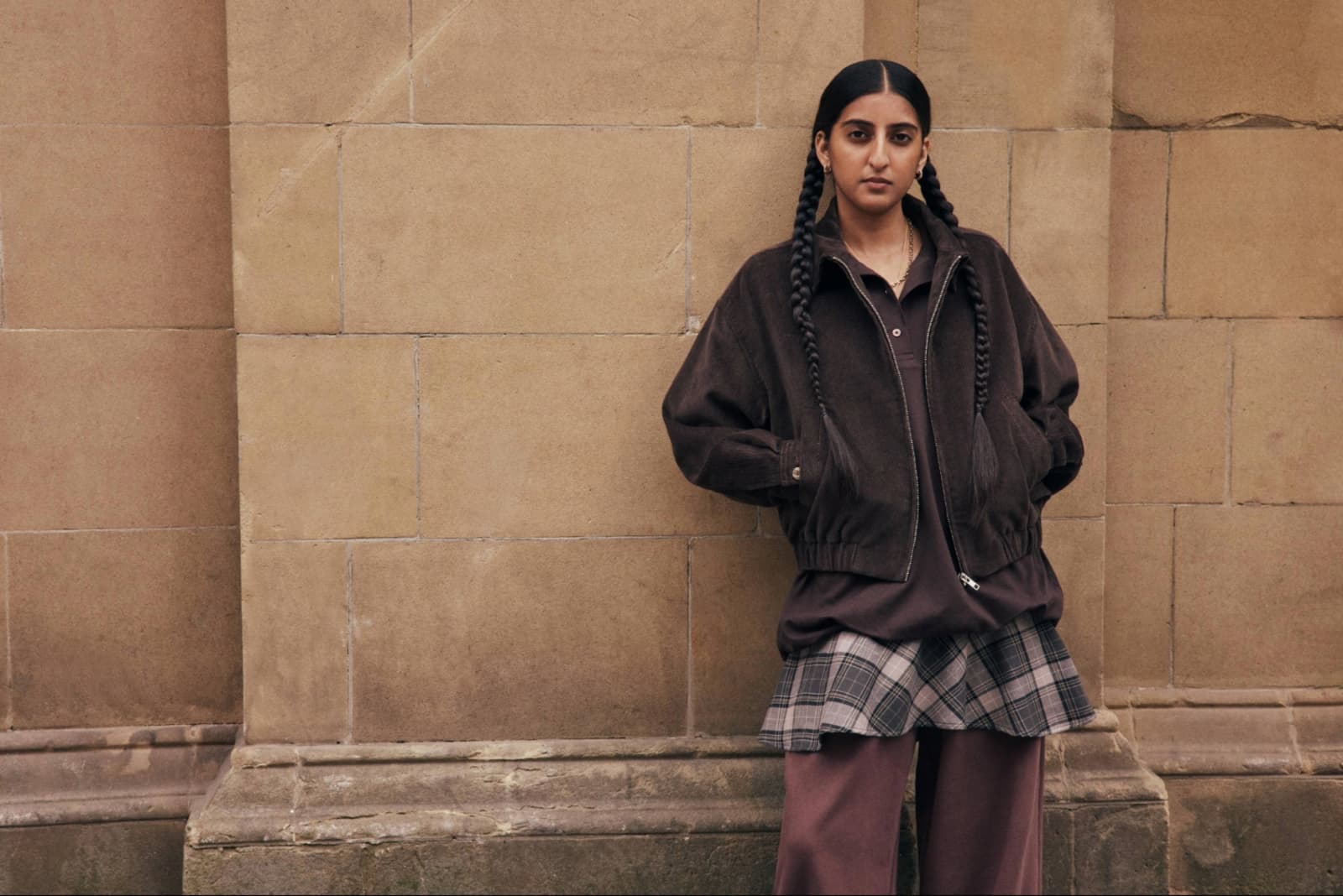
ALINA AKBAR LEARNED TO SEE THROUGH HER CAMERA
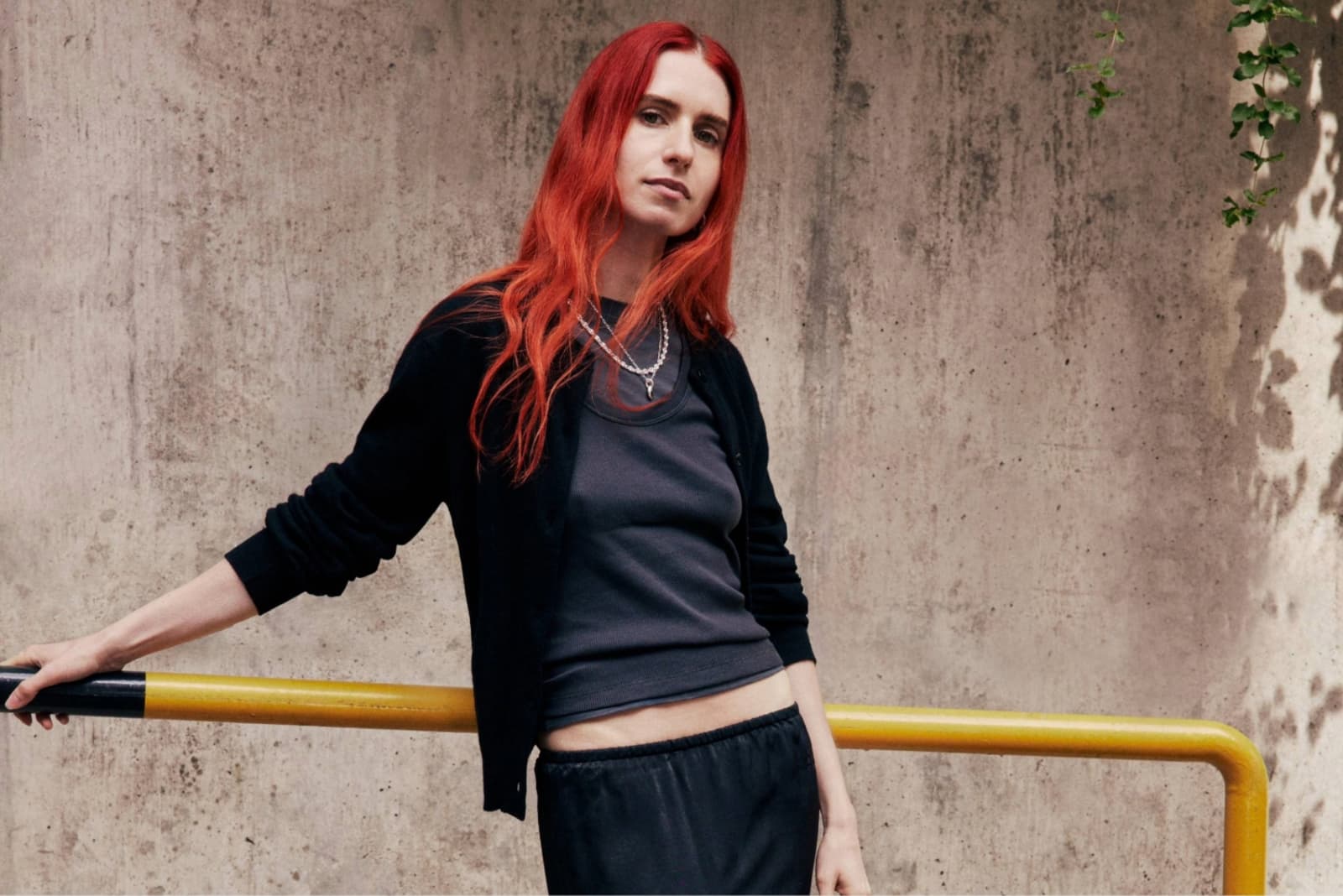
1 October 2026Visual artist Alina Akbar’s photography is the world exactly as she sees it. The END. LABEL campaign star chats to us about how tradition and modernity coexist, who shaped her style, and why gold jewellery carries identity
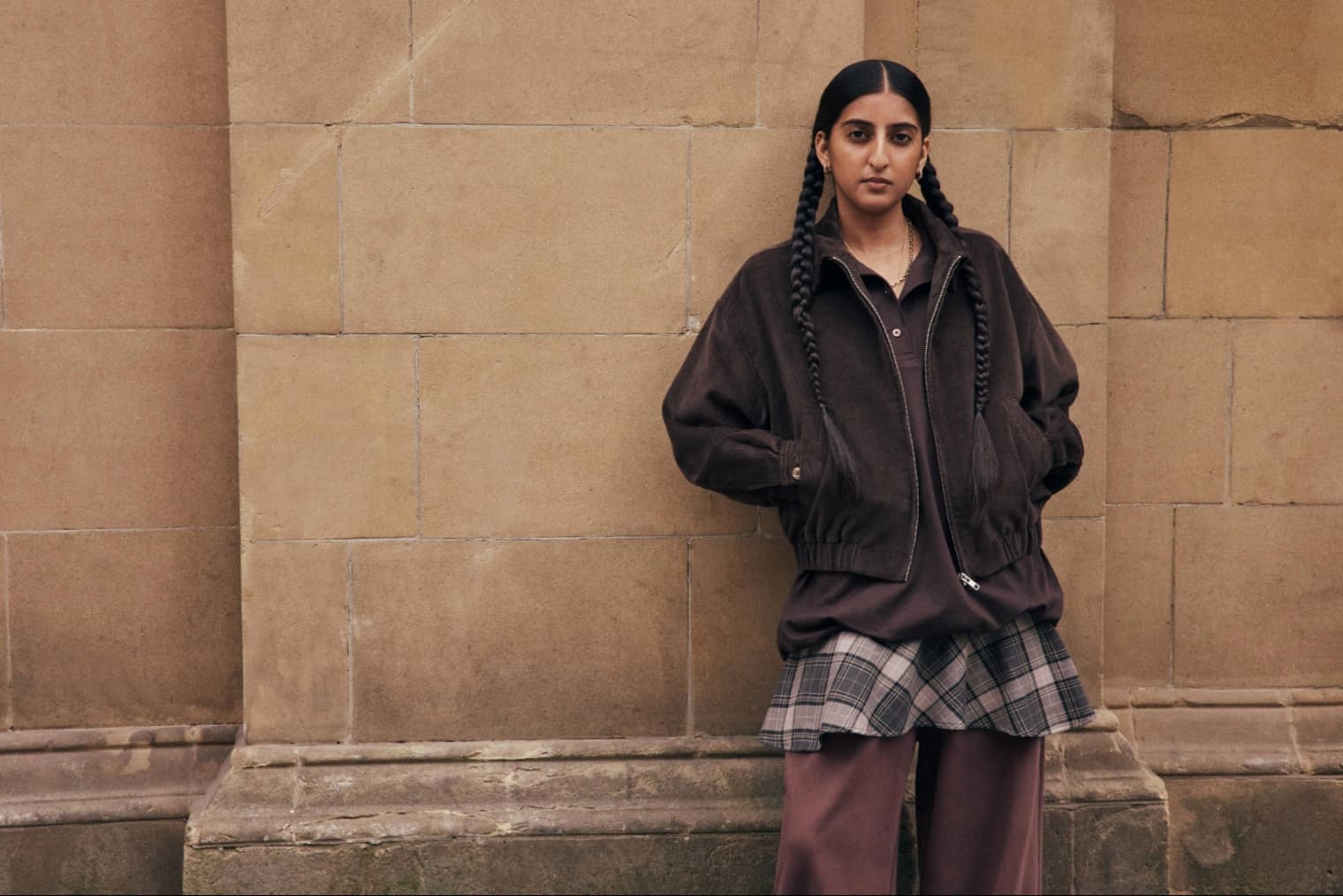
Scroll through Alina Akbar’s Instagram and you’ll feel like you know her, like you’ve visited her local spots, met her community. That’s testament to her eye. What many would pass over as a regular, everyday moment, she documents because she finds it beautiful. In this way, her photography is an archive of her life and the influences around her.
END. LABEL has this at its very core. Our first-ever full in-house collection revolves around how we build identity and personal style over time. Alina puts this into practice, her life mirrors her work, and her style mirrors her life. From terracewear to henna, there’s no boundary or separation and the result is a holistic approach that exists above trends. It’s tradition and modernity as one constantly evolving entity.
For the launch of END. LABEL, we sat down with Alina to talk hood music videos, her biggest influences, and learning to see through a lens.
How do you balance tradition and modernity?
I don’t really see them as opposites. I grew up around things that were already both at once. Shalwar kameez with trainers, gold jewellery with tracksuits, henna next to steering wheels. Being British Pakistani in the North means constantly inheriting things and then adapting them to where you are. I think that’s naturally found its way into my work and how I dress. I’m interested in keeping the codes and references intact, but shifting their context. Tradition doesn’t have to be frozen in time to still belong to you.
What can someone deduce about your identity from your photography?
Photography started for me shooting BTS at hood music videos, so without really intending to, I was building an archive of the North and the world around me. Working-class streets, cars, clothes, jewellery, estates, corner shops, and the people occupying them. A lot of things that might be overlooked or seen as mundane are things I find genuinely beautiful because they’re part of my experience.
My photography is really the world as I see it and know it. I think you can work out a lot about where I’m from and what I value just from what I choose to point the camera at; I think my photography is basically an archive of how I learnt to see.
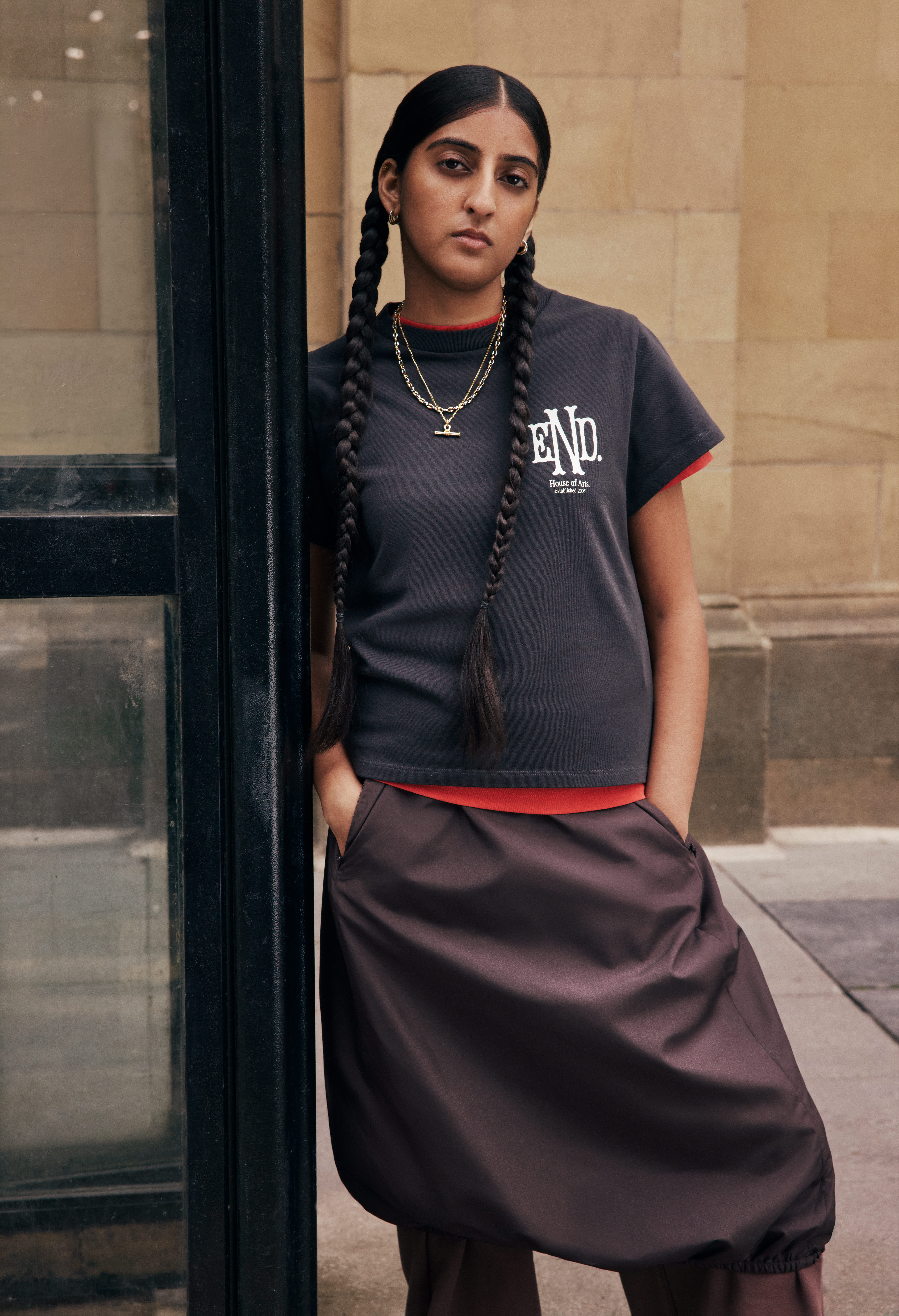
"Shalwar kameez with trainers, gold jewellery with tracksuits, henna next to steering wheels. Being British Pakistani in the North means constantly inheriting things and then adapting them to where you are."
Who has been the most influential person in building your personal style?
I grew up around my Dad’s style and that whole terracewear and tracksuit language, Stone Island, C.P. Company, and Lacoste tracksuits for Eid. But for me it came through the streets rather than through football. I started collecting little bits of Stone Island when I was young and remember being the only brown girl at school wearing it.
I think that says quite a lot about how my style developed. I was taking codes I inherited from my dad and the North around me, then naturally wearing them through my own identity and my mum knows what suits me, my confidence, and how it fits into my look so I always run everything I buy past her. Even now, a lot of my style is that same mixture of menswear with very South Asian and feminine details.
Is there a piece of clothing or a style that you’ll always make sure is in your wardrobe?
Gold jewellery, always. I don’t really feel like myself without it. I can be wearing something really boyish or simple and the jewellery brings the femininity back into it for me. But it goes much deeper than styling. Some of my pendants carry religious references, others connect to my culture and the women in my family, so what I wear around my neck can tell more of my story than the clothes themselves. South Asian women have always used jewellery to carry identity, faith, memory, and value, and I think I’ve inherited that in my own way. It’s probably the most consistent part of how I present myself.
Still in 2026, your immersion in the world of cars breaks gender norms. Do you feel that? How have you overcome it?
I feel it because people remind me of it more than I think about it myself. Cars, groups of men, and garages have always existed in my world, so I never entered that space thinking I was entering a ‘male’ interest. What interests me is everything around the car: modification, sound, style, status, community, the ingenuity of taking something mass-produced and making it personal. That actually mirrors a lot of my wider practice.
Being a woman in those spaces means people can make assumptions about what you know or why you’re there, but I’ve never felt the need to perform masculinity to prove I belong either. I bring my own perspective to it.
I’ve always been fascinated by the subculture around it. There’s a certain type of crowd you recognise across places like Rochdale, Bradford, Oldham, Cheetham Hill, Longsight. The cars, clothes, language, music, even the way they carry themselves. It’s its own Northern, working-class, and often South Asian visual language. Being a British Pakistani woman within that world, and now moving through art and fashion spaces, means I get to look at those codes from a different perspective. A lot of my practice is about recognising the culture and beauty in things I grew up around that weren’t necessarily considered worthy of that attention.