
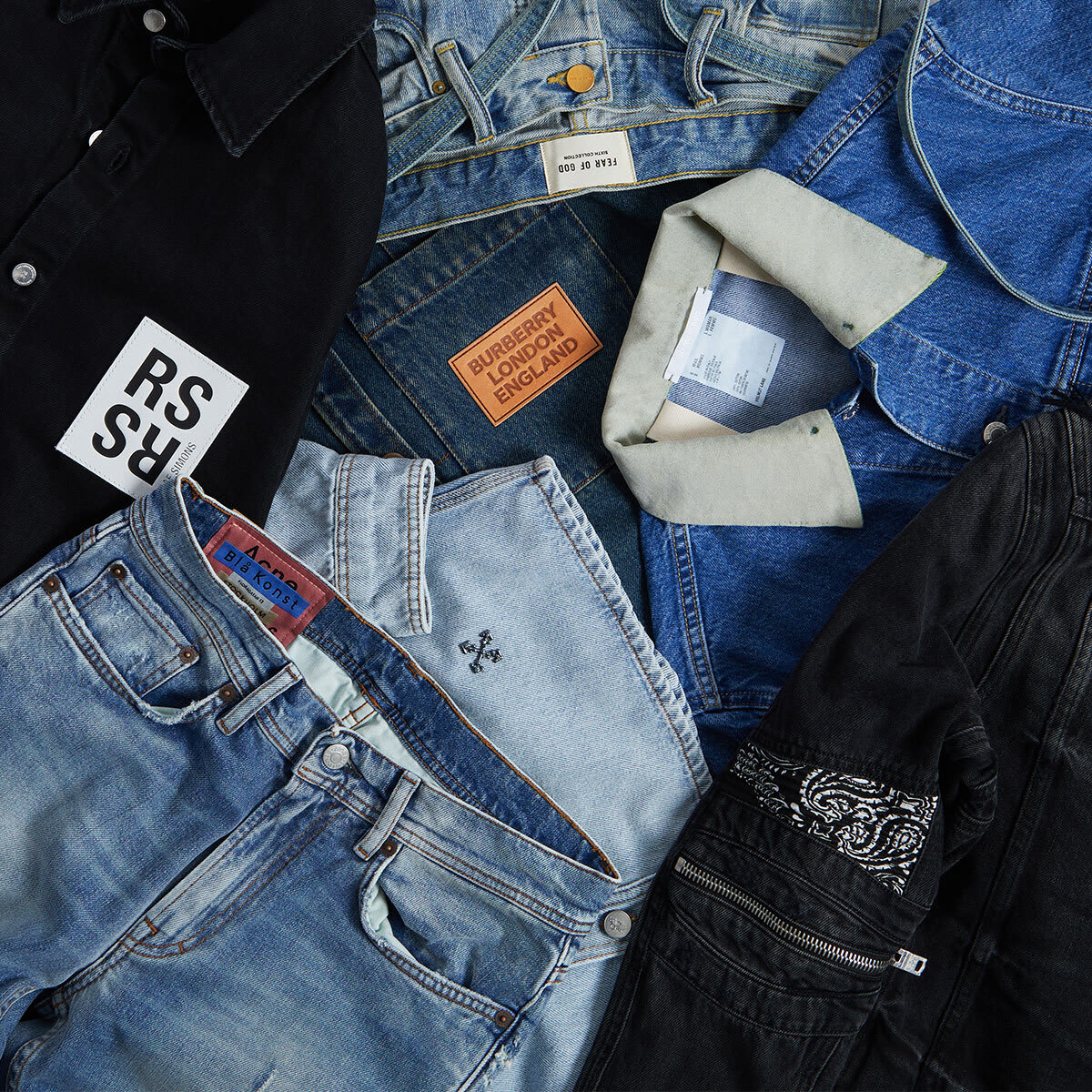
A Complete Guide to Mens Denim Jeans
Adored for centuries, no men's casual wardrobe is complete without a pair of well-cut jeans. With the fashion industry continuously exporting new products and fabrics, denim is arguably the definition of "enduring classic".
The iconic denim’s origins trace back to the 1670s in southern France, where David André created a durable indigo cloth, Serge de Nîmes, later known as denim. André moved to Genoa, supplying sailors with tough trousers made from the fabric. These sailors, called “Genes,” brought the cloth to America during the Gold Rush. In 1873, Levi Strauss used this design to create the first pair of cotton-denim jeans.
A wardrobe must have, men’s jeans have dominated casual collections ever since. In this edit we’ll take a look at some of the best denim on offer at END.. Look out for styling tips, advice on fits as we try to answer; which jeans are best for men? With an extensive range available, it can often feel like you’re searching for a needle in a haystack. With so many washes, fits and brands to consider, you might struggle to know where to look, however sit back as we’ll do the legwork.
A quick guide to Men’s Jeans
Straight Fit - The original jean, straight through the leg for a classic fit.
Slim Fit - For a tailored look, narrow through the leg yet with a slight tailor at the ankle.
Skinny Fit - Using stretch cotton, expect a fit that hugs the thighs, legs and ankles.
Selvedge Denim - Superior in quality and worth the investment, Selvedge denim is distinguished by the self-finished edges (on the inside seam there is often a clean stripe, in white or with a coloured thread).
MENS DENIM JEANS BRANDS
With numerous styles on offer, the difficulty in the task becomes apparent when you try to answer the question which brand is best for men's jeans? Whilst we haven’t directly answered the question It's clear to see that when it comes to the best denim men's jeans, there are plenty of contenders.
Scandinavian denim, led by Acne Studios since 1996, continues to dominate men’s jeans trends. Known for using organic materials, Acne’s Studios men's jeans are elevated classics, where every stitch and cut is crafted with precision. In contrast, Carhartt WIP offers durable, workwear-inspired jeans that have been popular since 1889. Known for their practicality and timeless design, Carhartt men’s jeans come in a variety of fits and washes suitable for both work and casual wear. On the other hand, Ksubi, an experimental Australian brand, brings bold, runway-inspired denim with unique designs like waxed and coated jeans. They remain true to their distinctive, unfussy style, offering a contemporary twist on traditional denim. As the era of skinny jeans fades, what are the most popular men's jeans right now? Well streetwear brands like Represent have emerged as key players. With a focus on British heritage and the Britpop era, Represent’s men’s jeans are baggier, with distinct washes, and distressed finishes, embodying effortless streetwear style.
MENS JEANS FIT STYLES
What's the best fit jeans for men? An age old question that has stood the test of time, and whilst there isn’t one answer, our Denim Guide will hopefully give you some useful pointers. Whether it's a classic cut or more trend-led style you’re after, skinny and straight cuts intertwine here, giving you plenty options to find the jeans that are just right for you.
Men’s Slim Jeans
With a fit that’s more tailored than straight, men's Slim Fit Jeans are the modern version of the classic. Expect a fit that is narrow through the leg and ankle. In dark washes, they’re a popular alternative to a semi-formal trouser.
Mens Straight Leg Jeans
The OG. Straight Leg jeans are where it all began. The original cut, they are timeless in style. Created for wearing everyday, men's Straight Leg Jeans are loose through the leg, and sit neatly at the ankle, usually grazing footwear. Best for a classic look, the popularity of Straight Leg Jeans for men has increased tenfold in recent years.
Is Denim acceptable for a smart casual dress code?
Denim - on the most part - is accepted for smart and casual endeavours. The choice of fit is what’s really important (as we said, slim jeans tend to be a safe option for semi-formal events).
A tailored cut that narrows towards the ankle is more roomy in the thighs too, and can cater for athletic builds.
Men's Skinny Jeans
Cast your mind back to the noughties - drain pipe denim reigned supreme, bringing with it an air of rock and roll thanks to legendary rockstars like Mick Jagger. Using stretch cotton, expect a tight fit that hugs the thighs, legs and ankles.
MENS JEANS FABRICS
A type of woven twill fabric, usually made from cotton, Denim consists of two yarns that are woven together. Known as the weft, the yarn that runs horizontally is threaded over and under the warp, the yarn that runs vertically. Denim is typically yarn-dyed with an indigo colouring. The warp yarns are dyed before being woven whilst the weft yarns are left undyed or bleached, which is why denim is blue on the front and white on the back.
What is Selvedge Denim?
The name for superior quality Denim, Selvedge is a harder-to-produce type of material that usually is sold and worn unwashed. Distinguished on the cuffs of jeans, the term refers to the self-finished edges on each side of the woven fabric; these edges don’t fray or unravel. The Selvedge in Denim is typically white with a coloured yarn in the middle.
Does all Denim weigh the same?
No, when it comes to Denim, there’s typically three weights, all defined by particular ounce categories:
Lightweight (Under 13.5 oz.)
Midweight (13.5-16.5 oz.)
Heavyweight (Over 16.5 oz.)
Heavyweight Denim has grown in popularity recently, but for some the fabric is too hard wearing. Providing a middle ground for most, check out Midweight Denim Jeans. However if that still proves uncomfortable, Lightweight Denim is the answer.
MENS DENIM WASH TYPES
Extremely versatile, when it comes to men's Denim Jeans, applying treatments and washes can drastically change the look of the fabric. Here we’ll take a look at some of the most common washes and how they are achieved.
Raw Denim
Also known as dry or Unwashed Denim, Raw Denim doesn't undergo any wash or process. Instead, it’s taken directly from the loom before being cut and sewn into jeans. Often in a deep blue colour, the fabric will crease and fade over time.
What are Enzyme Wash Jeans?
Applied to any composition and colour, enzyme washing is a treatment used to achieve a softer hand feel. Common across all textiles, not just jeans, the process occurs naturally as the enzymes eat away at the cellulose in cotton.
Men’s Black Jeans
Arguably the most sought after jeans, Black Jeans are achieved via a dying process similar to traditional Indigo Denim. The difference is that black dye is used to achieve the desired colour.
Dark Wash Jeans
Requiring some washing to create the colour, sometimes dark wash is an extension of a rinse wash.
What is an Acid Wash?
Also known as marble, the distinctive wash creates sharp tonal colour contrasts on the denim. Using stones soaked in chlorine, they sit within the wash process and react with the dye, creating the unique pattern.
Mid Wash Jeans
Just like Dark Wash, Mid Wash Jeans are achieved by extending the rinse wash process. The only difference is the amount of time they have been washed for.
Light Wash Jeans
Going through the same process as Dark and Mid Wash Jeans, Light Wash Jeans are dyed for a longer period of time to remove the majority of the indigo colour.
Are Grey Wash Jeans originally black?
Yes, created as a result of washing Black Denim, Grey Wash Jeans are created from washed Indigo. The level of washing determines the shade of grey.
Can you wear White Jeans?
If you dare to be bold then yes you can wear White Jeans. Quite unique, they are created when both the warp and weft yarns are woven using white thread rather than the traditional blue and white.
How are Bleach Wash Jeans made?
Heavily faded, the process behind Bleach Wash Jeans is the same as a rinse wash, but bleach is used instead of dye. In some cases, the bleaching is only applied to certain sections of the Denim.
Vintage Wash Jeans
For those wanting a pre-loved or worn in look, vintage wash jeans are the answer. First the denim is dyed and washed to create the colour needed, then it's bleached, scraped and grounded to a level where the worn-in look is achieved.
That concludes our edit of the best jeans for men. With plenty of information to digest and take on board, we hope you’ll be more informed when buying your next pair. Knowing what style, fit, or material you want will make shopping easier.