BEHIND "WEIGHTLESS TRACES": strl_ for END. x On Cloudhorizon
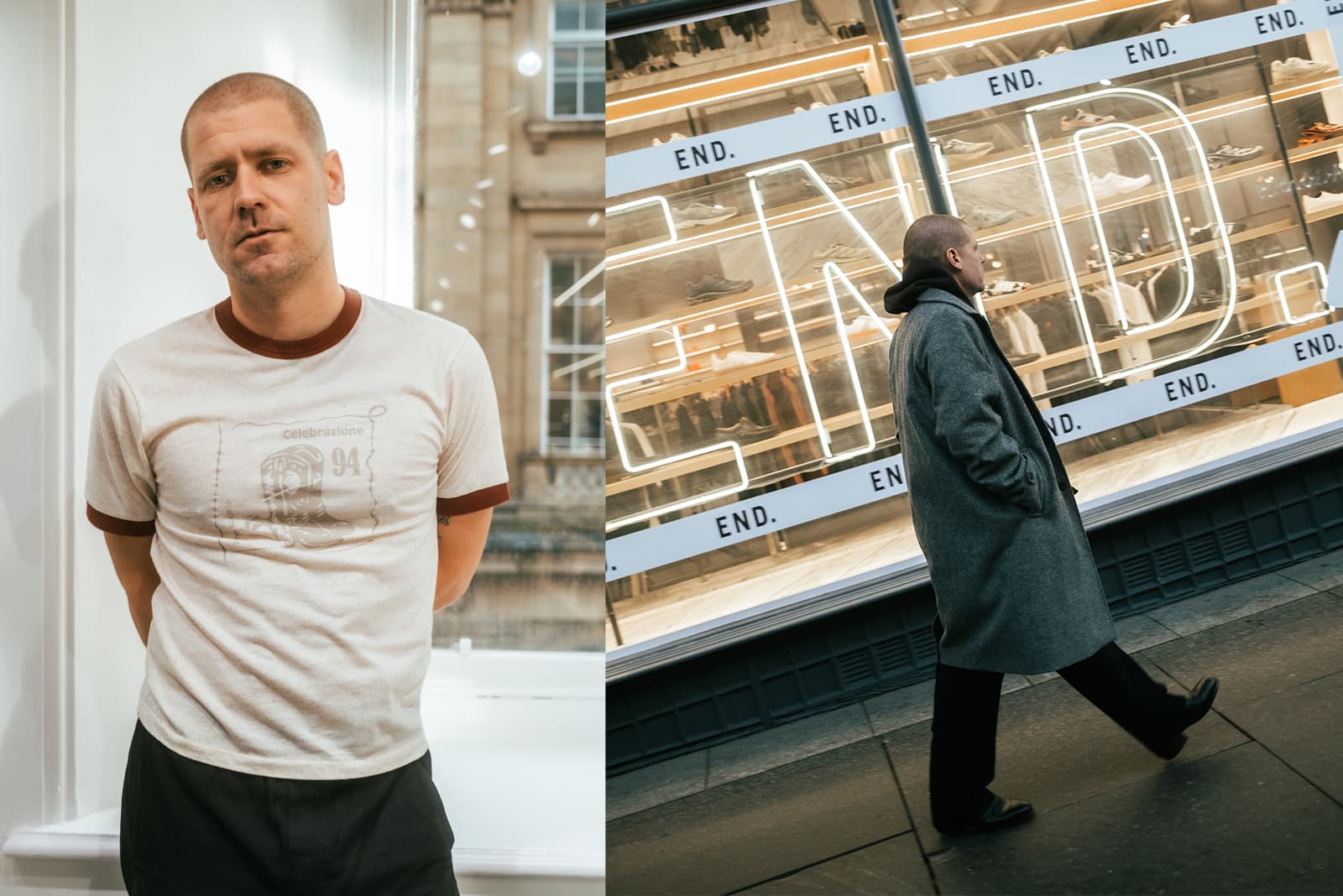
8 December 2025Sitting down with Samuel Michael Collins and Shō Alexander Murayama, we discussed the creative project with END. and On, their approach to their practice and the experience of creating land art in an area of immense beauty.
At its core, On sits in the space between nature and technology. Renowned for their running footwear and apparel, their precision Swiss engineered designs compound performance capabilities and allow athletes to advance their form, pushing boundaries and achieving the previously unachievable. Supplementing natural processes and building something new sits at the brand’s epicentre – offering the natural form of the foot a foundation upon which it can excel.
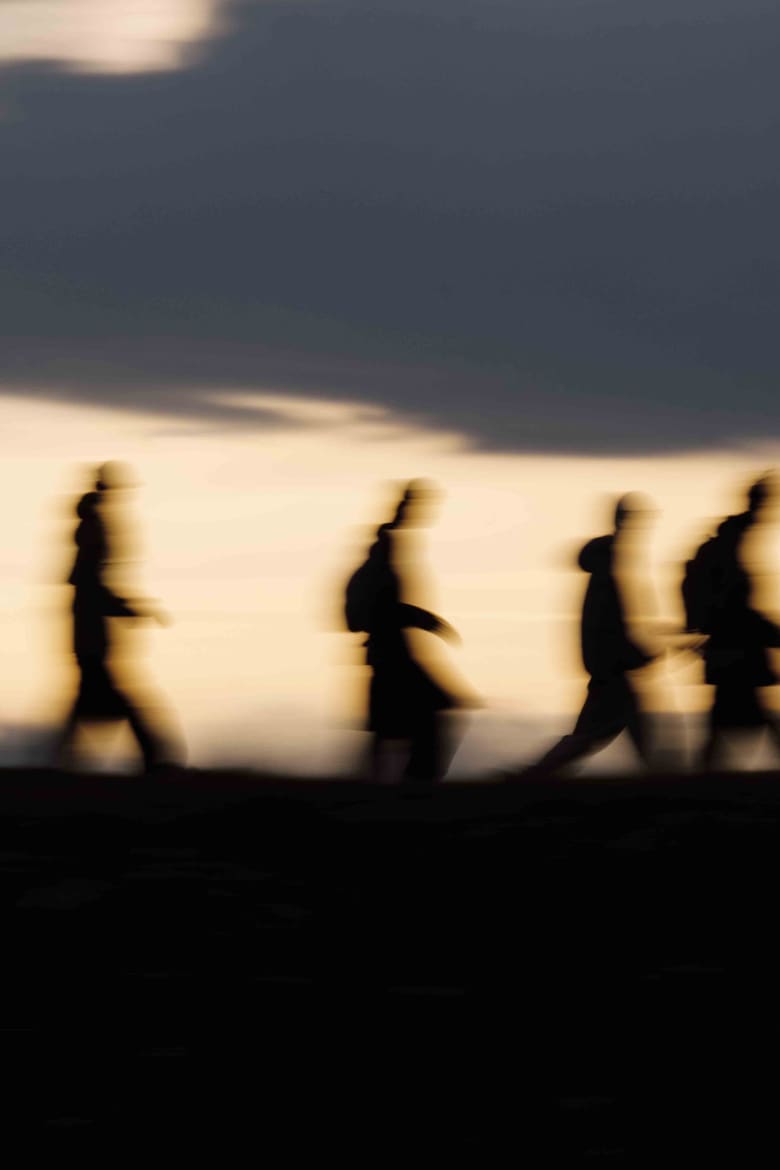
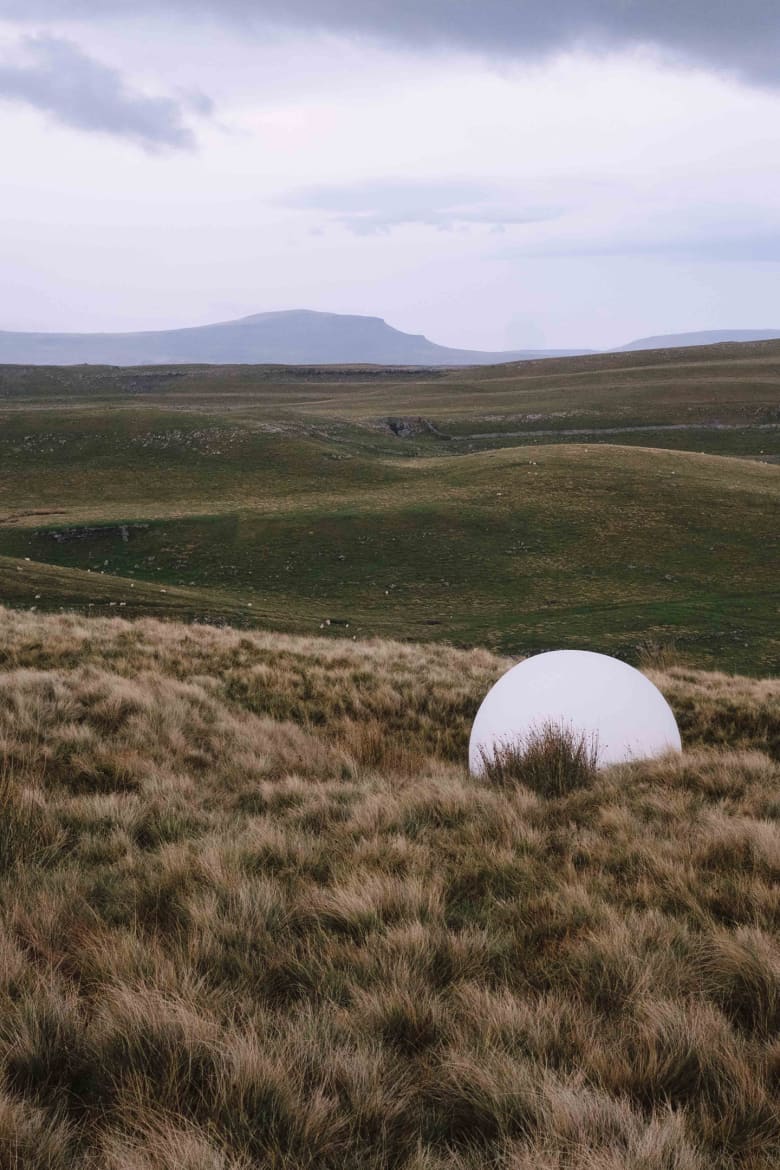
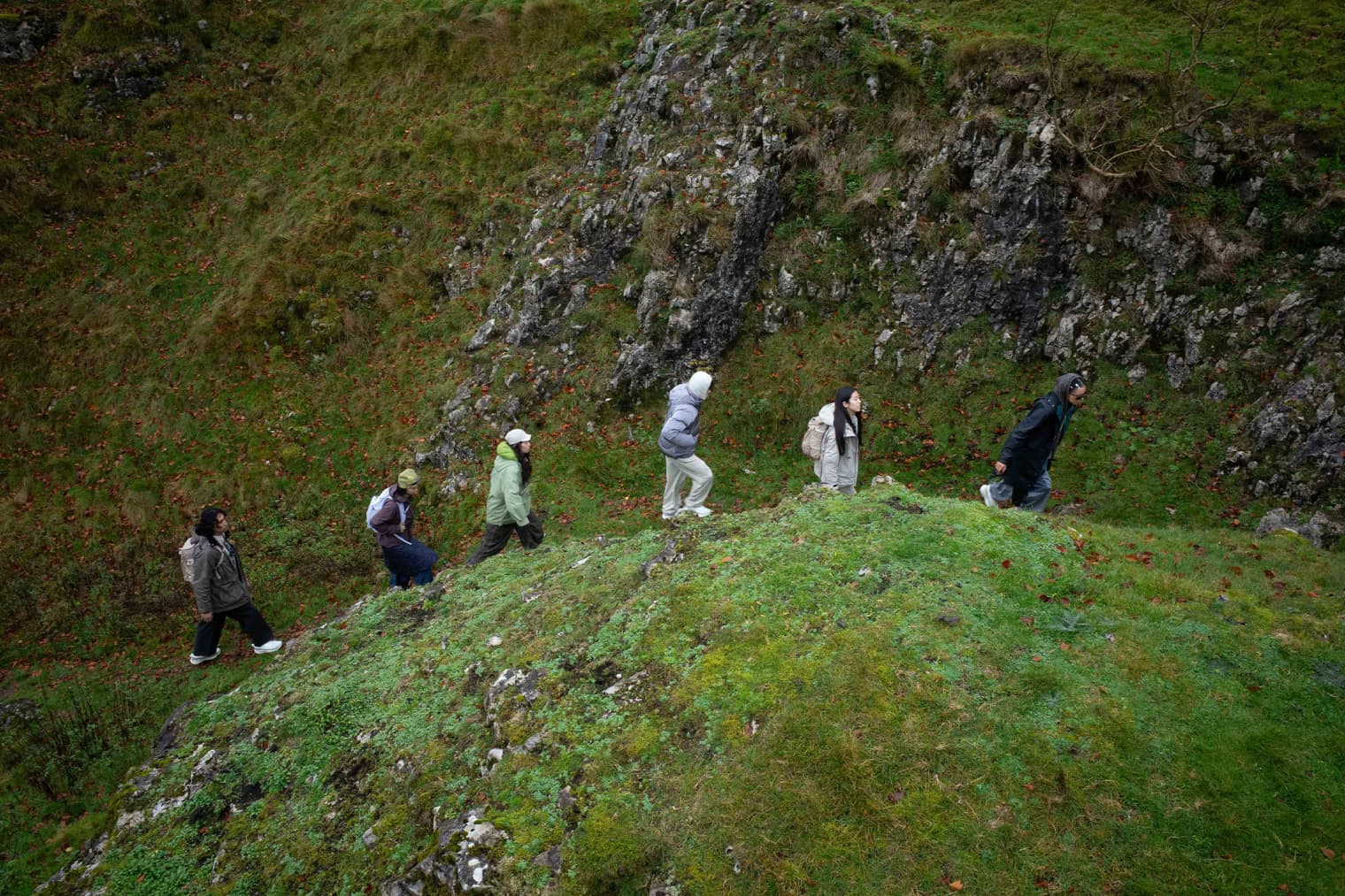
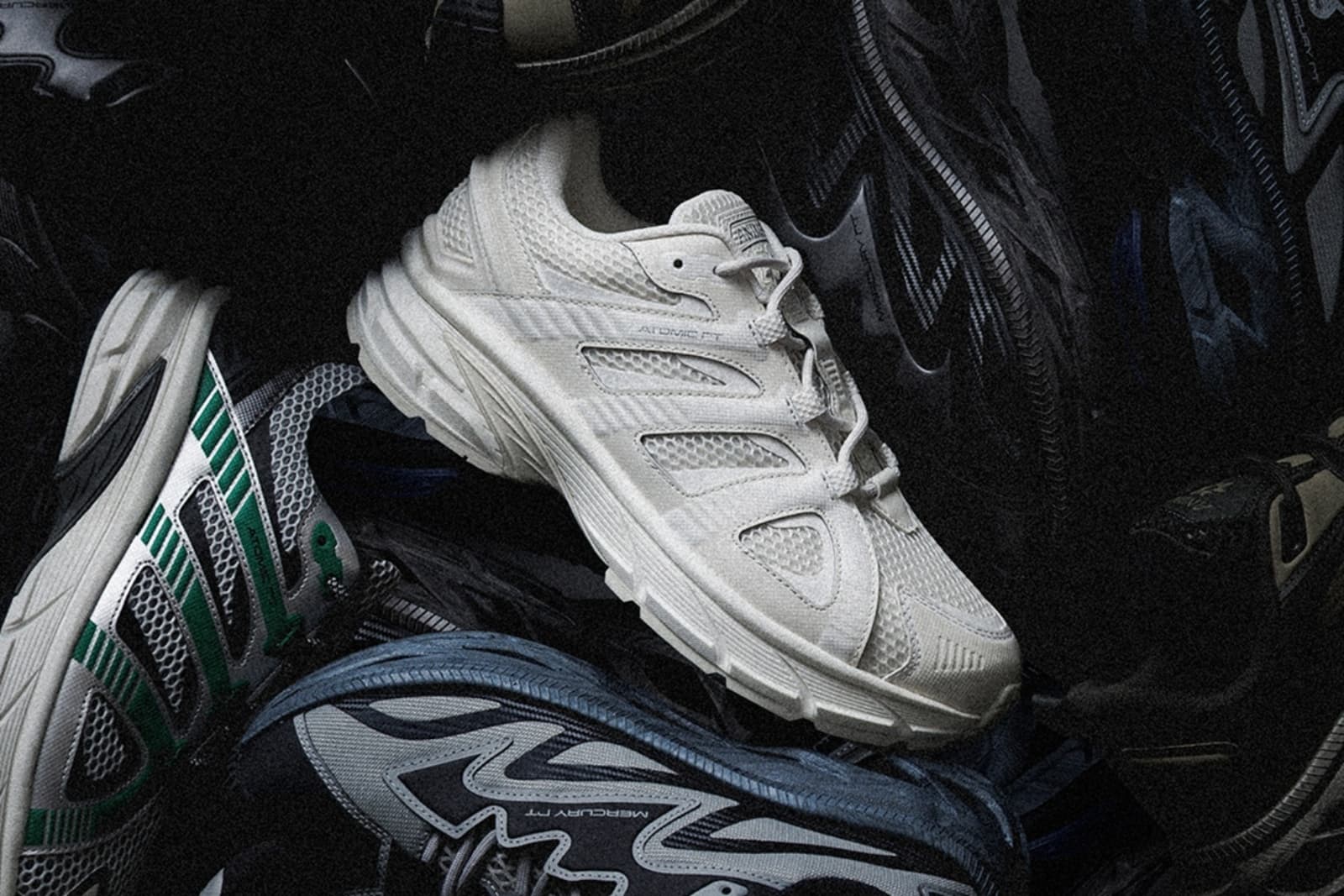
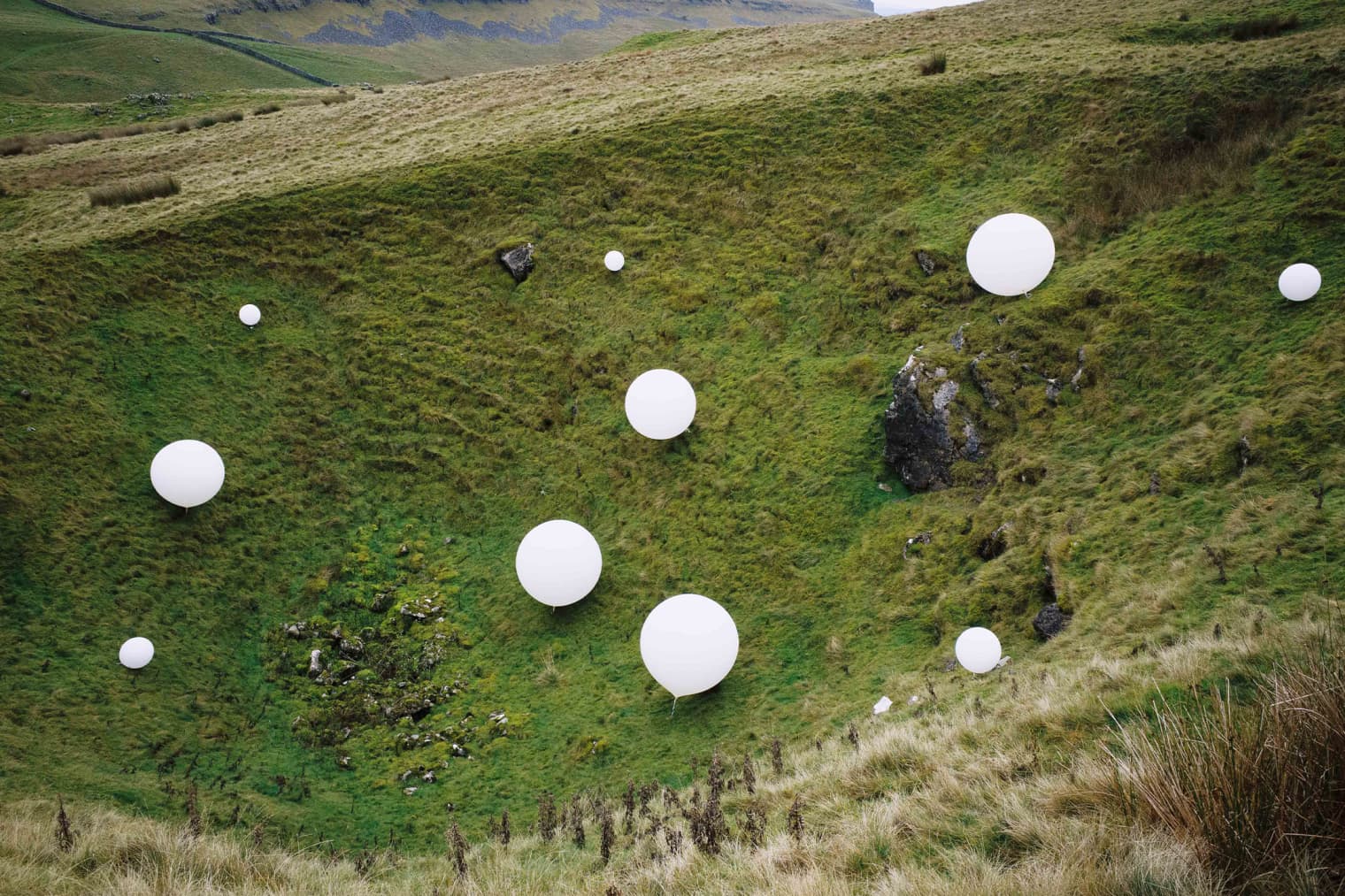
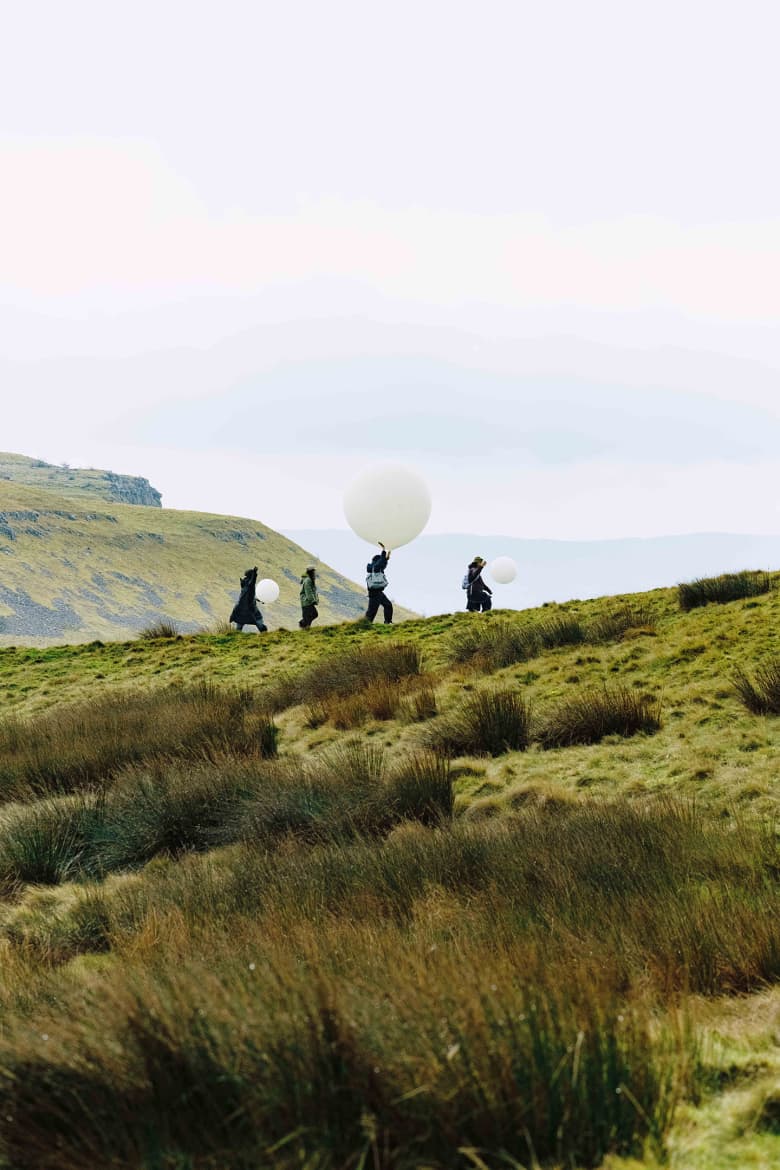
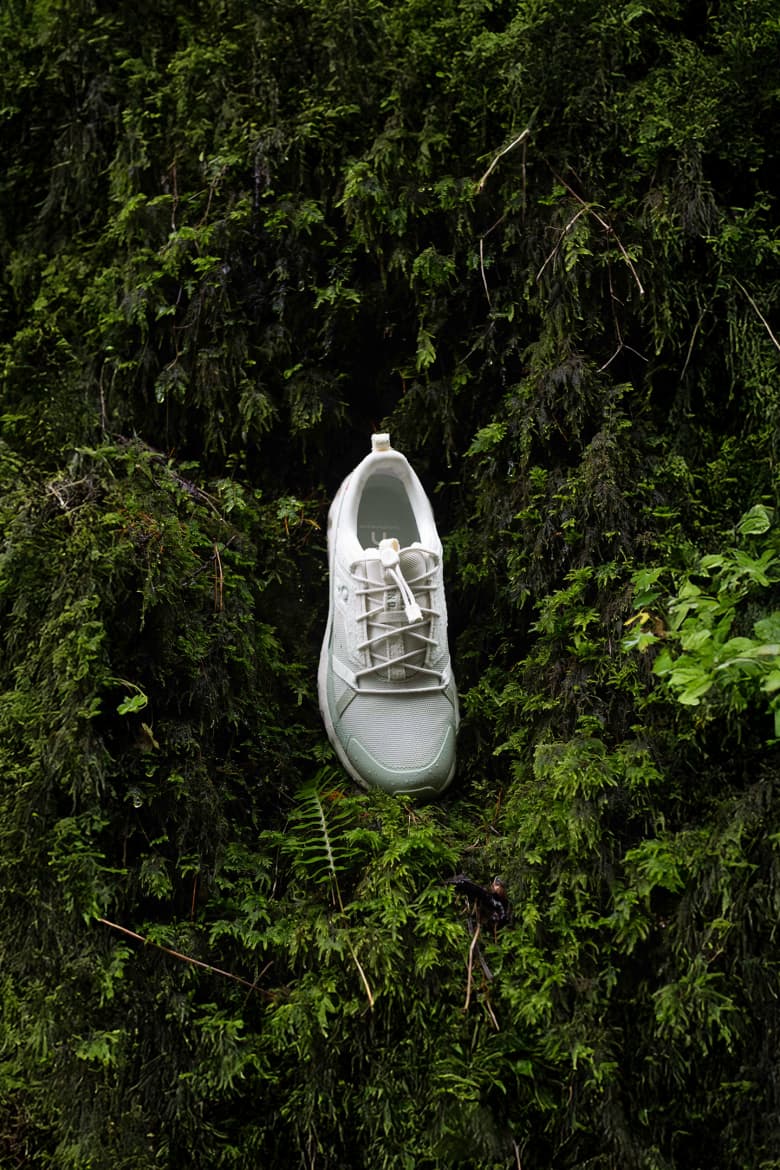
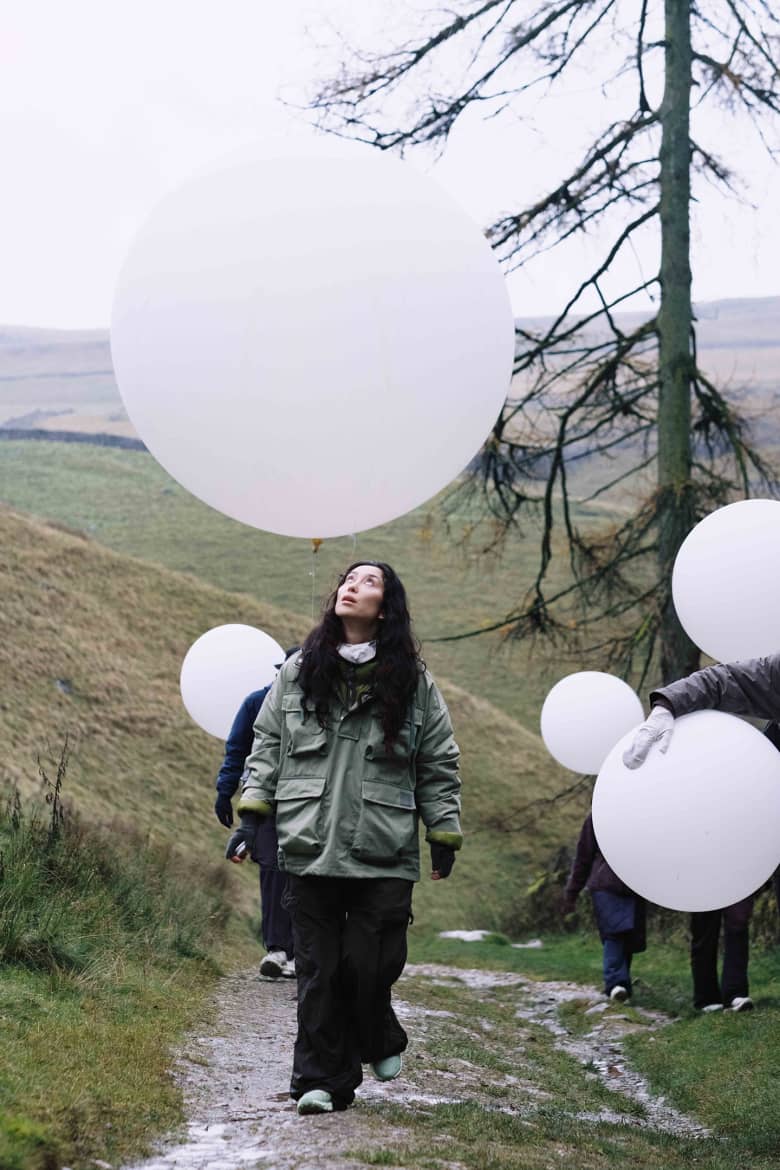
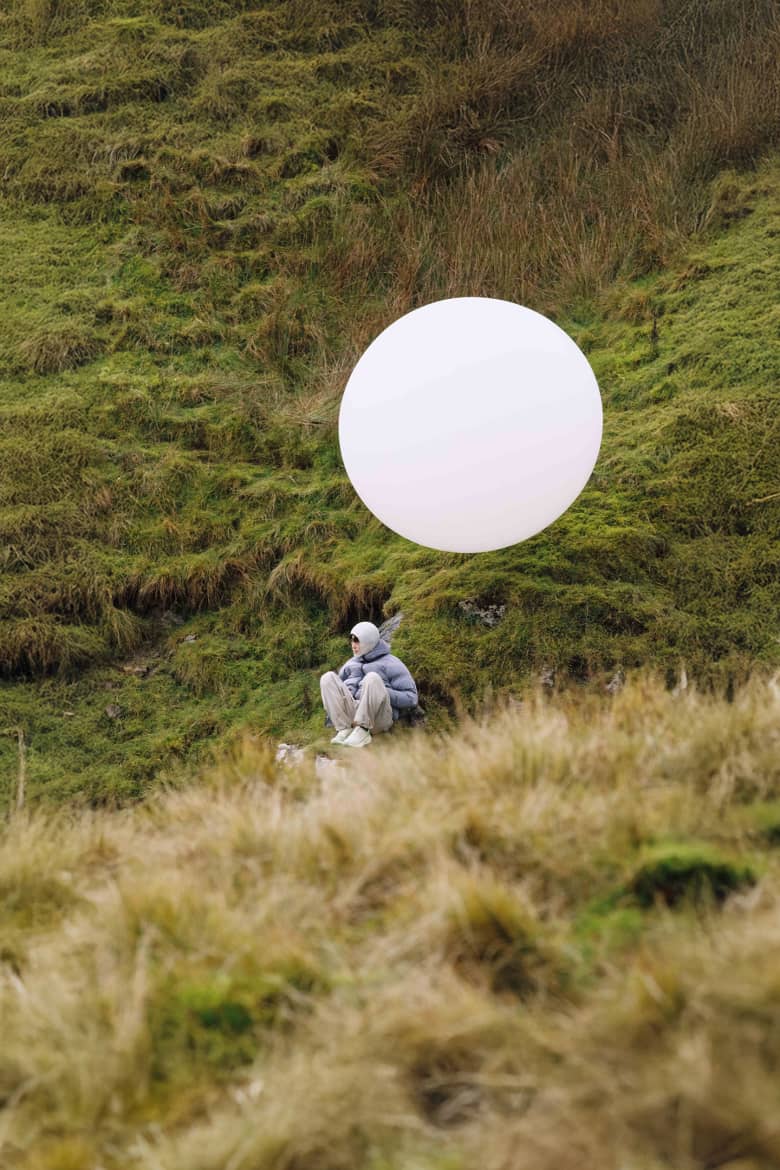
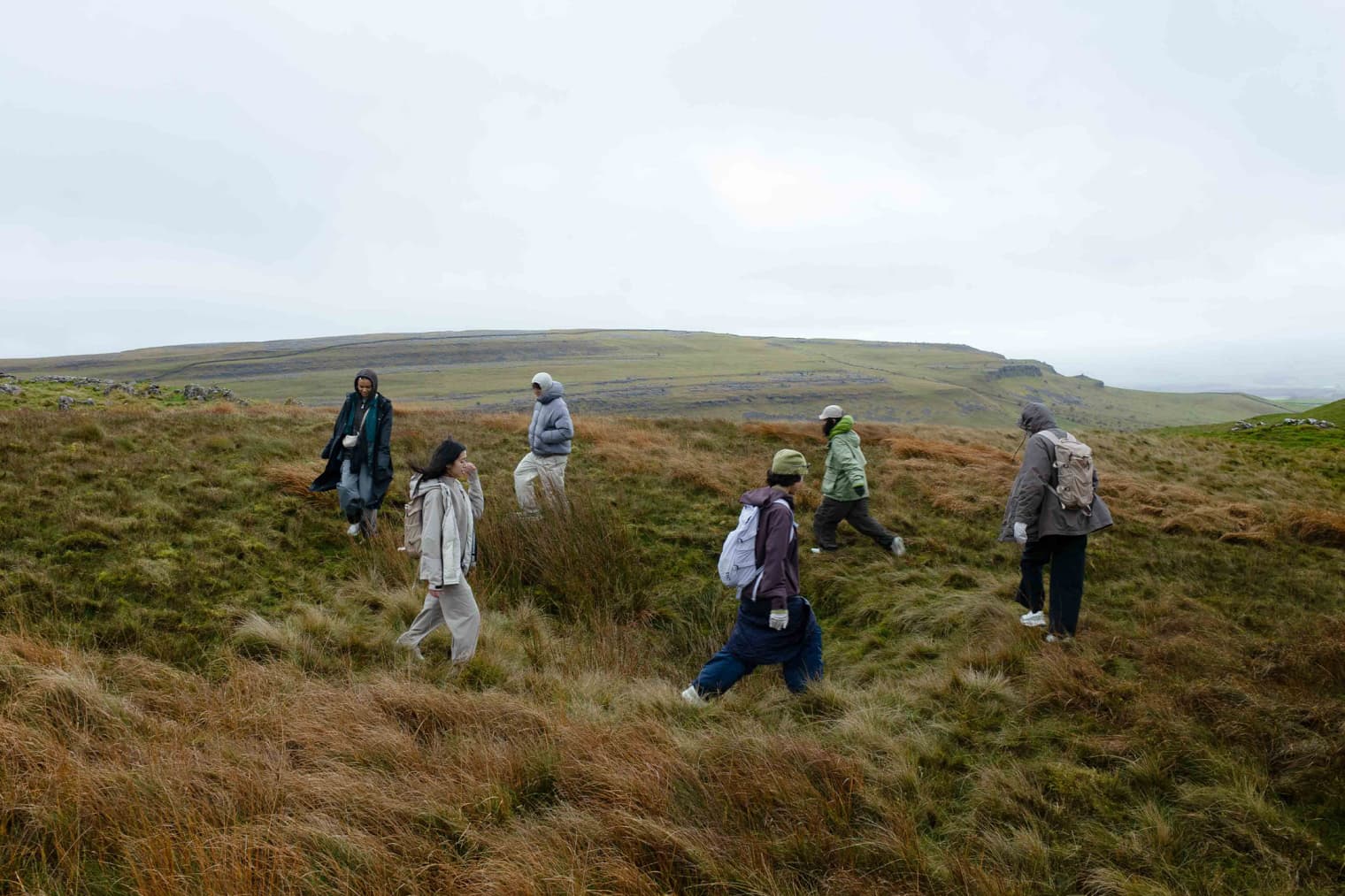
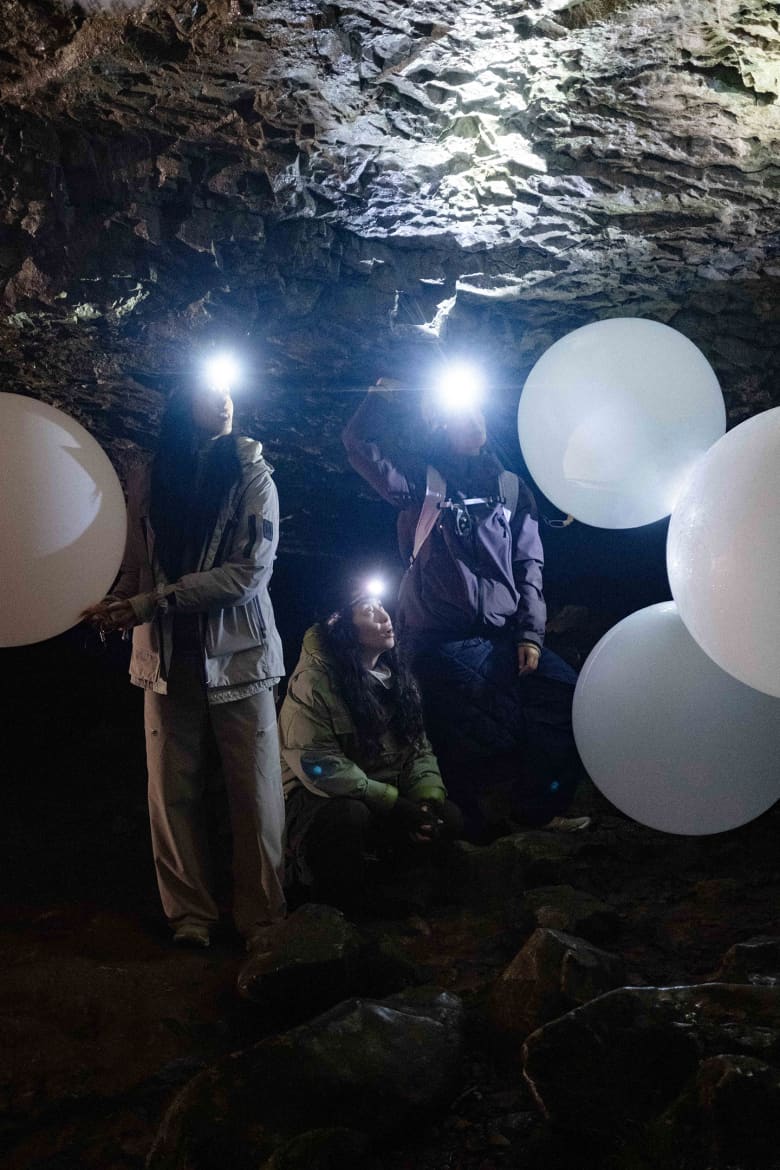
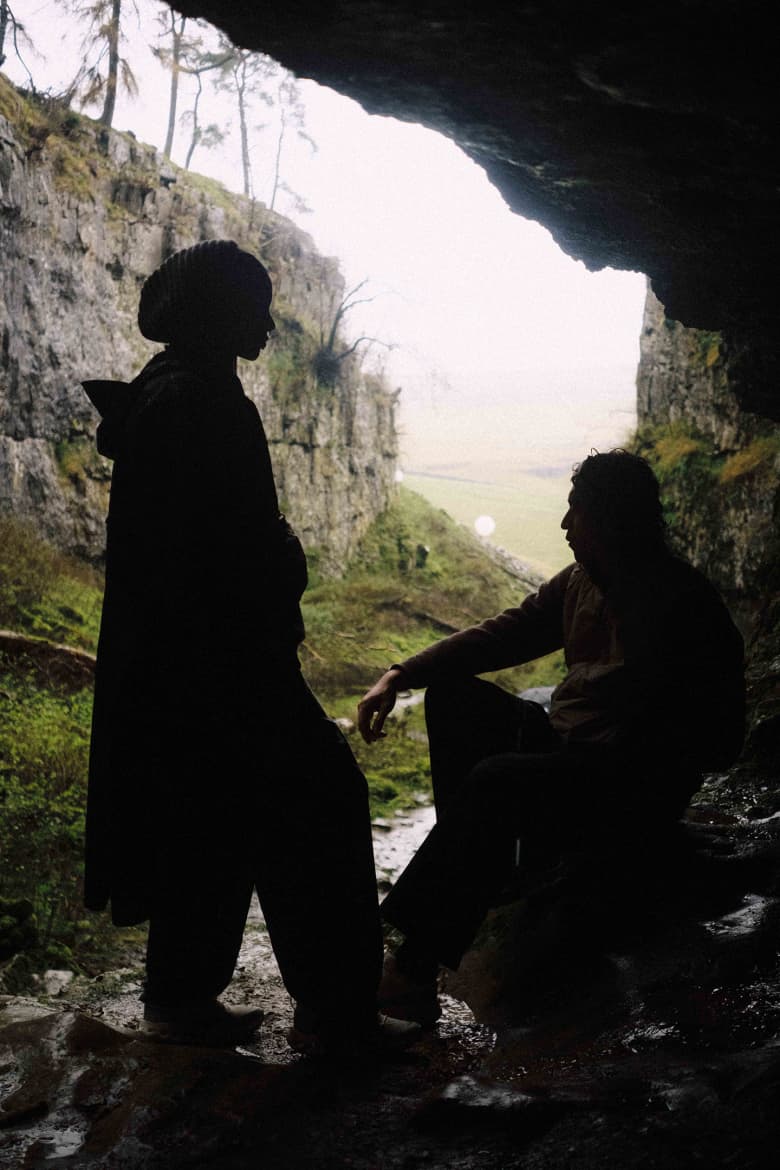
In honour of the release of the END. x On Cloudhorizon hiking shoe, the two brands collaborated with Copenhagen and London-based duo strl_ to commission a bespoke piece that straddles a walking-based practice with land art and architecture. Established by Shō Alexander Murayama and Samuel Michael Collins, strl_’s work looks to recontextualise the relationship between the landscape, human intervention and the way in which that reflects back on the environment. Creating their work Weightless Traces in the Yorkshire Dales with a group of hikers, the performative walking project and ephemeral survey of the Dales saw the SSSI (A Site of Special Scientific Interest) examined from a wholly new perspective. Tracking its unique geology and geography, the environment was documented as its picturesque and somewhat otherworldly landscape was punctuated with airborne flotations – with the journey undertaken amplifying the relationship between the human and environment through collective movement.
Redefining our connection to the natural world, the terrain of the land and our affinity for exploration, the expedition captured a specific moment in time where the area was changed, before returning to its original form. Sitting down with Shō and Samuel, we discussed the creative project with END. and On, their approach to their practice and the experience of creating land art in an area of immense beauty.
Working collaboratively as strl_, how did you end up meeting one another and what compelled your decision to create work as a duo?
Samuel Michael Collins: We first met studying architecture in Sheffield, and years later reconnected by chance on a small, theory-driven architecture course in Copenhagen. During a week of fieldwork sailing around Danish islands, we both became fascinated by the unique landscape of Ærø. Wanting to turn our research into something practical, and inspired by Lucius Burckhardt’s idea of “strollology,” we returned to the island, set up an informal residency with the local maritime museum, and began wandering, recording, and reflecting on the area—focusing on an abandoned windmill-powered Archimedes screw at Vitsø. Those explorations evolved into a public audio-guide walk with maps and signposts, which we opened that summer. Seeing locals engage with familiar places in new ways made us realise we were onto something, and that experience ultimately sparked our collaboration as a duo.
Your work sits at the intersection of land art and architecture – how do these two different practices interrelate?
Shō Alexander Murayama: For us the study of architecture has always been a means of better understanding our built/non-built environment, a critical-thinking tool for understanding ‘place’ you could say. Land-art, in its original construct, was about moving away from the white-cube into the landscape, it is inherently about context, it is always about place. Land-art could be described as a more immediate, often ephemeral response, but I think the subject matter is often very similar to certain architectural thought.
SMC: The way we see our practice has evolved over time as we explore new spaces. In a way land-art as a movement is a reference point.
Land or Landscape is the foundation. The interrelation between the subjects of art and architecture for which we are equally interested in is the landscape. Everything comes from and back to the landscape. It’s what facilitates all culture. Walking for us, is a means of engaging all three.
Based in Copenhagen and London respectively, how does your creative partnership operate?
SMC: Online and in person. It's strange to think our collaboration wouldn’t have been possible thirty years ago. We can be in two places at once, building ideas and then we come together when it is time to be on site and in ‘place’. As fantastic as the digital space is, it has clear limits. Time spent in it only heightens a sense of urgency to be outdoors in the landscape. That is where the real work happens.
SAM: Yeah, absolutely. I think our love for research-based approaches allows our work to consistently evolve whilst working remotely – but ultimately, we want to be reactive. There's always an eagerness and anticipation to coming together and engaging with the context firsthand.
As a creative practice that sits within the natural world, land-art works with its setting and incorporates it as part of the work. What are you looking for when deciding on a location for a new piece?
SAM: We’re often looking for stories. Layers of information to be unearthed. Whether it be geological, cultural, political – the landscape is a great preserver of information. There are many visually inspiring aspects to working in natural/human-made landscapes, but I think even a pile of dirt is rather interesting when you start to question where it's from, why it’s there, what's inside it…?
SMC: On a level, the landscape is the work (the subject and the object). Our intervention looks to add a layer to reframe the landscape and our relationship to it. At this stage in our practice, we are interested in places we haven’t yet explored or worked with to open up new dialogues.
Does the specific location then influence your installation on a more direct level?
SMC: We think about things spatially and atmospherically in relation to time and the human body. The phrase ‘in the middle of nowhere’ interests me because it is so often said and I don’t quite know what it means. Nowhere implies that there is somewhere which this place is not. It's often said about landscapes far from dense human settlements, which says a lot about our culture's focus. The more you look into a place the richer it becomes. Like Shō said, the landscape is a great preserver of information. Existing framing and relationships such as access, legislation, use and value all influence how you approach a site. In terms of actually being on site, other than the time of the year, nothing plays a more direct role than weather and light.
SAM: I think we feel that the type of work we are often trying to achieve relies heavily on adapting to location. Everything changes when you get on site, whether it be the shape of the physical topography or as Sam says, something as simple as the weather. Adaptation is key and also becomes a way of appreciating the magnitude of the landscape.
Described as a walking-based practice, how does the act of walking impact your sculptural land art installations?
SAM: At the beginning it was often something that was integral to the presented work, whether it be the piece itself or a thought about how one approaches the work. As our practice has developed, I think it’s become clear that the way we think about walking is not just in what's made visible at the end but it's fundamental to the way we carry out research and measure. Walking I think helps us give human scale to our environment. Additionally, I think all the best thoughts come whilst in transit…
SMC: Well said. With it being so fundamental to our practice, it feels like there is so much to explore in terms of how we engage with walking. Rooted in research and measure, it is also the way we experience our work. There is a brilliant artist called Hamish Fulton, who we really admire, who identifies as a walking artist. For him, the walk is the work. He thinks from a certain ecological perspective in terms of the weight of the work, in which he considers travel to be part of it. Walking doesn't have the same meaning in our work, but it is still fundamental to us.
What has inspired your project for On & END.?
SMC: We always set out to learn from the land. We want to continue to explore what we set out to do in our collaboration – explore the relationship between the ancient and modern, the esoteric and the scientific whilst trying to negate ideas of dualism in relation to nature and culture, human and the environment. We were excited at the idea of exploring the Yorkshire Landscape with a group on foot. We had initially planned to visit the Peak District and the Yorkshire Dales, but once we got to the Dales, there was so much to explore, it was really hard to leave. We went looking to be awe-struck, and that happened quite quickly.
SAM: Yes, the idea of working with the landscape itself as a sculptural aspect has been key to this project. From the start, with or without physical intervention, we had ambitions to creatively reframe a unique part off the British rural landscape, through use of movement, film and image.
How did the landscape of the Yorkshire Dales inform and influence the outcome of the performative walking piece?
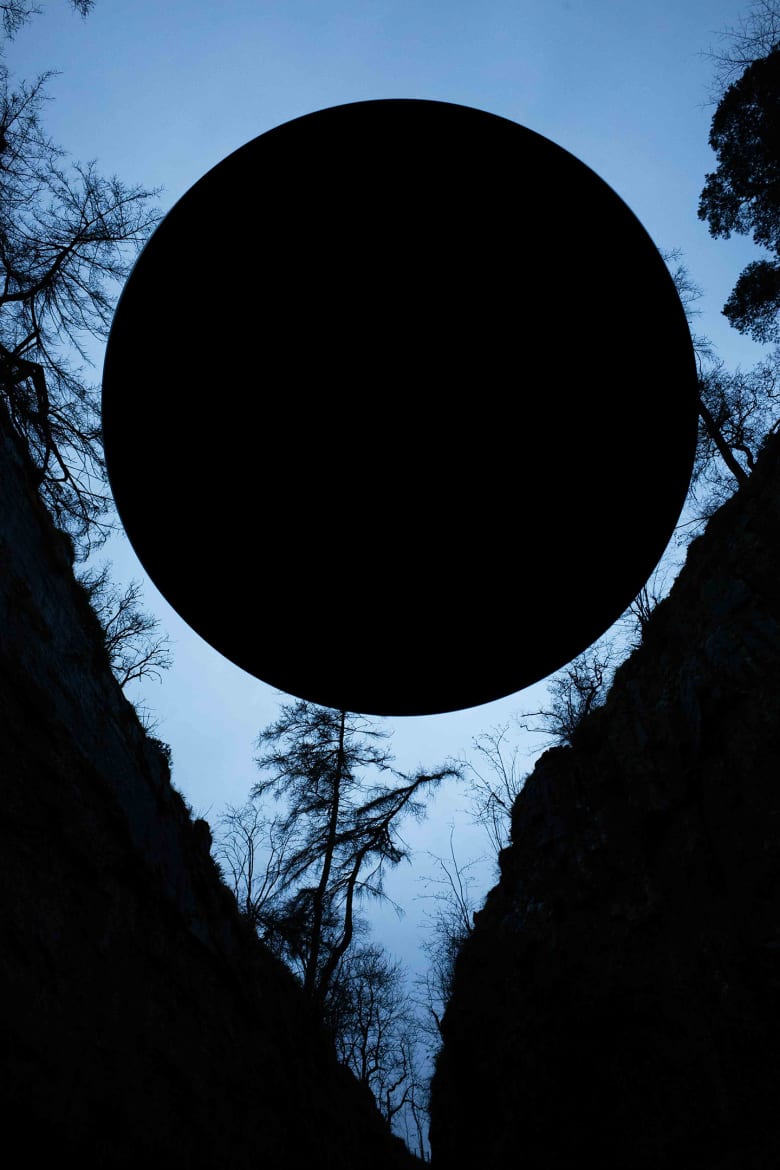
SAM: To us, the Yorkshire Dales holds an interesting notion of the picturesque landscape but also an otherworldly landscape. The natural phenomena of the ‘shakeholes’ became a strong encapsulation of this to us, something curiously beautiful that was familiar and unfamiliar at the same time.
SMC: Nothing we do can compete with the immense nature of this landscape.
Working with a wider team in the creation of this piece, how has your experience been in guiding newcomers to the world of land art and through the walking-as-practice creative process?
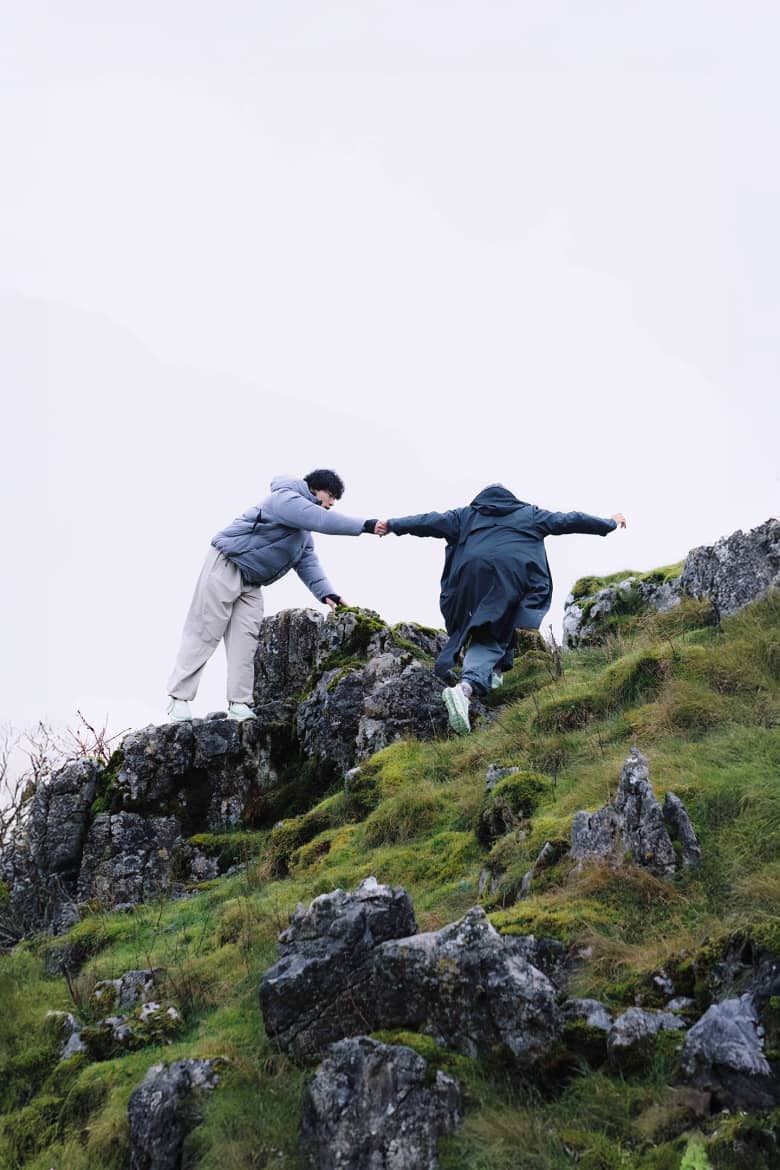
SMC: We ended up learning so much from the process. Working with On and END. on this collaboration has reframed a lot and on reflection, given us a lot of ideas we would like to explore further. Thanks to the work and sensitivity of On and END., more than anything, the people became sculptures in the landscape. It’s something we have thought about but not had the opportunity to really explore. In a way, it de-materialises sculpture, putting the emphasis on the body – the movement and composition of the body and the collective body. The movement between the informal and the formation is a really interesting transition. Working with a group who were so comfortable in their own skin, they embodied a lightness and a playfulness that created a very joyful relation to the landscape that at times was truly beautiful and great to be a part of. Working with a team of expert photographers and videographers was also exciting. A lot of what we do is represented and archived through these mediums.
SAM: There's always so much to the process and engagement of working in the landscape and with people that I think we often ourselves miss. In this regard, it’s really interesting having different eyes on different parts of the creative process as it unfolds. It also creates an interesting feedback loop on site – being able to see it unfold live through multiple angles/multiple mediums. At the end of the day, it's always a privilege to work with people who are passionate about what they do and want to contribute to the storytelling about our work and the wider landscape.