COMMUNITY IS THE KEY: BANDIT RUNNING
12 August 2025Welcoming the NYC-based brand to END. for the first time, we caught up with the contemporary running brand's Chief Design Officer Ardith Singh to discuss all things Bandit.
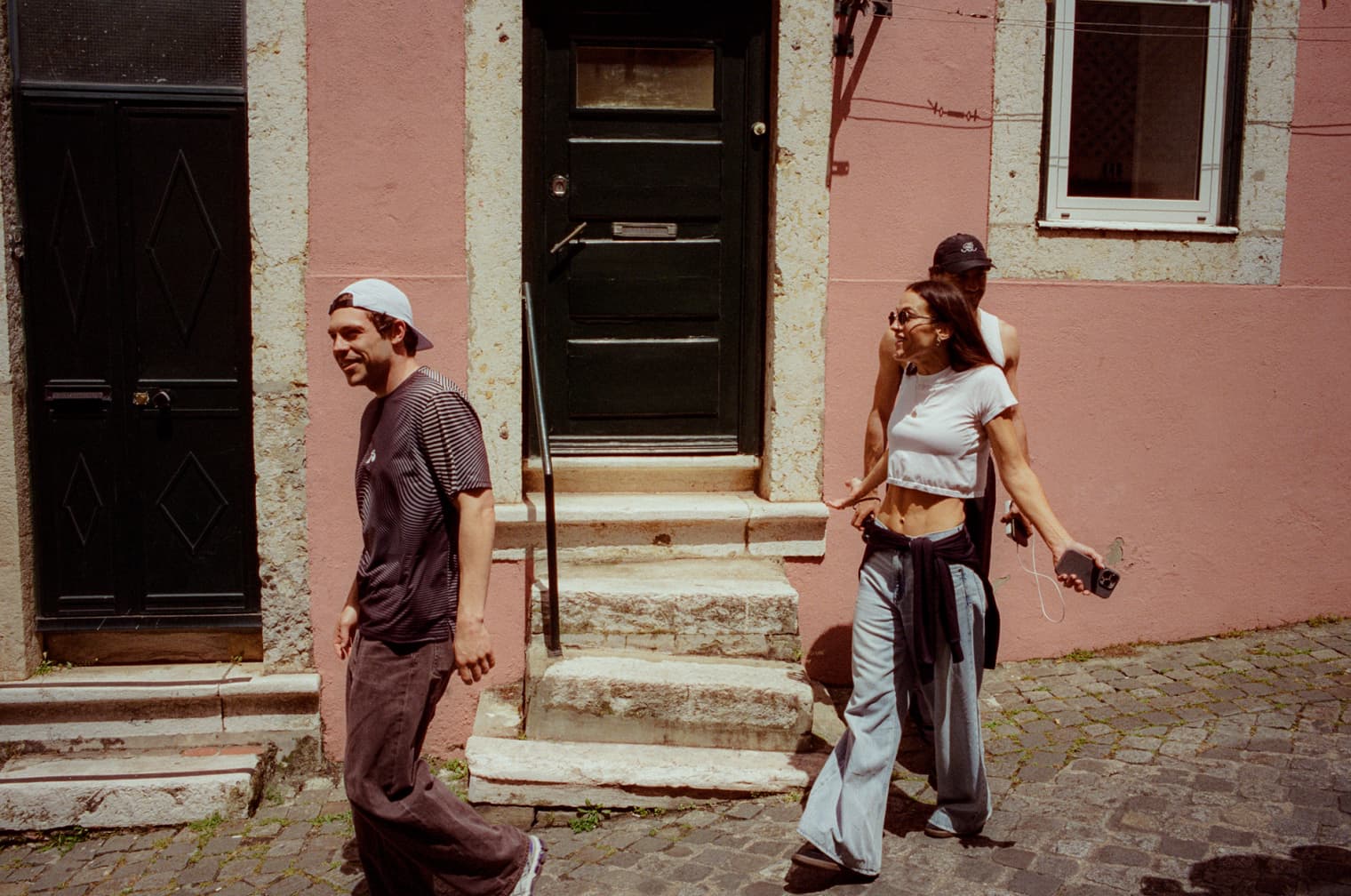
When running is all the rage, how do you set yourself apart in a competitive market? With every brand vying for pole position and a podium finish, in order to stand out from the crowd, innovation is key. Born in New York City and operating from Brooklyn’s Greenpoint, Bandit Running has been making waves in the city for their authentic connection to grassroots running culture and a true dedication to product innovation.
Founded by Chief Design Officer Ardith Singh with brothers Nick West and Tim West back in 2020, Bandit’s outlook has seen the brand pull from the world of contemporary fashion while simultaneously centring around progressive product design that places comfort, utility and user experience front and centre. Cultivating a genuine community of running enthusiasts, the brand has gone from strength to strength over the course of its half-decade of operations, successfully championing the New York running scene and providing performance apparel that closes the divide between feeling good and looking good. At its core, community is the driving force behind Bandit, and it’s clear that it always will be.
Catching up with Ardith via video call ahead of the launch of Bandit Running at END., we dove into the world of NYC running, Ardith’s design process and how community guides everything that Bandit does.

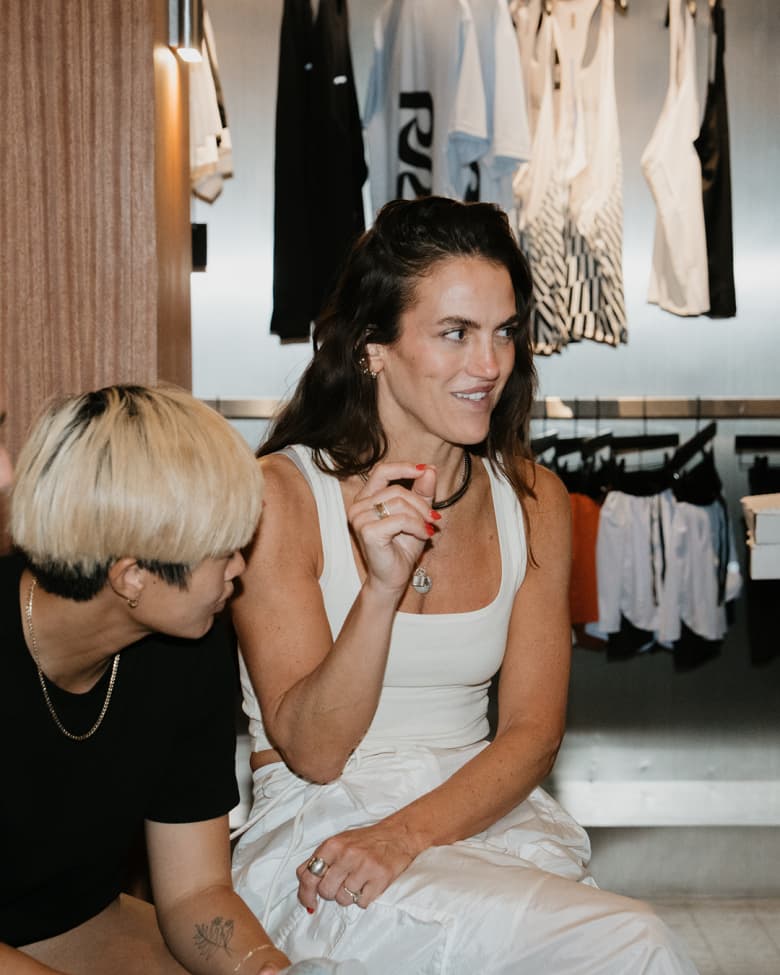
How did your love of running first materialise and what kickstarted your desire to create your own running product?
Running has always been a part of my life. I was always the fast kid growing up. My dad hurdled in college, and I started hurdling in middle school and all the way through college as well. A little different than the majority of our community, who are more marathon and half marathon based. I always loved running, so I was really excited to get back to it. I was in studio fitness, creating that type of product, before I met Tim (West, co-founder of Bandit Running). Honestly, when I met him and really connected on what he thought Bandit could be, it really just felt like all of those pieces in my life were leading up to this and really getting back to creating product to support people really chasing these big goals. It felt like the perfect opportunity at the right time in my career.
How did you end up meeting Tim and getting set on that journey?
We had some mutual friends that connected us when he was thinking about Bandit as not just a sock brand, but as a head-to-toe performance apparel brand. He obviously needed a designer that could help him bring that to fruition, so we met for a drink to kind of start talking about it, and drinks turned into dinner, which turned into the restaurant closing. I knew that there was something special we could build together. After that, I met his brother, Nick, who is our CEO and our third co-founder. I always joke that I was like, “oh, of course the brother's not going to be great. You can't have two great guys in one family”, you know. But I met Nick, and he was super smart, really curious. So, it just felt like the right team to bring this brand Bandit to life.
What was your design background prior to getting on board with Bandit?
I was at a luxury activewear company called BANDIER; I was their founding designer. We really catered to high-end studio fitness for powerful women. If you think about the Tracy Andersons of the world, the Amanda Kloots, Akin’s Aarmy, all those sorts of people. That was New York in, I don't know, the 20-teens. Studio fitness was booming, and women were really demanding that their product not only performed but looked good to and from the gym. It was the beginning of that sort of thought process where you're not really willing to sacrifice your personal style for the gym or for a class. You're going to be dropping your kids off before, going to brunch after, or maybe throwing on a jacket and going to drinks. Your clothes really had to move along with you, and that really aligned with my design ethos of not sacrificing performance for style. I think that's something really critical. So, when Tim and I started talking about Bandit and how the running space was really one of the last spaces in performance to recognize that, when it's been happening in women's fitness for a long time, but not in running. The running space was almost forcing you to present or look a certain way if you needed that level of performance. You had to hang up your personal style in order to get what you needed to run a marathon, have the storage you needed for fuel and have fabric that wasn't chafing. So having Bandit has really given us an opportunity to provide performance for the running community. That's table stakes, that has to happen but looking at it through the lens of fashion. My background really lent itself to what we were trying to build with Bandit.
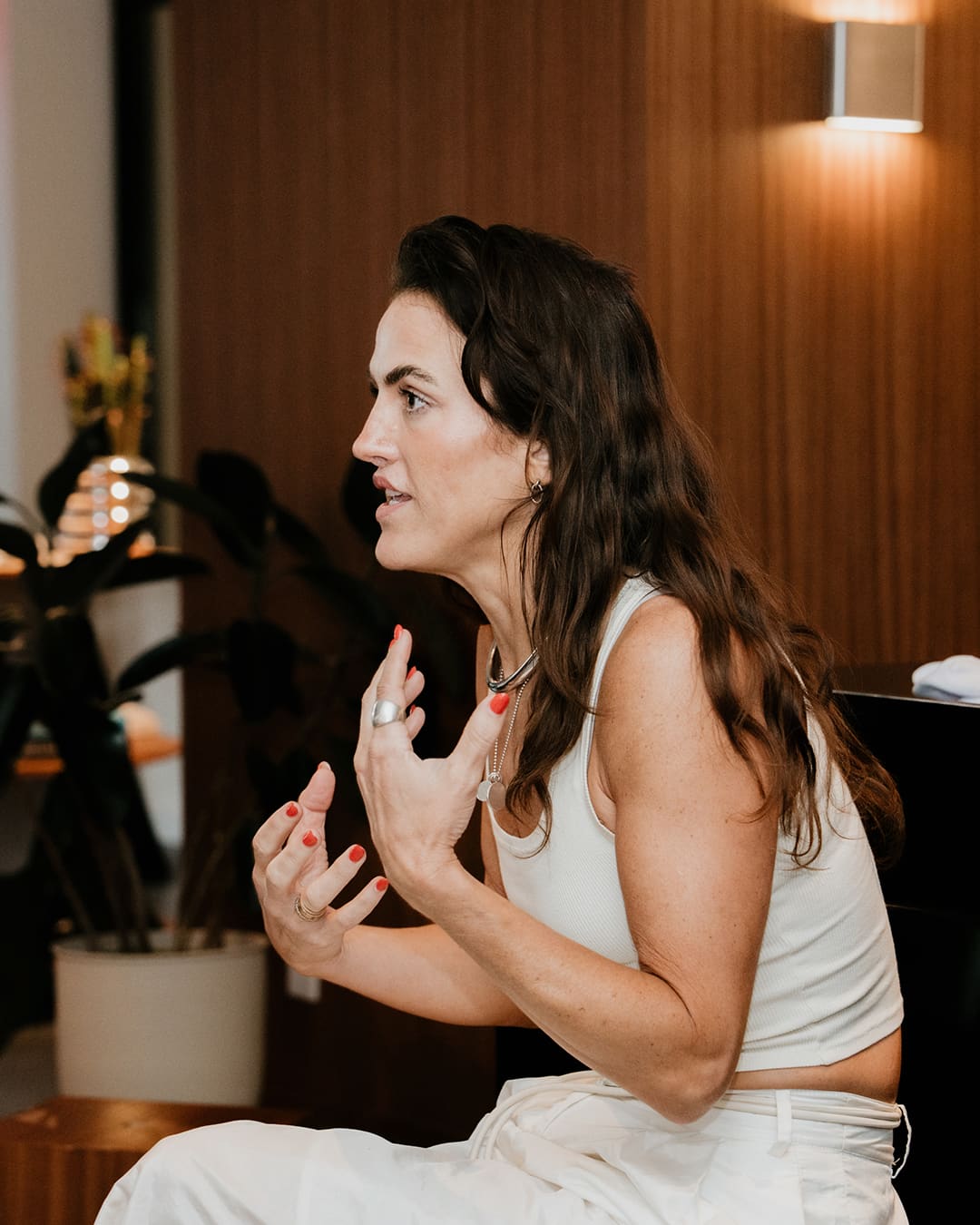
"It's really thinking about fabric construction, looking through the lens of fashion and approaching performance in that way."
Why do you think running was slow to catch up with the approach that combines performance and aesthetics?
I think there are certain things that runners have got to have that are non-negotiable. If I think about studio fitness, you don't necessarily need a ton of storage for fuel. You have to look good in a packed class in front of a mirror. Sheerness was a big thing for us at BANDIER because you're bending over right in front of somebody else, so some things are more top of mind. But all of these other design solutions weren't really necessary. I think that something that can be a roadblock for people when they're designing or thinking about product in the running space is all these actual needs that runners require. It's an 18-mile run on a Saturday that's 90 degrees. It's not a 45-minute studio fitness class. So, there are these real needs that are required. For a long time, people were designing just for that and sort of forgetting that next step of bringing style in along with function. It's harder. When I want to do this beautiful design line, but the pocketing system I've created sort of interrupts that, how do I design with intention and think about how the pocketing system can be designed within the design lines and almost melt away in the background? That's a bigger challenge. That's taking things one, two, three steps further.
How do you then marry these two things in a coherent way?
I really think about the non-negotiables first. For us, it starts with the raw material. I think about a fabric that tested well in our community. I love the way it looked. I love the way it felt. There was something bothering me about the shine of it, so I re-engineered the fabric to have black spandex in it. It made the fabric a little more matte. If you think about bending over and sometimes you see sheen, it's the spandex, and sometimes that can look a little inexpensive when the fabric is supposed to be more luxe, so turning it black really sort of made the whole thing elevated. And whether or not our community realizes that we do that, there's that nuance that they know something's different. It's things like that. It's really thinking about the details. It's about how on our men's half tight, which is one of our best-selling products, we have seven pockets, but if you were to look at it right now, you might be able to pick out two pockets, maybe three. The way we constructed it and the way we designed it, the pockets really sit into the yoke. And instead of doing a two-needle topstitch, we turned it back with bonding, so there's no topstitching. The pocketing is very quiet. It's there when you need it, but it really melts away when you don't need it. So, you're not ever looking overly techy.
It's really thinking about fabric construction, looking through the lens of fashion and approaching performance in that way. Instead of doing maybe a more commodity construction of something that you might see other active brands or running brands use, we think about it in a way that's considered through the lens of style. It just allows also for versatility. I never want someone to think they can't wear my half tights on a shakeout run versus a marathon. You don't ever want to show up looking overly techie or like you're trying too hard, and I think the way we design really allows for that versatility and allows these products to really take you wherever you are in that running space, in your training block, whether it's a shakeout or whether it's race day, the product can really take you through all those steps and be appropriate showing up that way.
With any performance-based brand, the technology is constantly progressing and changing. How do you go about researching, testing and refining your product and incorporating new tech?
We have competitors that have teams as big as our entire team, not just the design team, working solely on R&D. And what's interesting is that we're able to meet them with the small and mighty team we have, I think, because we're very, very curious. We're always asking questions. We're always connecting with both the mill side, so the fabric side, all the way down to the yarn level and the factory side. Reaching out to new factories, understanding what technologies they have, how things are changing from bonding to ultrasonic welding and how that can be better for the runner, better for the end product.
So really staying curious and just never settling. I think there are things that are constantly on my bucket list to figure out, and that's just constant research on the internet, in person at industry shows, and really, like with everything else, those relationships that you have with your external partners. So, really being connected with our mill base and saying, “what's new? What's happening? My community is having this problem. I'm seeing this. How can we better serve them, is there a yarn that shows sweat less? Can we do a finer denier of spandex? Like, what can we do to create a better raw material?” And then on the factory side, it's really from a construction standpoint, like, what factories are bringing newness to the table in terms of construction? What else is there besides your run-of-the-mill flat lock? What if I wanted to do a really beautiful, curved seam? Well, bonding tape is straight. So, we have a factory that we are partnering with and producing for the first time this fall that has a new technology that really allows us to do a clean, bonded look without the use of tape. It’s another type of technology. So, it's about constantly asking questions, never settling, never resting on your laurels and just pushing everyone internally and externally for what's new.
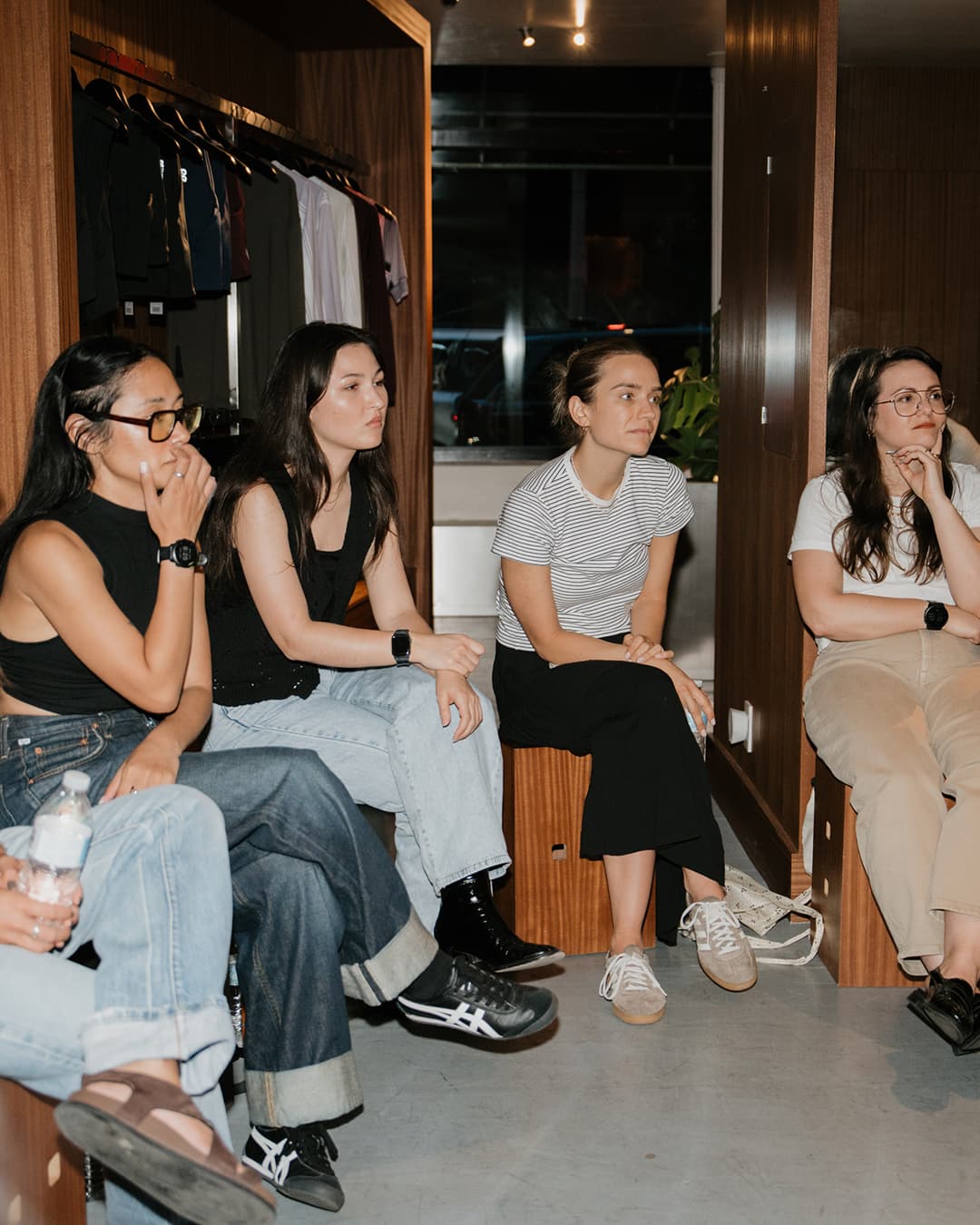
"It's our opportunity to talk to people, not just in New York City, but across the globe about product, what they're loving, what they're not loving, what they need that we're not giving them."
Defined as a “community-driven running brand”, what does this mean for Bandit? How has the running community in Brooklyn influenced Bandit Running?
I think brands are using the word community a lot, so something I always like to remind everybody of is when we first came to this office, built our desks, you know, from Ikea by ourselves, before I even picked up a pencil to sketch, we had the New York City community in. We did men and women separately, and we had a huge roundtable about what was out there, what was not out there, what wasn't serving them, what they needed. Those initial conversations are really what started everything for us. It's my north star. It's something that I've continued after every single drop. We often have community roundtables in for feedback asking them “What did you love about the summer collection? What was missing for you? What do you want more of? What were the issues? Where were the holes?” It's really making sure we put our ego to the side and listen to what our community has to say. It's about showing up at every pop-up, working the floor. Everyone at our HQ comes to every pop-up. We talk to the community.
It's our opportunity to talk to people, not just in New York City, but across the globe about product, what they're loving, what they're not loving, what they need that we're not giving them. It's about having my Instagram DMs open to people with feedback constantly. It's about being online all the time and understanding what's happening in the comment section, in the Reddit community, and just being open to feedback, and then filtering it through the lens of how we can act on this in a way that makes sense. What are the themes that are really rising to the top that we want to address? The community has been so generous with their time, specifically the New York City-run community. I can put up a story on Instagram about needing a wear tester, and I'll have hundreds of responses in minutes. Everyone's so willing to build this with us, so it really feels like we're doing it hand-in-hand.
Some of my best products and ideas have come from the running community in terms of pocketing systems, how many pockets they need, where they need them, where the bounce is driving them crazy, how I can fix that. Waterproof lined phone pockets are something we introduced for the first time in 2025 in our spring collection. That came from feedback. Nuances that maybe the normal consumer wouldn't notice, like adjusting the gusset shape to reduce any sort of opportunity for chafing, things like that. It all comes from being connected with the community and having a relationship with them that allows for the candor of, “hey, these chafed me a little bit. The seam doesn't feel like it's in the right place, or this thread feels a little stiff.” Because people are open and we have that reciprocal relationship, I have the opportunity to take that feedback and act on it. I think that if we didn't foster real relationships in real community, I wouldn't have that. So, I always like to think we start with community and we're really building this with them.
It's ultimately being built for them effectively so that they're able to get the best possible products to make their running the most enjoyable. My ideal scenario is someone sees Bandit either in store or on Instagram, loves the way it looks, orders it, tries it on, and then never thinks about it again. Once you put on a pair of my half tights, I never want you to have to think about them again. I want you to forget they're there. If that happens, I'm doing my job right.
So, getting those little tidbits from the community is so valuable. I feel like I have hundreds of thousands of people on our team. I feel like every Bandit member is on my team because they're so generous with their feedback and their time, and when I say generous, I don't mean it's all complimentary. I have plenty of feedback that is constructive criticism, and I think that's what is making our product better every single delivery; we're able to iterate and really meet the runner's needs.And then on top of that, maybe give them something unexpected that they didn't even know they needed or wanted in the first place. Right? It's that cherry on top that we can give them beyond what their actual needs are.
Proudly New York-based, how has the city shaped Bandit over the past five years?
I think it was odd that New York didn't have a running brand, right? It's the global hub of running. Obviously, Portland has theirs. Boston has theirs. But there was really nothing in New York City, and Bandit feels so undeniably New York City because New Yorkers live fast paced, layered lives. You're not really able to compartmentalize. Usually, once you go out, you're out. So, you really need whatever you have to work with you and you need your clothes to move with you. That's why I think about how our products are technical and they perform, but they have a certain attitude when styled a certain way. You're really able to use them as a canvas for personal style. It just doesn't look so techie, like you’re going out for this really intense run. You can still look cool in Bandit. And I think New Yorkers would never sacrifice style for function - that's a part of our DNA, there’s ultimately nothing more New York than that.
Bandit has a very clear visual code that sets it apart and positions it as a forward-thinking performance brand. What guides the design language of Bandit?
We really don't look side to side; we don't look at our competitors. I actually don't think I've ever had a runner on my mood board. I really love to think about other disciplines of design, like architecture, artists, sculptors, painters, textile designers. Coming from that place really creates a very different and nuanced end result, both in terms of silhouette and design lines, but it's also about starting from a different place. For summer, I was inspired by a trip I took to Portugal, and I remember coming back from the trip at the end of May, I went Memorial Day weekend, and I came back, and I was like, “summer is done. Summer is in my head, it's done!” Just being really inspired by the color, the way the city looked like it was candlelit. I just absolutely fell in love with Lisbon and the surrounding little beach towns and the tile work. Not in a way where typically maybe a designer might go to Lisbon and be inspired by the painted tiles - they're so beautiful, don't get me wrong - but I was more interested in this sort of architectural way the tiles were used, or the stone mosaics were used for the sidewalks and how the shapes moved from the city. Then when you got further out to the beach, they became these undulating curves, really thinking about it through a different lens. At the end of the day, it just creates a different end result when you're not thinking solely about being inspired by running. I'll be inspired by maybe Helen Frankenthaler's blot bleed technique, her artwork for spring. The fields of color feel really fresh. I love the nuances of the color in these sort of big swaths, and on the other side of my brain, I’m thinking that it's spring, I have to get in the runner's mindset, what are we thinking? We're coming out of winter, we're coming out of some sort of cocoon, we're rebuilding, we're building into the spring marathons. And then I marry those two things together, really, the runner's mindset for the season, and then the discipline or the art that I'm inspired by. Drawing those unique connections is what brings a more nuanced outcome.