NAVINDER NANGLA PRESENTS "LONDONE FASSION WEAK"
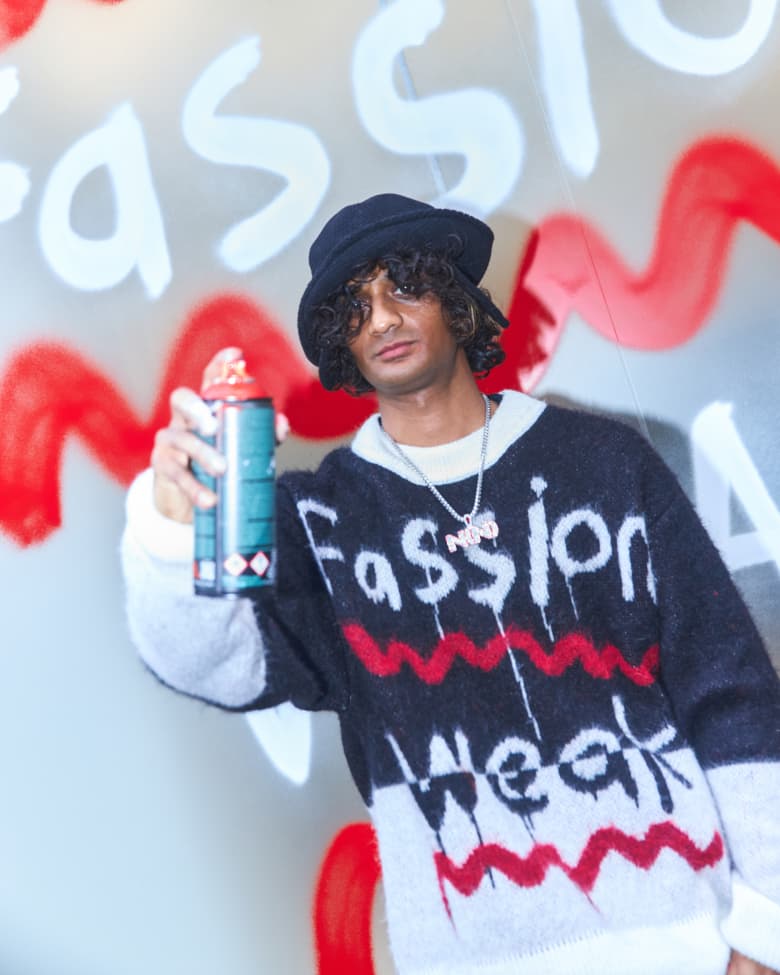
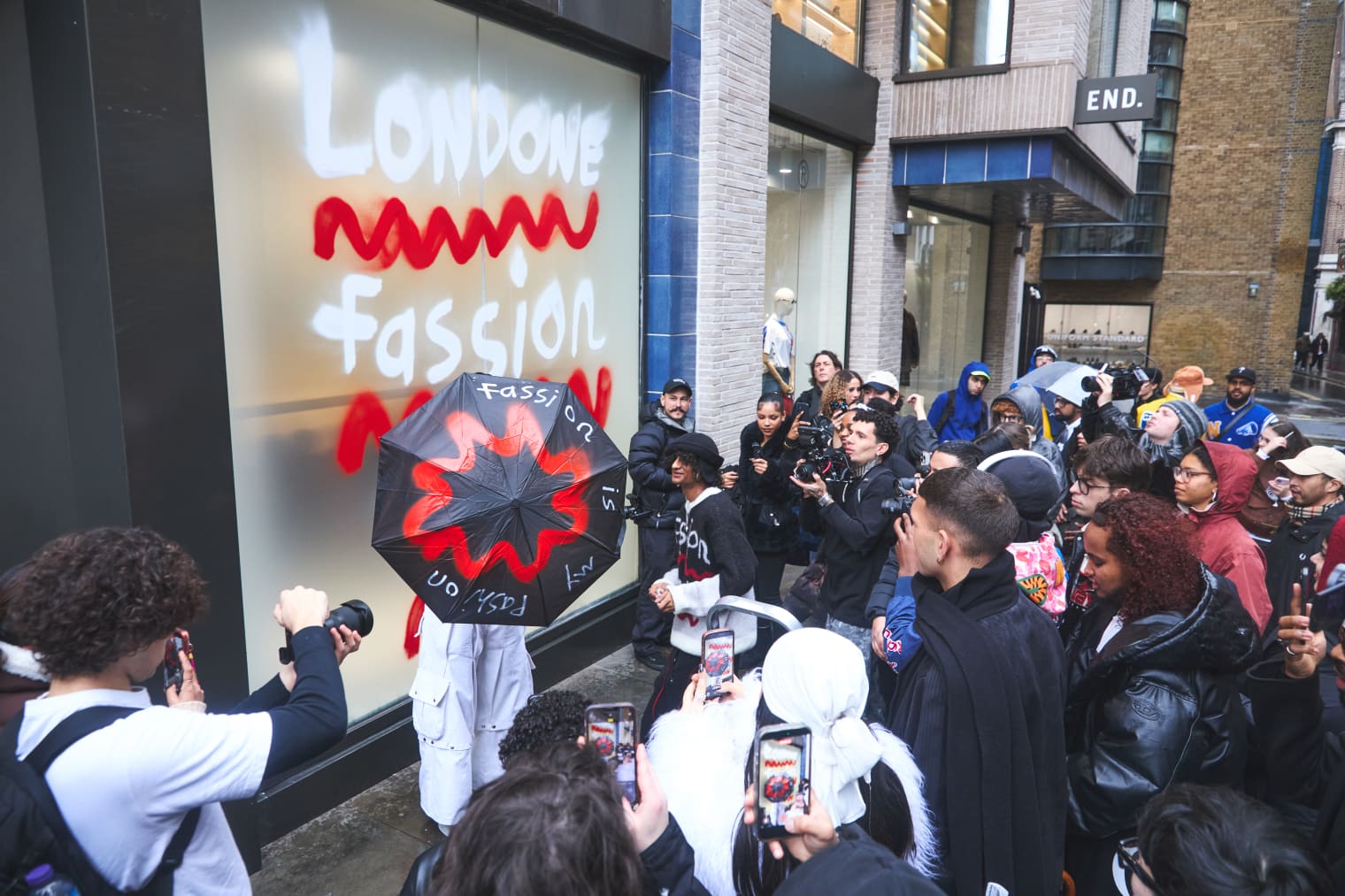
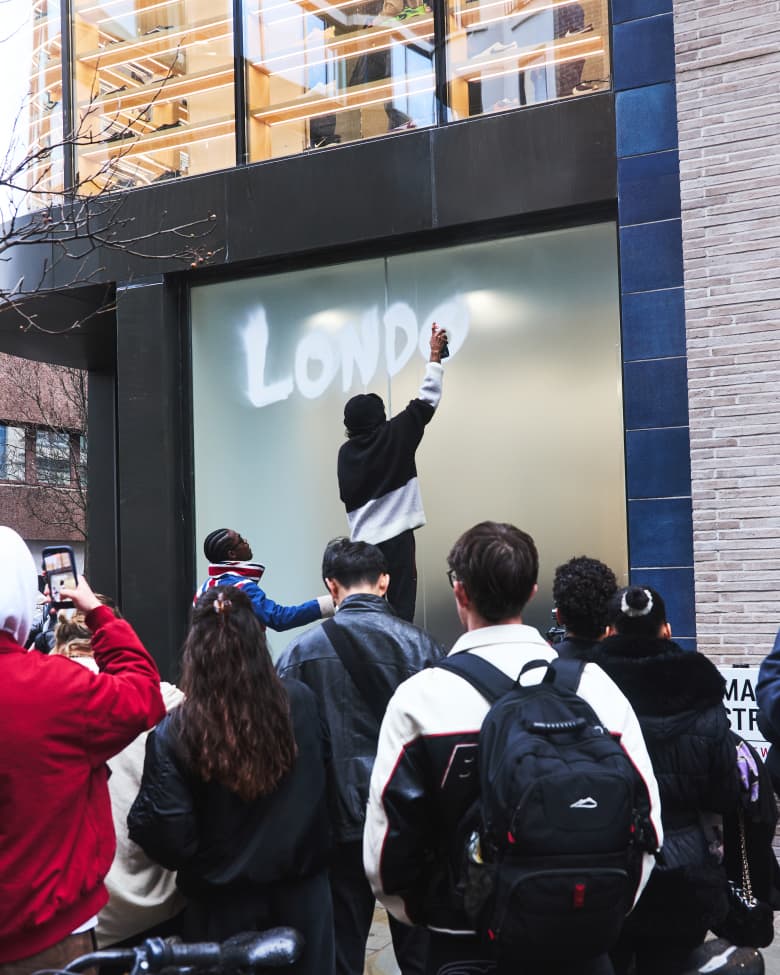
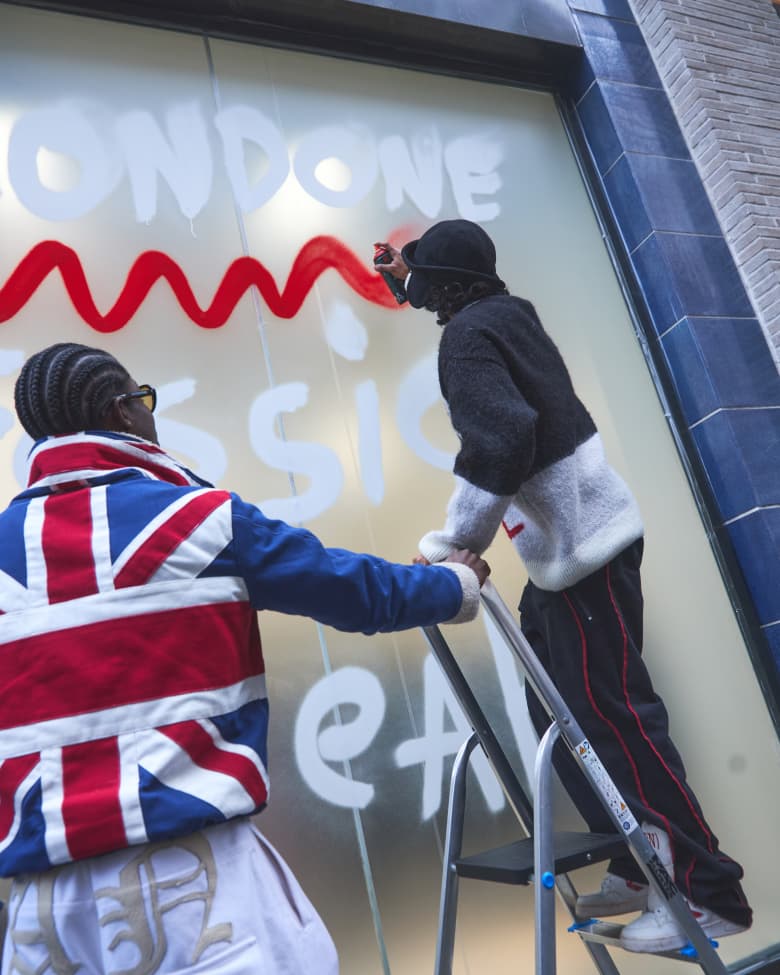
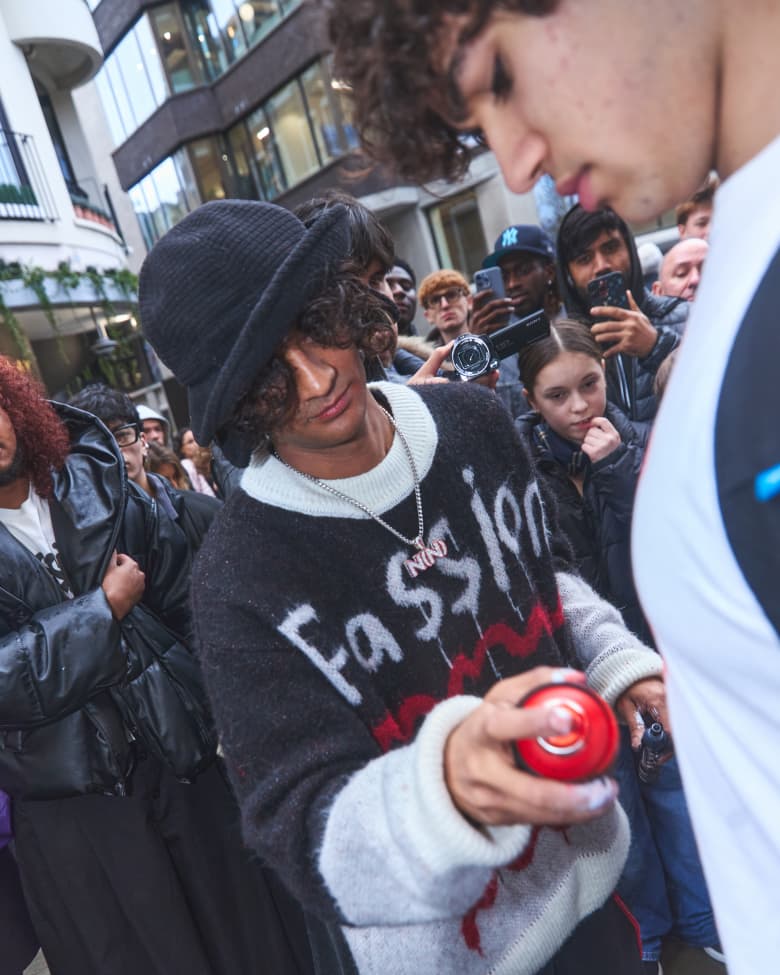
24 February 2026Launching his exclusive t-shirt at END. with a live window painting, we caught up with street art disruptor Navinder Nangla at END. London.
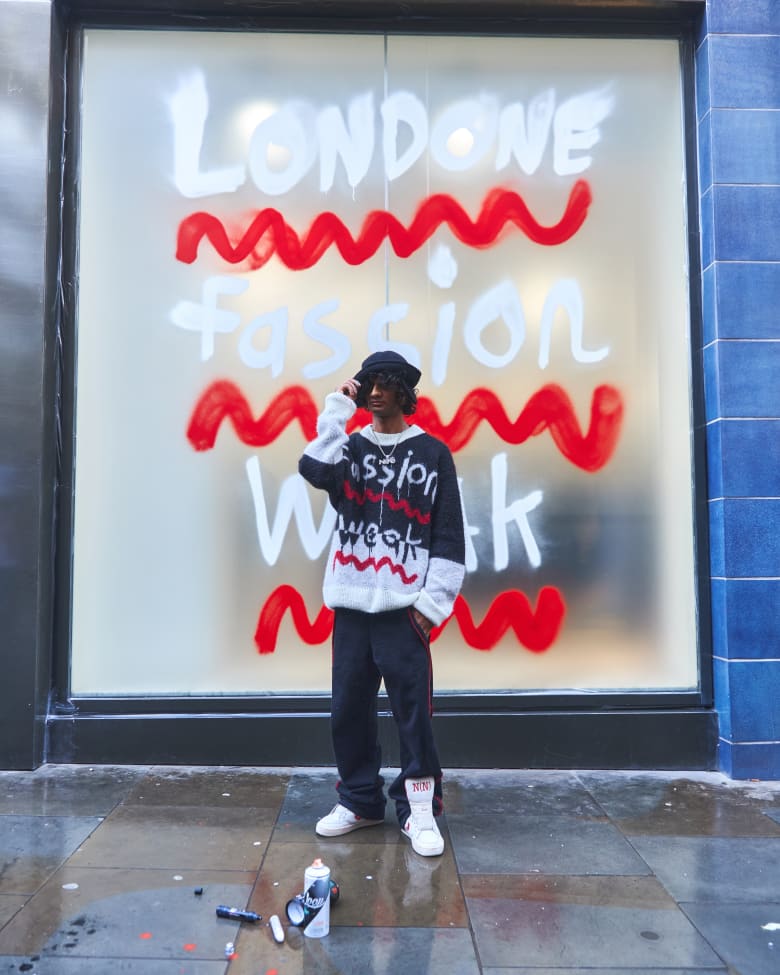
Rapidly ascending to cult street art fame, Navinder Nangla’s iconic slogan works have been spotted across European cities like London, Paris and Milan for the past few years. Simple yet eye-catching, the Northampton-based artist has tapped into a collective consciousness with his raw graffiti-inspired pieces, scrawling the misspelt phrases “fassion is my pashion” and “fashion weak” on walls, in turn becoming ubiquitous emblems of fashion week’s arrival. Inspired by his personal experiences with dyslexia, the process of creating these works has seen the British-Indian artist utilize his dyslexia to champion a different way of thinking and a way to tap into his own creativity.
Launching at END. for the first time, Navinder presents his own END. Exclusive Londone Fassion Weak t-shirt, alongside his debut capsule collection. Sitting down with with the artist following his live window painting at END.’s London flagship store in Soho, we caught up about what inspires his creative approach, his interest in fashion and harnessing creative energy through dyslexia.
Your career as an artist has rapidly expanded in recent years - was art something that you had always been interested in?
I’ve always been on art from a young age! I’ve been doing art before I knew it was art.
Your work blends the worlds of fashion and art. What has inspired your decision to create work and product at that intersection?
They say fashion isn’t art, so I’m literally saying fassion is art - I hope this makes sense to you all.
“Destruction is a form of creation” has been your mantra — a reflection of your approach to creating art. What does this phrase mean to you?
For me to create something new, I use this mind set as if you know how something is done correctly, you can break it down and make it something else. For example, if you know exactly how to make a tailored suit from scratch — start to finish — you will be able to throw the rule book out the window and re-make it in a completely new form. It’s the same with how I spell words like fashion and “pashion” — I’m breaking down the words to create something new to champion my dyslexia.
In the past you’ve spoken about your dyslexia, and how that has played into your creative output. Why was it important to you to reflect it in your work?
It’s played a huge part. It’s meant that my brain is wired differently, so I think outside of the box, come up with new ideas easily and have a different angle of attacking things. I really wanted to push my dyslexia in my art as I feel it’s like a superpower. I wanted something that put me down at school to be turned upside down and championed! If I wasn’t dyslexic, I wouldn’t have been able to come up with my new revolutionary visual language of misspelt words with the redline autocorrection. This has literally saved my life, because no doubt if I wasn’t dyslexic, I would have been a failed artist. Lastly, it’s funny because at school my “S” looked like “5”. Teachers always made me do lines and now my famous tag “Fassion is my Pashion” has hella “S” in it. It makes me laugh thinking back to it.
Your “fassion is my pashion” text piece has blown up since you first started painting it in cities across Europe - at the time were you aware that it would become such a potent symbol and slogan? Why do you think it has connected with people so deeply?
The time I knew it was super powerful was when I had an idea to do my first piece during London Fassion Weak and literally after 2 seconds of me putting it up, someone dressed in a really cool way said, “this is sick!” From that, it was a lightbulb moment. I thought this is gonna go crazy, so next stop was Paris Fassion weak and that’s when it exploded. Cool people were posting it and then loads of famous people started sharing it. I think it connects with everyone because it’s so universal: anyone can read it. It’s fun and not too serious. I like to say it’s the equivalent to the modern-day Andy Warhol Campbell’s soup can. It’s easily recognisable straight away! My art is part of the culture — it just lives among us now. It’s for the people.
You’re a renowned clothing collector with an extensive archive of garments - when did you first start collecting? What are some of your favourite pieces from that collection? Do you find that your inspiration comes more directly from the world of fashion?
It was probably around 2015, while I was at uni studying fassion design, when I got heavy into all that archive stuff! Jun Takahashi, the designer from UNDERCOVER, is my hero. He’s the GOAT. I actually met him during Paris fassion weak and when I left, I sat on a bench crying. I remember the conversation between me and him like it was yesterday. I was showing him all the Archive pieces I owned of his, and he was said “how are did you even get this!” I have a “Vandalized” jacket, the “AFFA” piece and then the “UNDERCOVER” piece from “Witches Cell Division”. When I saw Jun Takahashi again in Tokyo he signed my UNDERCOVER t-shirt, so now I guess this piece is my holy grail!
Do you find that your inspiration comes more directly from the world of fashion?
It’s a mix but I would say that the majority definitely does. I study the greats like Alexander McQueen and Jun Takahashi. All the best designers mix beauty with horror and make this completely new and beautiful language. It’s so evident fassion inspires me; my most recent painting that I completed was inspired by the 1960s YSL Mondrian dress. I recreated the original art works using my rebellious punk spirit, shooting it in a new way with my paintball gun. I actually recreated the dress afterwards as well, and shot that up with my paintball gun.
Presenting your first END. Exclusive t-shirt alongside a capsule collection of tees, what has inspired your creative approach across the product offering?
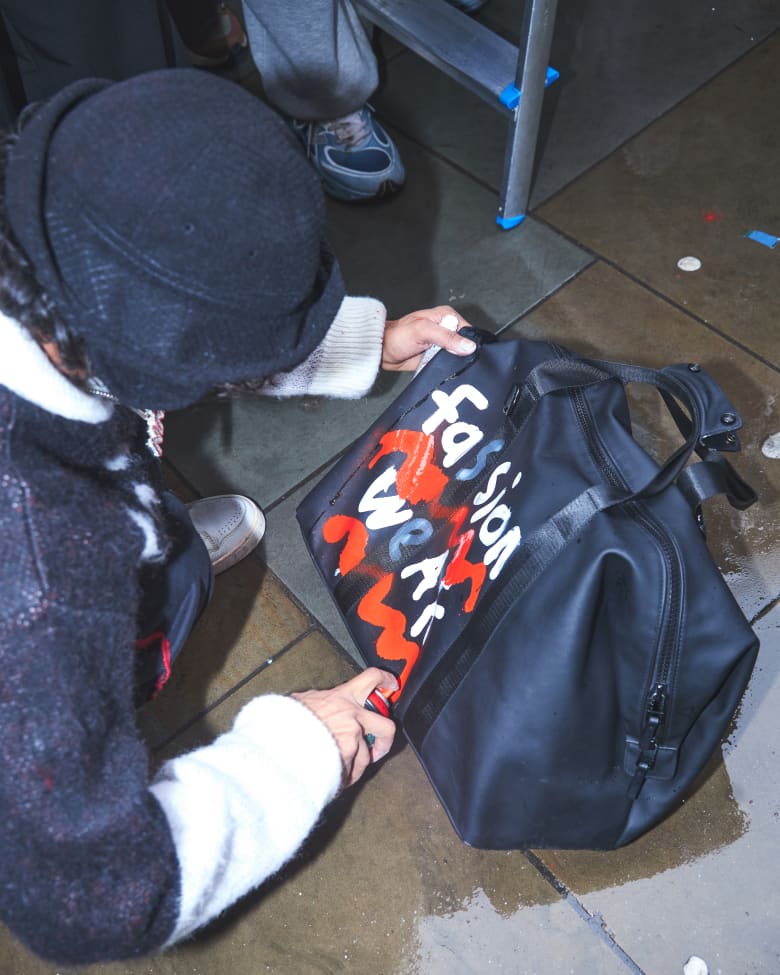
It came so naturally. I was actually signing the END. Christmas gift bags in their store and I was vandalizing the bag, and I realised that I could use the “e” from END. to make the “weak”, so this is where the idea for the graphic first came from.
NAVINDER NANGLA AT END.