SYSTEMS OF SOUND WITH FRIENDLY PRESSURE’S SHIVAS HOWARD BROWN
27 April 2026Ahead of END., Stone Island and THE FACE’s Due North event in Manchester, we caught up with Shivas Howard Brown of Friendly Pressure to submerge ourselves in his world of sound.
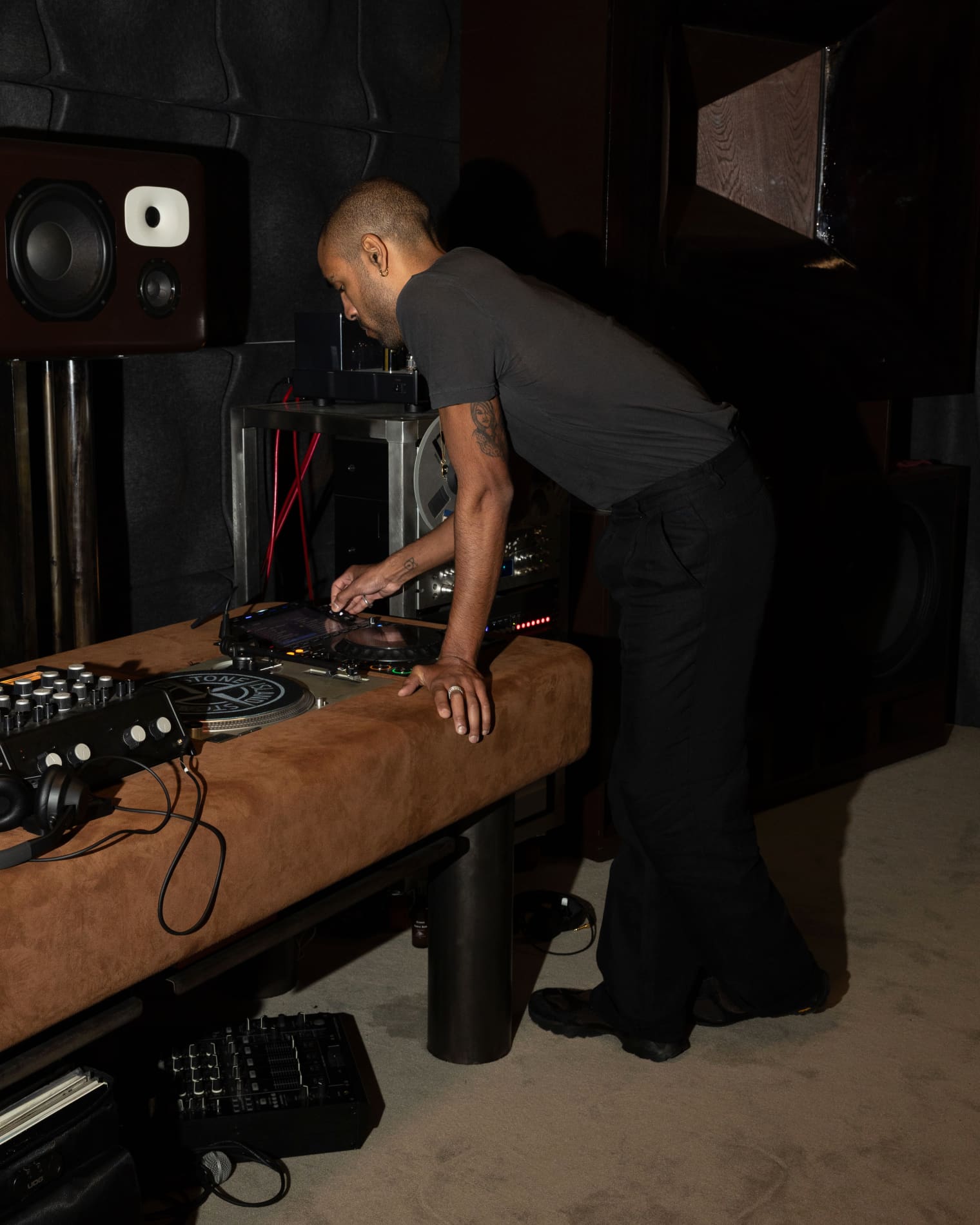
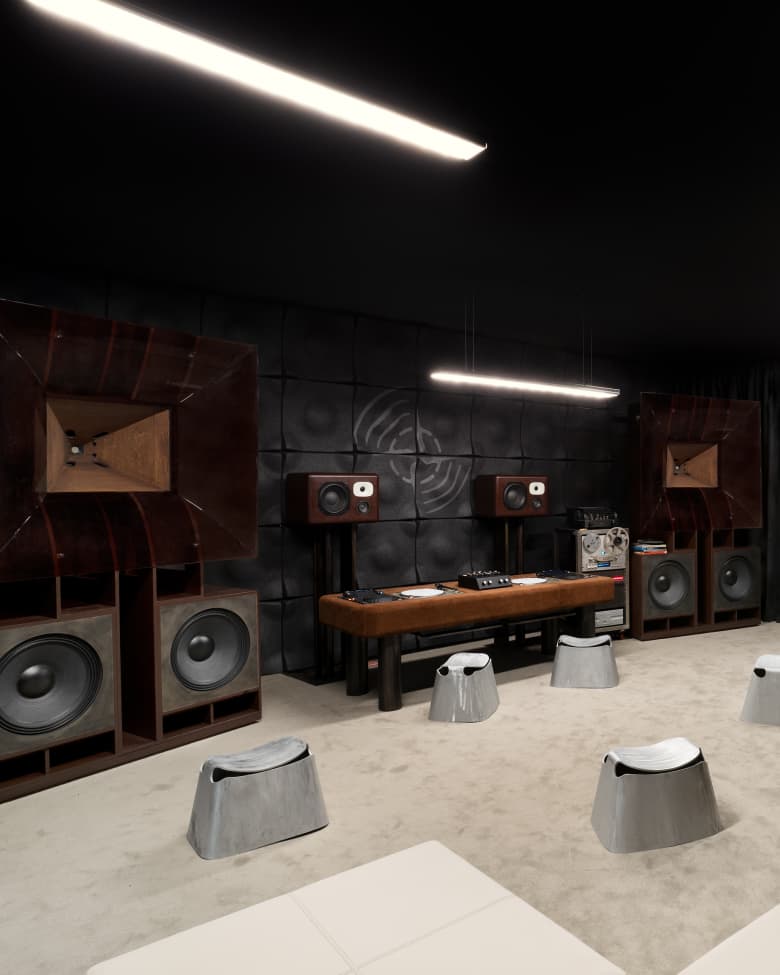
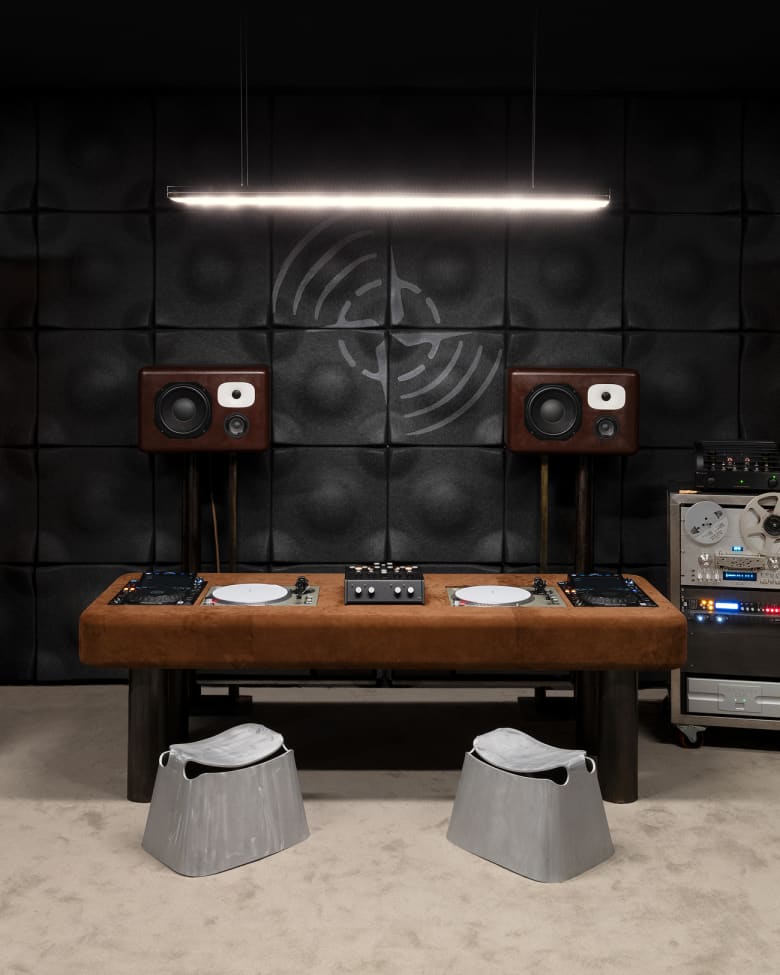
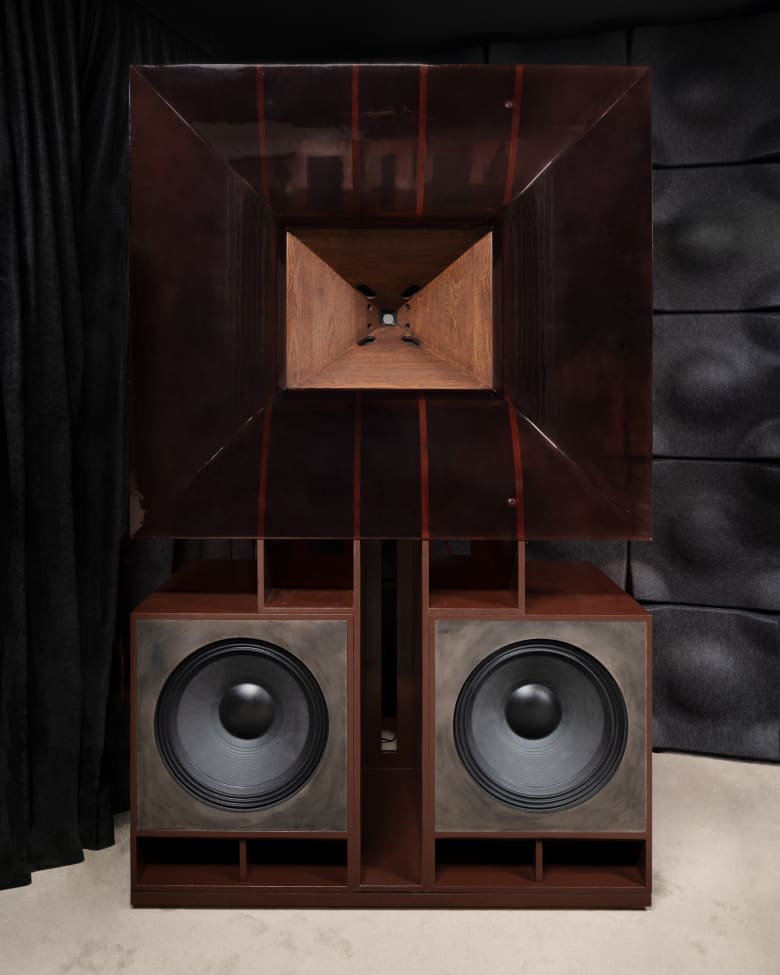
Having teamed up with Stone Island for a bespoke collaboration Friendly Pressure: Studio One for Milan Design Week, the London-based loudspeaker system specialists were the perfect match to provide the sound system for our upcoming Due North event in Manchester with the Italian sportswear legends and British magazine THE FACE.
Helmed by Shivas Howard Brown, Friendly Pressure has captured the deep-rooted heritage and undeniable charm of sound system culture, filtered through their own stylistic sensibility and with a design language transposed for the modern day. Borne from Shivas’ long-standing passion for sound, music and the culture of sound systems, a familial trait passed down from his parents and extended family, Friendly Pressure was founded through pandemic boredom and necessity, but its gestation period reaches much further back. Through his dedication to refurbishing high quality audio equipment and his autodidactic approach to the craft, Shivas’ focus has culminated in a fresh outlook on sound for the contemporary audiophile.
Sitting down ahead of the Due North event, END. and Shivas caught up about his passion for sound, Friendly Pressure and his work with Stone Island.
What originally piqued your interest in sound systems and sound system culture?
I actually had a sound system when I was about 11 years old. My dad used to drop me off at all the local house parties. I say all, but there were maybe 5 or 6 extremely poignant ones in my memory, where my friend’s parents were away and we did crazy parties in their basements. Two of my uncles were quite prolific musicians and had crazy systems in their houses, so leading up to that point, every family party was all of us around the barbecue in the garden with a sound system playing all day, with loads of kids and adults partying. So, it’s been a big part of the way I’ve grown up.
Do you have an audio engineering background? How did you end up creating sound systems?
My audio engineering background has been developed through blowing different speakers, mainly my dad’s studio monitors, which I used as part of my sound system, helping him replace the drivers and getting hold of new ones. Soldering in the new components was something that we always did. Sound system culture really revolves around fixing your own gear. If you love a component or a particular speaker system, you’ll always do whatever you can to repair it. It’s not like taking something to your retailer and asking them to replace some components on an expired warranty. We’ve always repaired whatever hardware we’ve had, so as a kid, I basically took apart pretty much every bit of hardware that I personally owned that I was allowed to. I’ve always had a passion for electronics and circuitry.
What compelled you to start Friendly Pressure?
During the pandemic, the only thing that I could really focus on, because of my ADHD, was researching how to make my own speakers. It was never really something that I thought I could put some kind of commercial value into, but with the little money that I did make during the first year of the pandemic, I bought a really big system, some Tannoy’s and some valve amps. It was a time where I stepped away from active monitors, so I dove back into how to get my analogue system sounding as good as possible. Once I started spending some money on new bits of hardware, I really quickly started to hear the differences. I was living with a couple of friends at the time, at this really nice house in Holloway that we got on a pandemic deal, and my friend said that he thought that I should take some pictures of the speakers and put them on Instagram to sell them. So, I put a photo up of the full system on IG, with some other speakers that I dug out from my mum’s shed and put the full system up on Instagram for sale, and it sold within an hour. I started to do biweekly drops from that point on, driving up and down the UK to meet different collectors, buying some of my favourite speakers that I had always wanted and started to learn more about the speakers by taking them apart, refurbishing them and their components. I think that was the point where I had exponential gains in actually understanding analogue speaker design. There was a knock-on effect when I was researching it all, so I thought why not try and see if I can make some money out of this too.
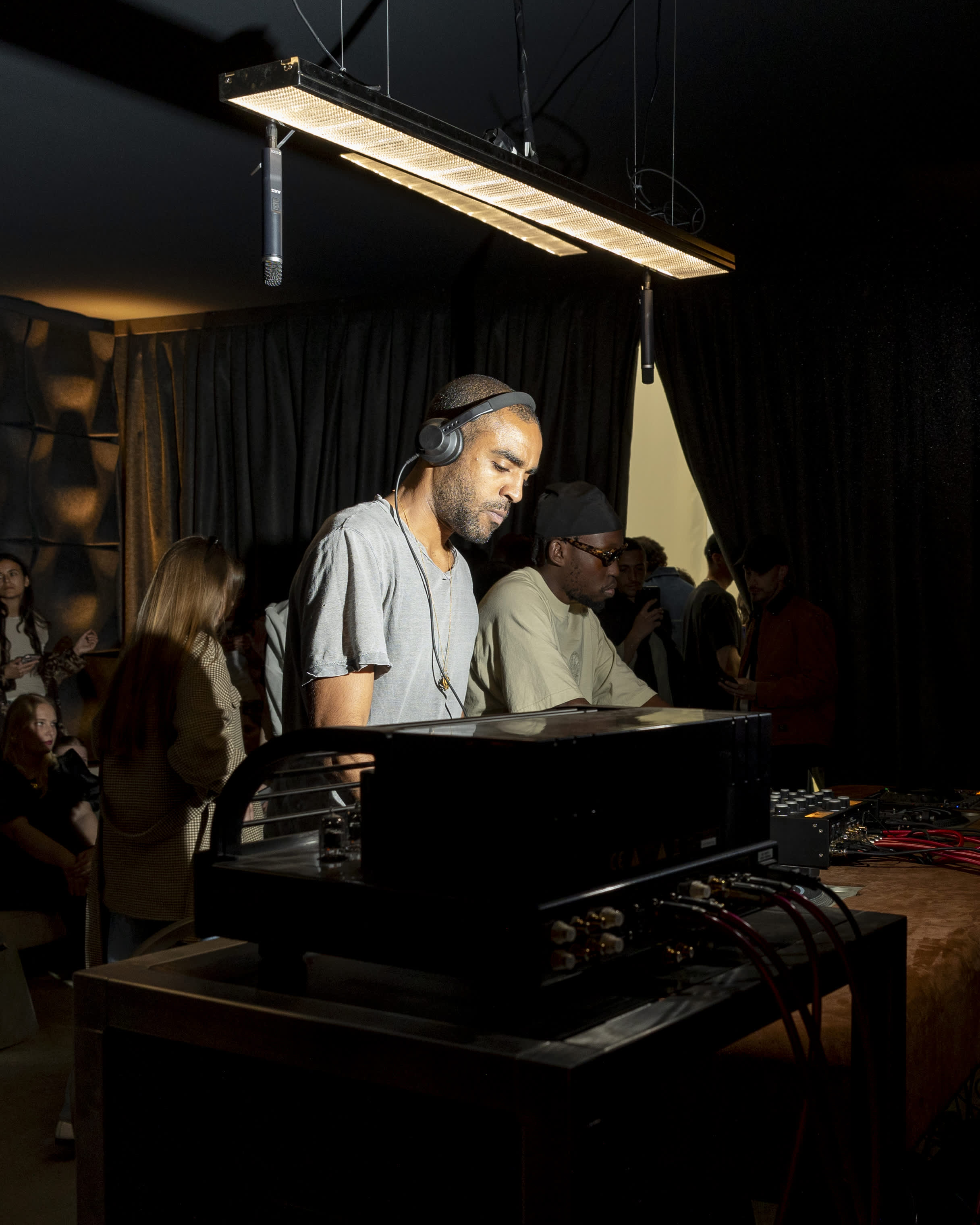
"Each time you buy a new bit of kit, you’ll hear something slightly different in your favourite record that you've already heard a million times."
Has music always been an important part of your life?
I already touched upon this in an earlier question, but my dad was a musician, my uncles are musicians, too. My auntie was a DJ, as well. Basically, everyone in my family, even a lot of my mum’s side of the family, who were involved in film, were also involved in music. It’s been the main communal and social tender around pretty much everything I’ve done, my whole life.
Your speakers and systems have a distinctive aesthetic style, combining natural tones and materials. What guides your visual approach to speaker design?
Because I’d never studied design, I just wanted to reference my favourite speakers and their visual language. I get asked quite a bit “what’s your design language?”, but it’s a difficult question to answer because initially it was very much based on my favourite vintage designs, but as time has gone on, you learn more about the key factors in how to squeeze as much mechanical performance out of a speaker design. You want to try and optimise the functionality of the speaker so that you’re getting the most out of it, but then, in turn, delivering bespoke systems to each one of our clients, it’s very much about the space that the speakers are intended to go into and then also what their initial design references are. We normally present a couple of ideas based on what we’re excited by at that particular moment, which can be any of the new ideas that we’re prototyping at the workshop. Then generally we like to steer our clients into a direction where it’s something that we’re extremely excited by, because the reality is that some clients have ideas that they think would work, but we’re pretty certain that they won’t, so there’s sometimes a bit of back and forth. Up to now, we’ve got the most out of each fabrication.
In the modern age, when sound quality has been slowly reduced over time, with streaming, mobile phones and poor-quality Bluetooth speakers dominating, why is high quality sound still important?
Essentially, because of when I was born, I was really lucky to have a computer in my room when I was around 11/12 years old. Around that time was when I was using the internet to inform how to put my own sound system together but also how to fix certain things. I’ve always been one of those people who has been searching for whatever it is, from a resource perspective, online. The way that I found and discovered a lot of music was online, digitally. I have a much bigger digital collection than I do vinyl, for example. But the second the availability of music became ubiquitous through the iPod, Sonos, Spotify and other streaming services, that created a natural propulsion for people to want to engage with music in an analogue format. Pretty much all analogue formats are designed to give the highest resolution playback, so there’s been a direct correlation between the increase in vinyl sales as the increase in streaming services, iPods sold and other digital media players. That has sparked a lot of people’s interest in how to get closer to their favourite music, artists, bands and songs. It’s made me want to understand how to get the most out of my music. That’s why we’ve ended up in a place where hi fi has blown up again, because I think that people realise that the more you spend time playing a song on repeat, you want to hear more detail each time you listen. That’s the idea of improving your hi fi system – each time you buy a new bit of kit, you’ll hear something slightly different in your favourite record that you've already heard a million times.

"It was very much informed by Stone Island’s insane material research and industrial aesthetic. We really wanted to design something that spoke to their identity but also kept the Friendly Pressure elegance."
You recently collaborated with Stone Island on your Studio One project at Milan Design Week. How did this union come about?
The project with Stone Island came about through a beautiful introduction from Morell Mason and Andrew Bambi, who introduced me to Oliver Cook. Oliver had just started as CMO not long before, and instantly there was a lot of understanding and respect for each other’s craft. It was clear from first meeting that we wanted to do something together.
What was the focus of the collaboration?
Whenever we meet a client, we assess from the first point what they want to use the system for. The first conversation was that they wanted this system to be used in their new Milan showroom - I’m not sure if that has been finished yet, although it will be where the system will live. We work with our clients to understand what they want to do with it – do they want to have parties or is it more for intimate listening sessions? Obviously, the size of the room and how many people it would be for is all a part of it. That was why we worked with Bosco Taylor, who we’ve worked with on quite a few projects. We used his Unity system as the core part of what you see as the final system, and it was very much informed by Stone Island’s insane material research and industrial aesthetic. We really wanted to design something that spoke to their identity but also kept the Friendly Pressure elegance.
Looking to the future, what are your plans for Friendly Pressure?
The dream future situation for Friendly Pressure would really be to set up some kind of apprenticeship scheme around giving younger passionate individuals access to the tools, machinery and components that they can prototype and learn from. Learning with tools and components and being tutored through that, learning outside of the book is definitely instrumental into bringing more people into any space, and also bringing people into a space on a more practical level, which I think always brings new ideas to a community.