FIELD NOTES: JOJO FROM RAG PARADE GOES BEHIND THE MAKING OF BARBOUR KNITWEAR
6 October 2026Located in the small Scottish town of Annan, Barbour’s new knitwear factory bridges traditional handwork with advanced machine manufacturing. We sent Jojo from Rag Parade to get the lowdown
Jojo Elgarice has spent years getting to know the ins and outs of vintage Barbour. As the owner of Sheffield vintage shop Rag Parade, he knows what a 1940s waxed jacket feels like, how it's stitched, and, as he'll tell you, how it smells. He knows what kinds of wool last, which areas give in first, and what to look for in a piece of future vintage.
With all that knowledge, Jojo sees a factory floor a bit differently. When we sent him to the small town of Annan in Scotland to see where Barbour's new knitwear is made, he arrived with a better-trained eye than most. What he found was a place where futuristic Japanese whole-garment machines hum a few steps from a room of women who link sleeves by hand, with centuries of experience between them.
For Jojo, who spends his days around garments that have survived decades and sometimes generations of wear, it was a reminder of why certain clothes last. We caught up with him after the trip to talk about craft, the human touch that machines can't replace, and why a classic rarely needs updating.
When you first walked onto the factory floor, what stood out to you most?
The first thing I noticed was that it was old technology meeting new technology.
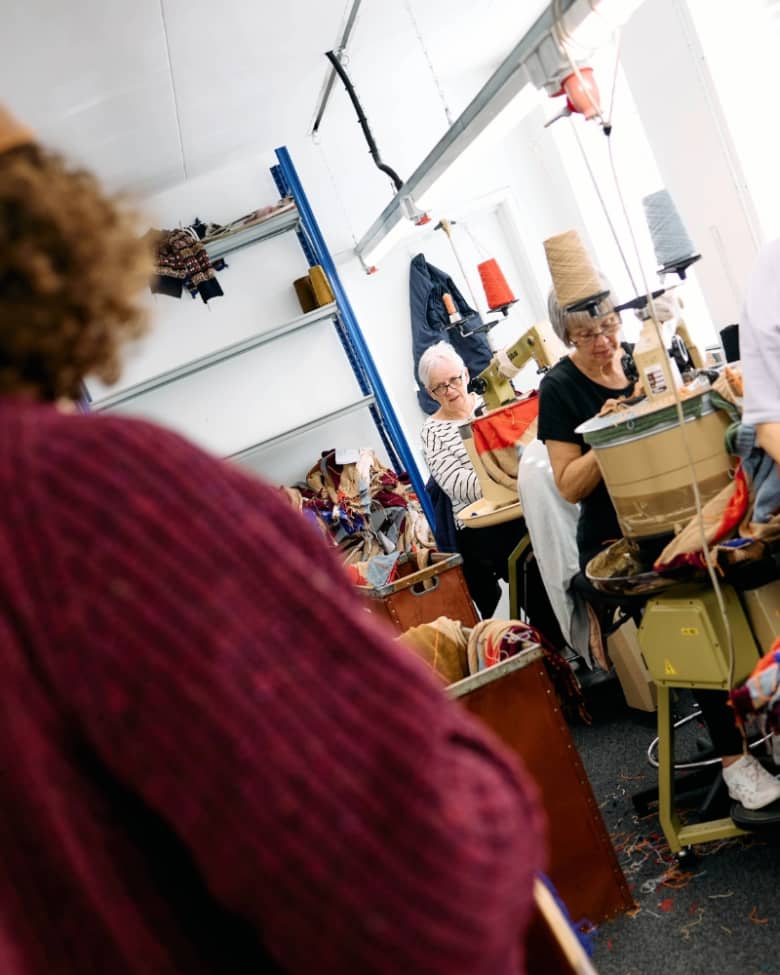
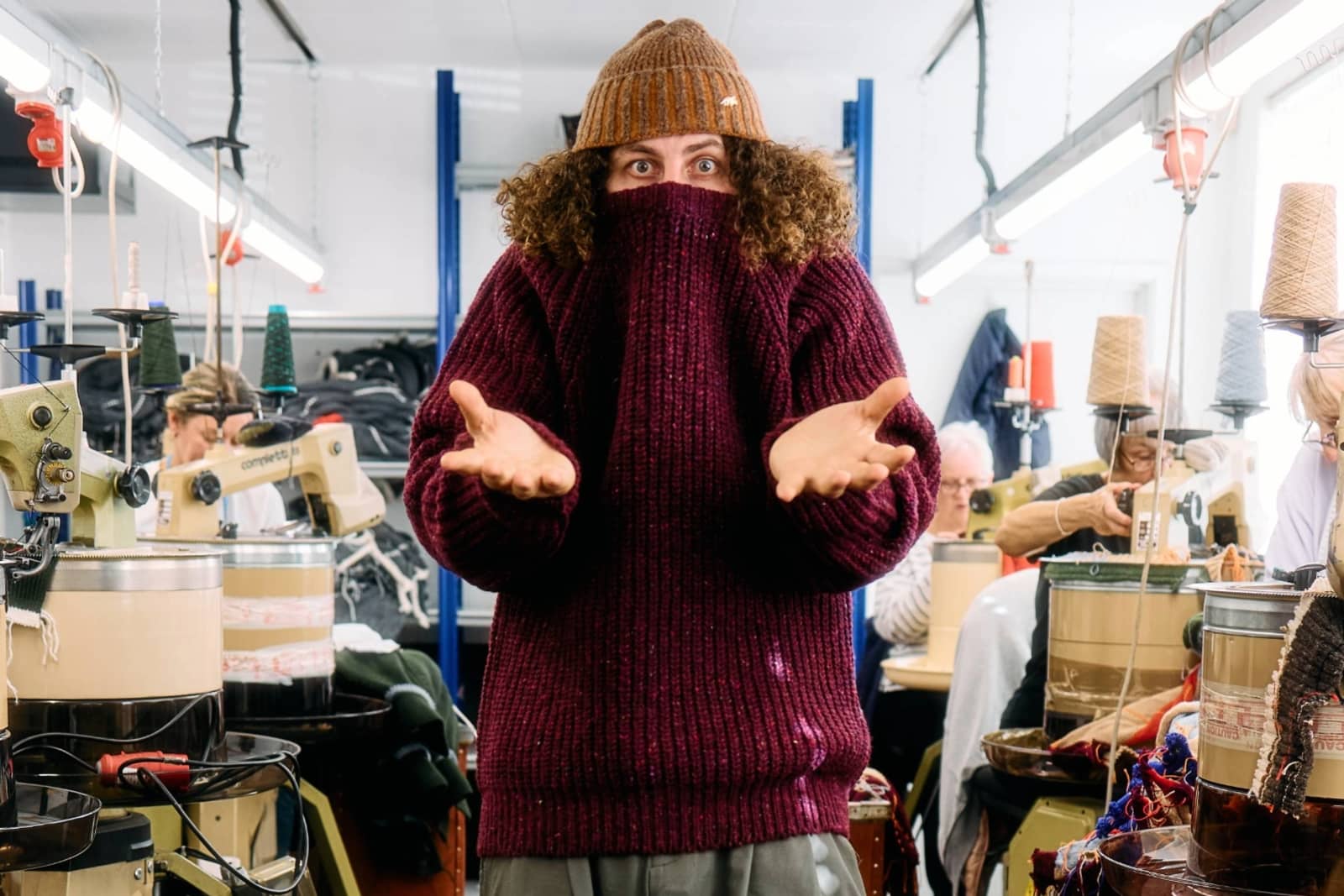
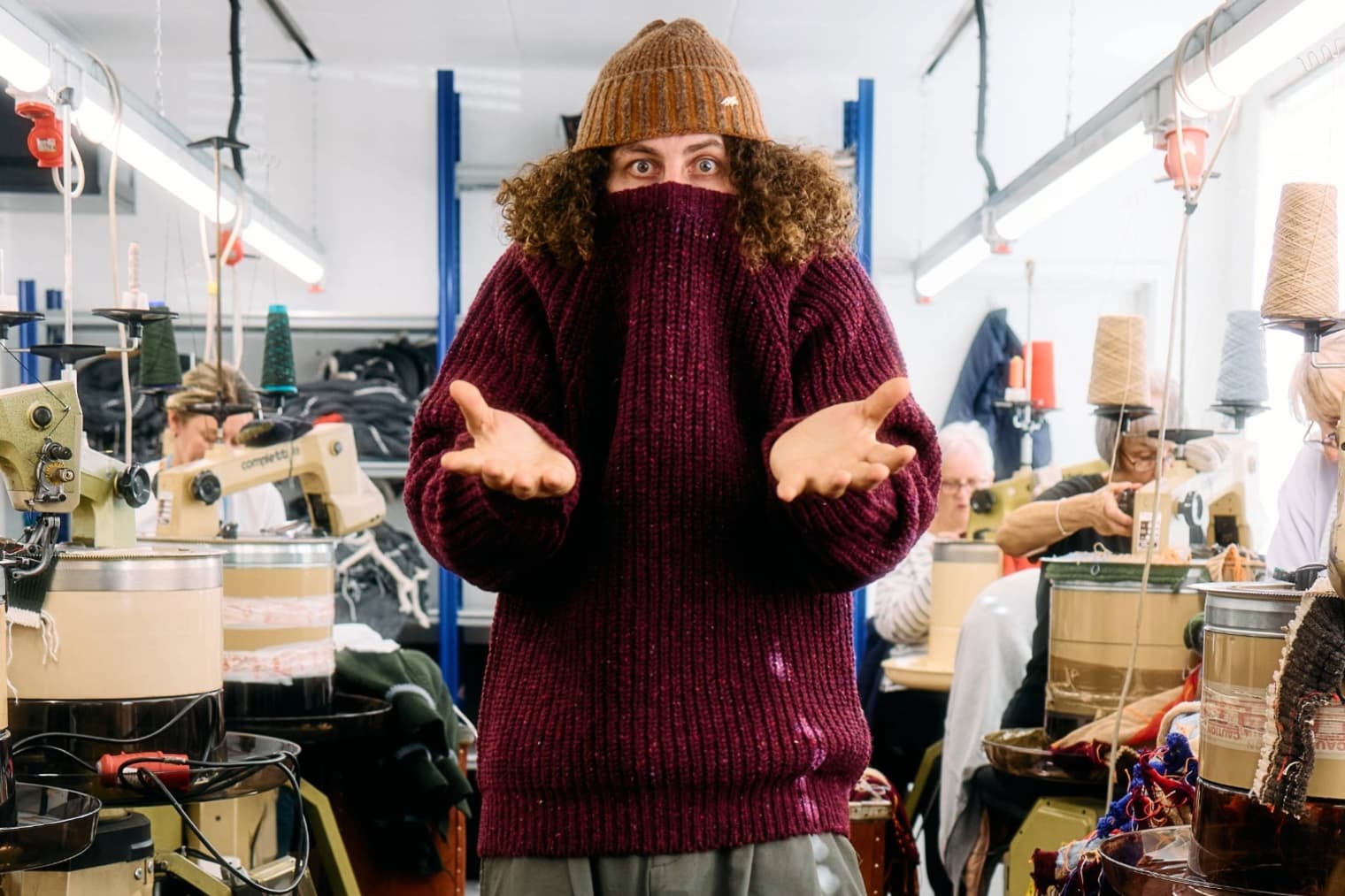
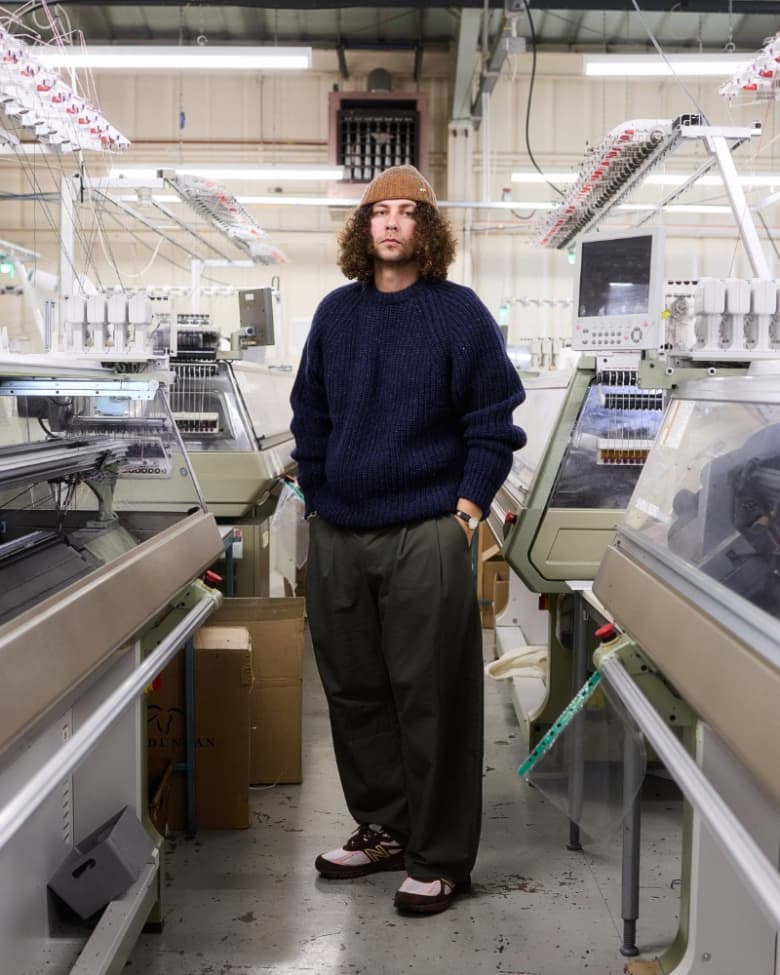
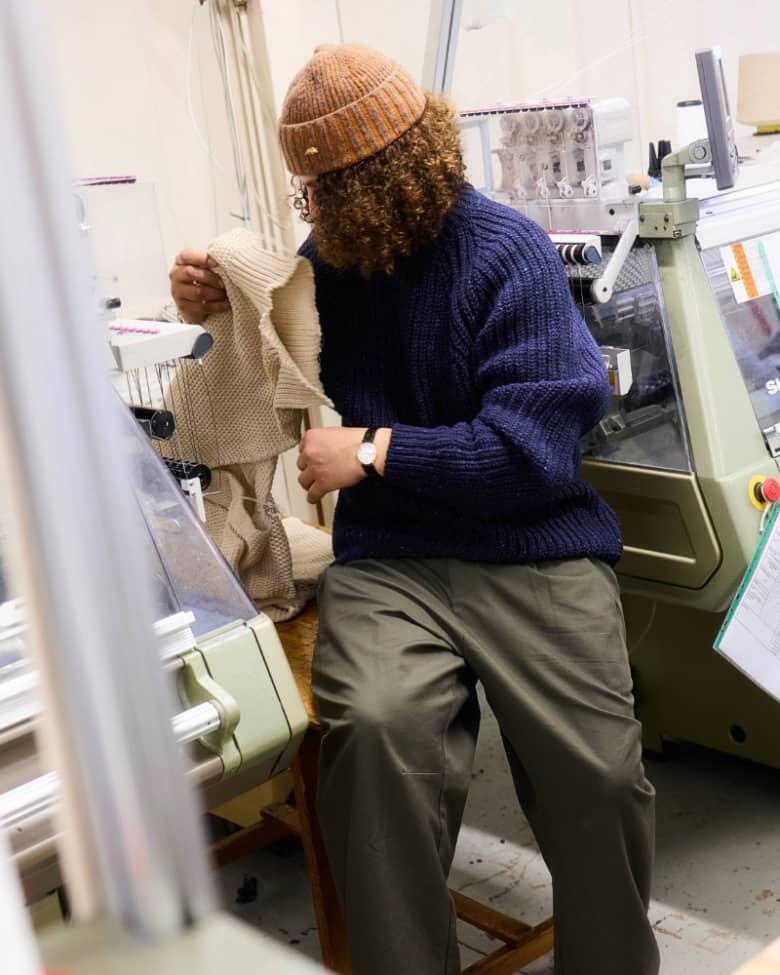
Some of the techniques were super futuristic, like the Japanese machines, which they call whole-garment machines. They could loop the garment in a circular motion and, depending on the type of jumper, even attach the arms, which is pretty cool. Then there was really old world technology like the linking room next to it, where the ladies would link the arms by hand.
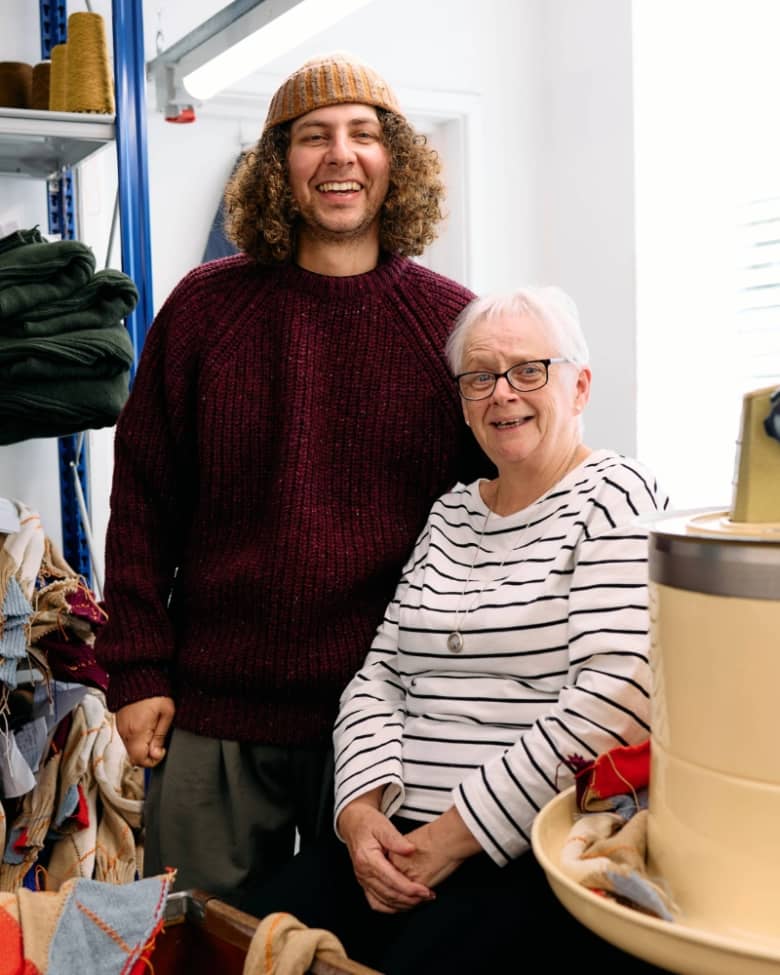
I think there were five ladies in the room, and they said that between them they had hundreds of years of experience. Seeing that modern technology next to the old technology and handwork, and how it all worked in synergy, was amazing. Each garment was also hand checked for any damage, pulls, or repairs that needed doing.
It was a real combination of the old world and new world together.
On that, what role does the human hand still play here versus the machine?
I suppose it brings the process all together in a more organic way. It also finishes the garment, because as good as the machine is, it can never finish the garment on its own.
The machine can start the process, but it always needs human aid to trim and check for things a computer could never find. Then there's the finishing process: the washing, the steaming, and the pressing. It can start off with the technology, but it always needs to loop back to that skill set, which I suppose is something that can't be taught quickly.
You handle garments that have survived decades of wear. When you looked at how these knitwear pieces are being made today, what construction details told you they're built to last?
All of it, to be honest. This visit gave me a newfound respect for Barbour and knitwear in general. When I look at my own knitwear, I can really see how much work went into it.
When I was in the linking room, they were working on quite a technical pattern with a lot of colors and shapes. Seeing how complex it was really drilled home how cool these garments are; It makes you want to really take care of your stuff, because when you see the amount of work that goes into it, it's insane.
It's not just made in a factory, it was a real process, and they really cared about getting everything perfect.
And did that go all the way down to the materials? Did you get a see the wool?
We looked at some of the boxes of yarn. It wasn’t raw, as it had already been spun onto the reels, but you could see the ingredients of the product, and everything was so well made.
Stuart, the owner, also said something interesting about the water. He said the reason there are so many Scottish knitwear factories, or historically were, is that the water is a lot softer. The soft water really helps with washing the wool, helping to soften and age it. After it's made, the knitwear still has a sort of oily texture sometimes because of the natural oils in the wool, and the washing softens that. He said that's a real plus point of where the factory is situated in the UK.
They also have a machine that they age it through which uses the water so it really is an essential part of the process and massively affects how the final product ends up looking and feeling.
Did you get a chance to meet the team?
Stuart, the owner, was telling us about people he worked with, and we had mutual friends. He worked with my friend Sean, who's now design director at YMC. Sean used to work for Nigel Cabourn, so he's known him for ten or twelve years. I knew Nigel quite well too, so that was a full circle moment. I think he'd also worked with some people I know at Beams in Japan, and probably hundreds of others.
You could see they were very passionate about getting the product right. The factory was started by his father and now it’s run by Stuart and his daughter Mary who were in the office, and I’d guess that there were around 30 people altogether in the workshop.
We had a really good chat with the ladies in the linking room. Some people were busy concentrating and wanting to get the work done, because I imagine they have a lot to do in the day. Others were more chatty. The linking room was a lot quieter, so it was a different atmosphere from the room where the machinery was, which was very loud.
Barbour is a brand with real heritage, and you handle heritage pieces all the time. Did seeing the factory change how you think about the relationship between old Barbour and new Barbour? Is there a through-line, or is it a different proposition entirely?
I think it's changed and evolved, but it also ties back in with the old. The quality of the stuff I tried on was old-fashioned quality, if you know what I mean. It was something you would have got back in the day, so in that way, the good bits haven’t changed.
At Rag Parade, are you seeing more desire for older stuff or is it the newer pieces that are more popular?
Classic things still do sell. The real old-fashioned classic pieces are the really rare ones, but they're still super popular in places like Japan. I think they appreciate the simplicity and the silhouette, but they'll probably wear it with something super modern to bring it up to date, rather than it looking like a period-drama, old-fashioned, stepped-out-of-a-photograph look.
A guy from Japan actually got in touch about an old jacket this week. He's got a shop and wants to look at this 1940s Barbour I've got, which is a super rare piece. I think that old world stuff is still really sought after amongst niche circles. In the UK there are still collectors for it too, but it's a small scene.