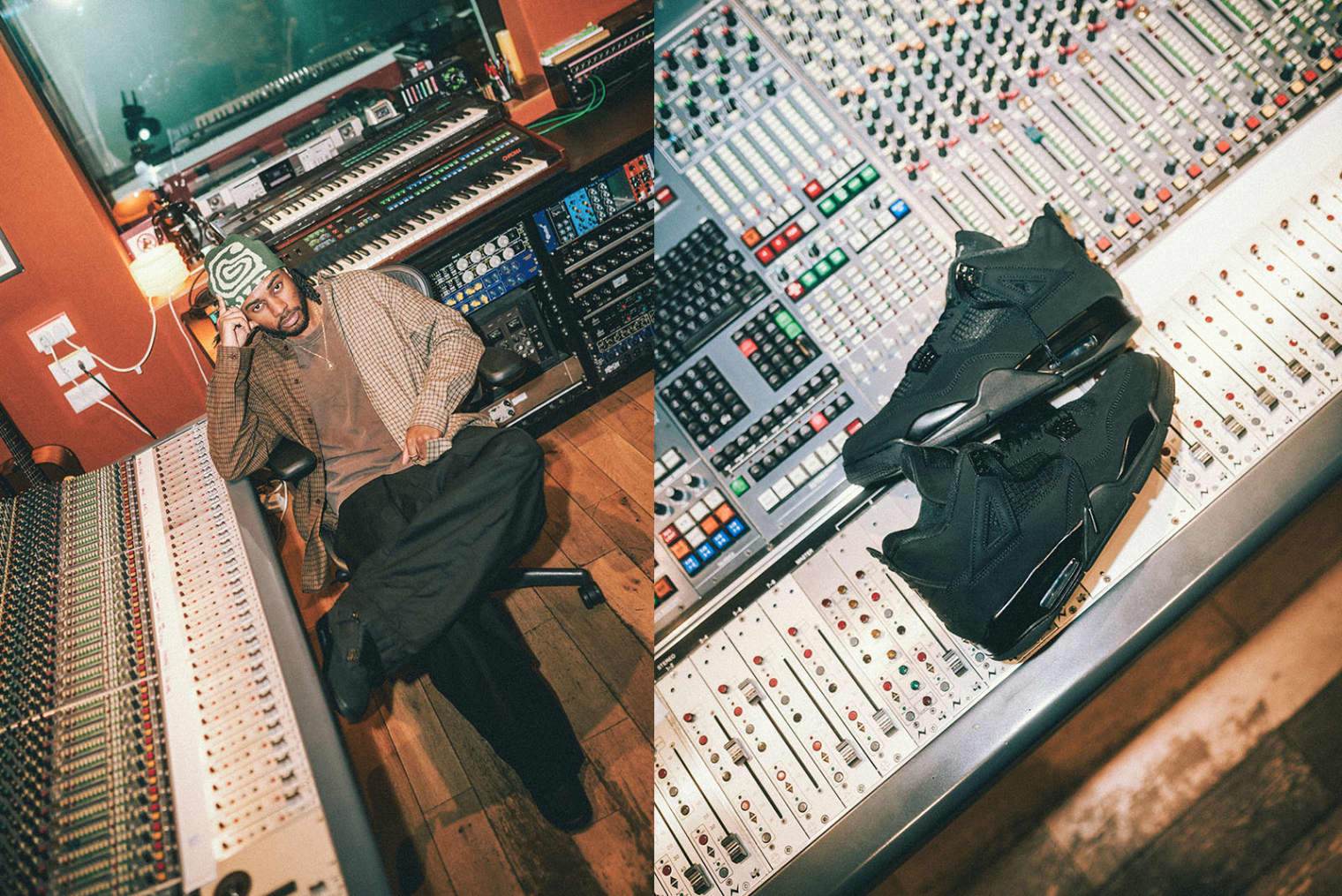
VENNA & THE NEW VANGUARD OF JAZZ: AIR JORDAN 4 'BLACK CAT'
21 November 2025Visiting Venna at the studio ahead of his UK and EU tour, we caught up about his musical upbringing and his personal take on jazz for Air Jordan 4 'Black Cat'.
Releasing his debut album, MALIK, back in September, Venna has been riding high. Achieving critical and commercial success, the young Londoner’s idiosyncratic form of contemporary jazz music has springboarded him into the spotlight as he builds out his own interpretation jazz in the modern day.
A multi-instrumentalist at heart, Venna’s stylistic sensibility has seen him pluck from a myriad of genres to set strong foundations, compounded by his own unbridled talent for composition and performance. Enlisting music industry veterans from the UK and USA, Jorja Smith, Yussuf Dayes, MIKE and Smino, amongst others, have lent their talents to the 17-track album, punctuating Venna’s rich musicality with their own personality. Expertly showcasing his ability to shapeshift, MALIK is a statement of intent from one of the UK’s brightest rising stars in jazz.
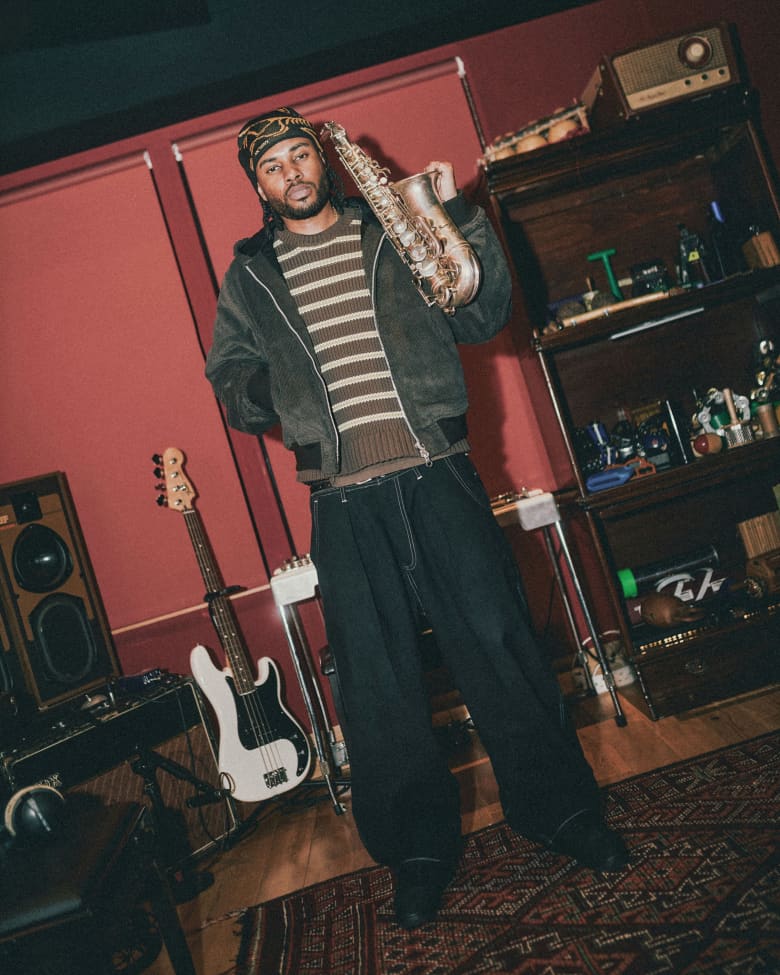
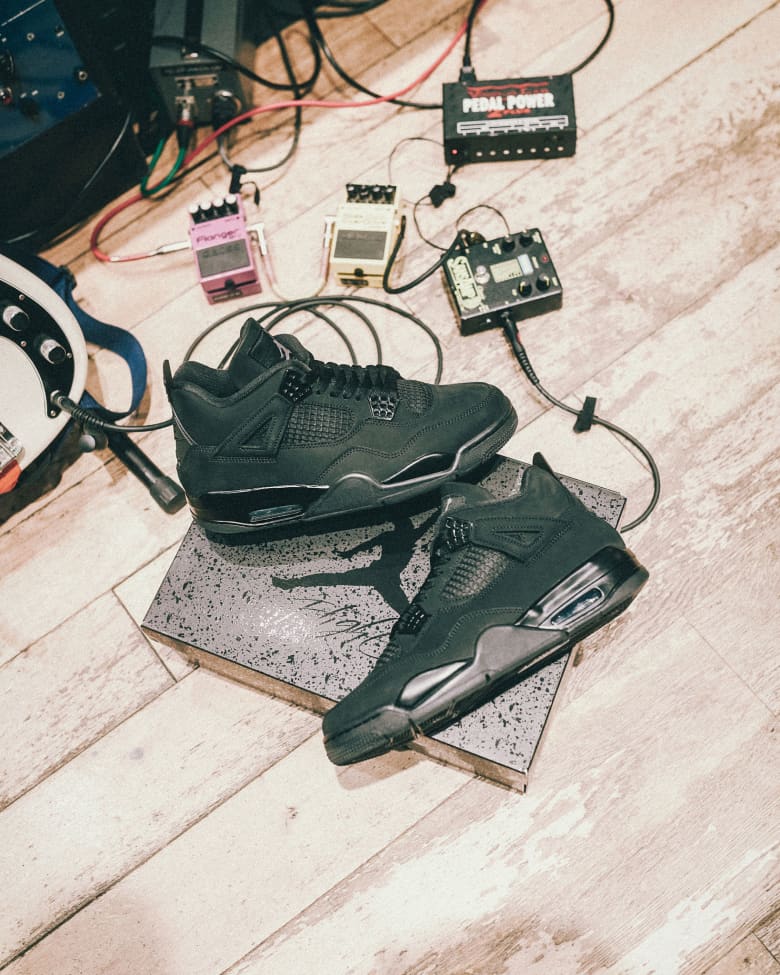
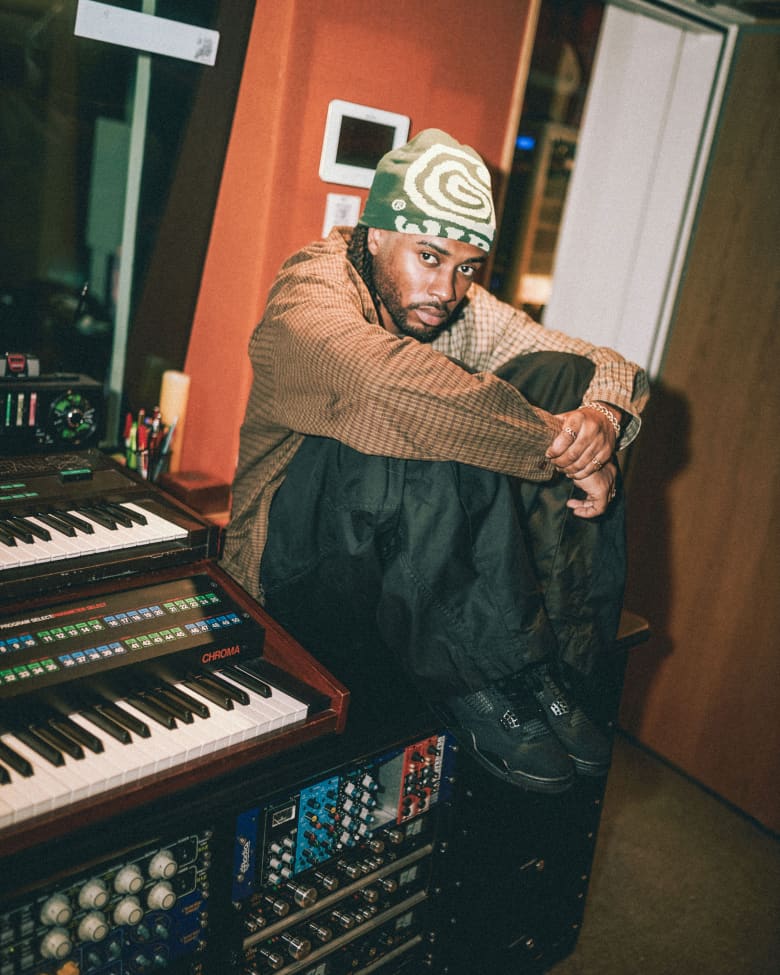
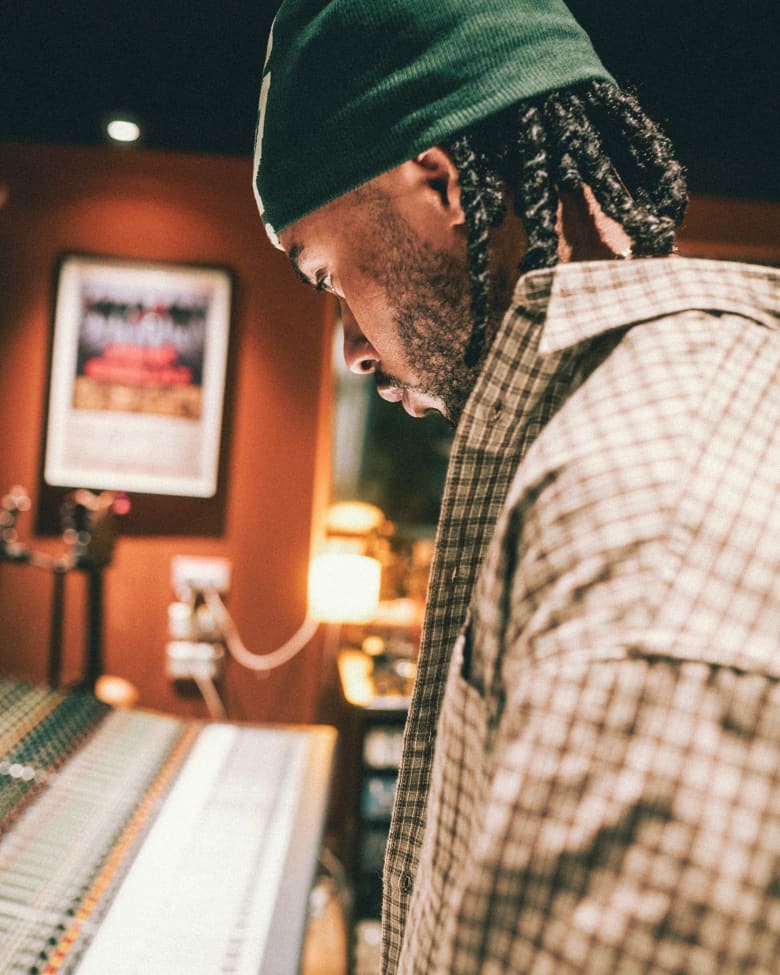
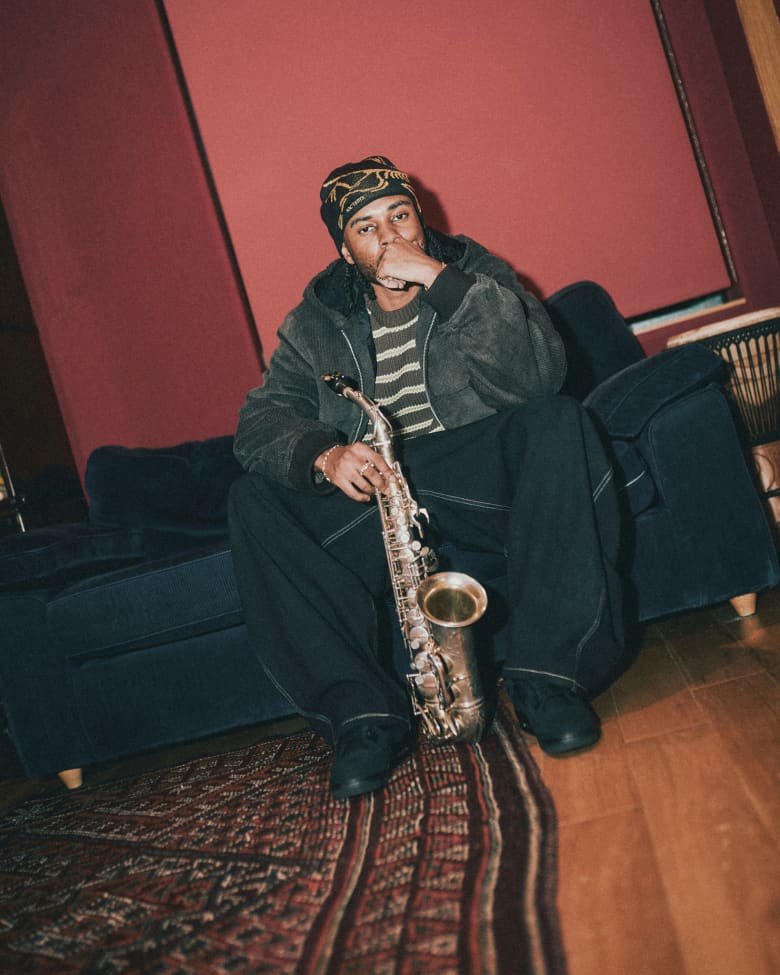
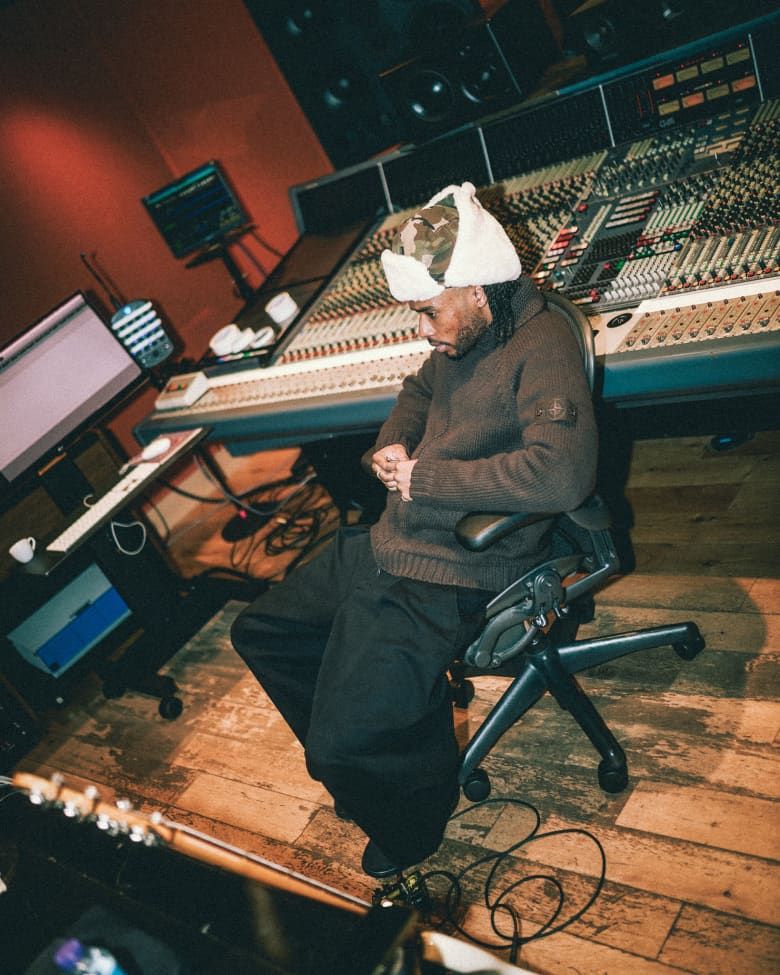
Sitting down with Venna at Studio 13 in West London ahead of the launch of the Air Jordan 4 Retro OG ‘Black Cat’ sneaker, we spoke to the saxophonist about his process, his approach to jazz and personal style.
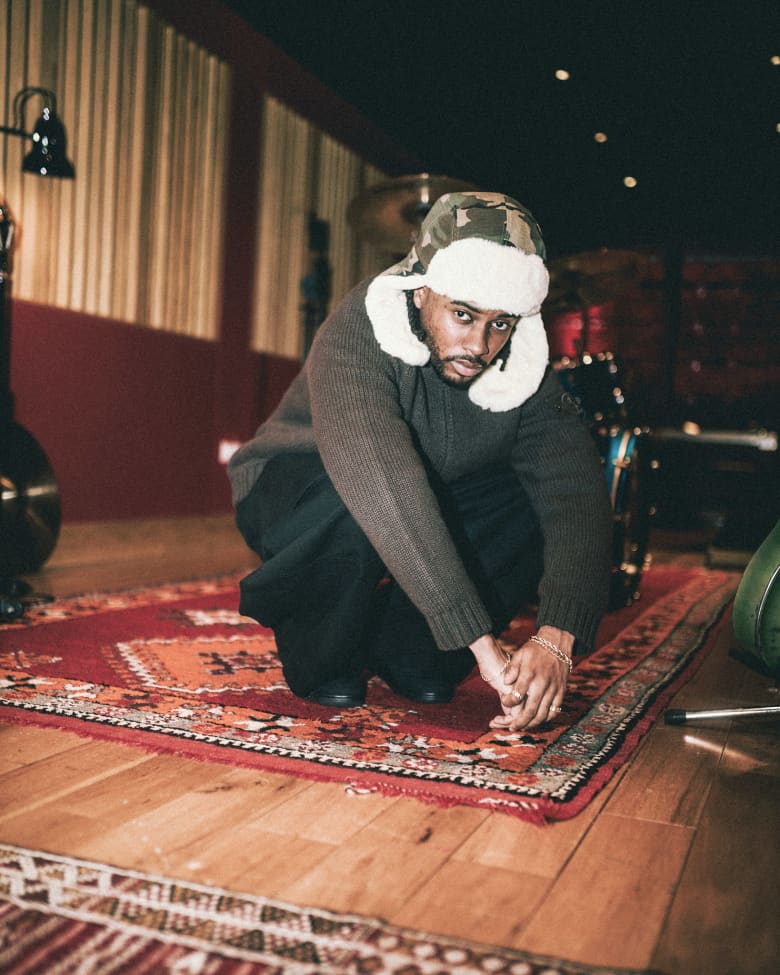
Musicians often come to music from a variety of different avenues - what is your musical background? How did you first find jazz music?
I used to play classical piano as a kid, so that was my introduction into learning how to actually play and how to read music. I ended up doing a lot of grades, but I didn't really enjoy classical music at that age. I can admire and appreciate it now, but back then, I liked what I liked. I liked what was on Choice FM and all of those radio stations there. As I got older, I learned to just appreciate other things. When I was 12, I got sent to boys' school, and I started saxophone there. At first, I started to play classical saxophone, which was cool. My teacher vanished after he went to Brazil and never came back. And I hear him. I went to Brazil now and I understand. After that, I had another teacher called Alison who came in. She asked me if I wanted to carry on playing classical or to switch it up and learn jazz, so I chose jazz. The day that I started, I fell into the rabbit hole of jazz. She used to lend me albums, like John Coltrane, and my mum would play it in the car. That's how I really became familiar and started to have a deep, found love for it. So, big up, Alison.
What were some of your first memories of listening to music that you really connected with?
I'm sure there are earlier ones, but I remember my mum used to play a lot of neo-soul and Luther Vandross. I remember as a kid crying to a Luther Vandross song called Dance With my Father. My pops is still here, but I used to just cry to that song. I don't know why. I was a young boy, man. But I remember listening to a lot of Luther Vandross and Barry White as a kid. I remember that vividly. And then as I got older and I got my own iPod Nano, I listened to random things. I used to listen to some Trey Songz, some Bow Wow. I have cousins in Atlanta, so they'd put music on my PSP and tell me what's hot and what's not. You just learn to have your own taste in music. I'd hear what's on the radio, I'd listen to N-Dubz and Dappy. There's a whole varied range of music. Nothing that I create to this day, but it set my foundation of what's going on in the current climate of music.
What would you say has been the strongest musical influence on you and your creative outlook?
I try to make things that feel nostalgic and feel reminiscent of something, but it doesn't sound like anything else. I feel like it's not even a particular thing or particular sound that I pull from. I listen to a lot of things – a mixture of old and new music. I try to genre blend. I feel like the only way to keep pushing the music forward and pushing the boundaries is if you find all your loves and put them into one place. That's what I managed to do with my first album, MALIK. I really managed to put all the sounds, textures and palettes that I really admire from different genres, whether it's from indie, R&B, jazz, or soul, really blend it and put it into one place. That's how I like to make music, at least.
It's a trippy one sometimes when you really figure out what has allowed you to get to this path of even just listening. Listening to music is a form of studying. With jazz, a big form of jazz is transcribing. John Coltrane may play a solo that he made of him just playing, but as musicians and saxophonists, we would sit there and listen to that for hours and hours trying to understand how he got to a specific part or how he played that note or that chord change. A big part of music is studying and listening to the music rather than just reading it.
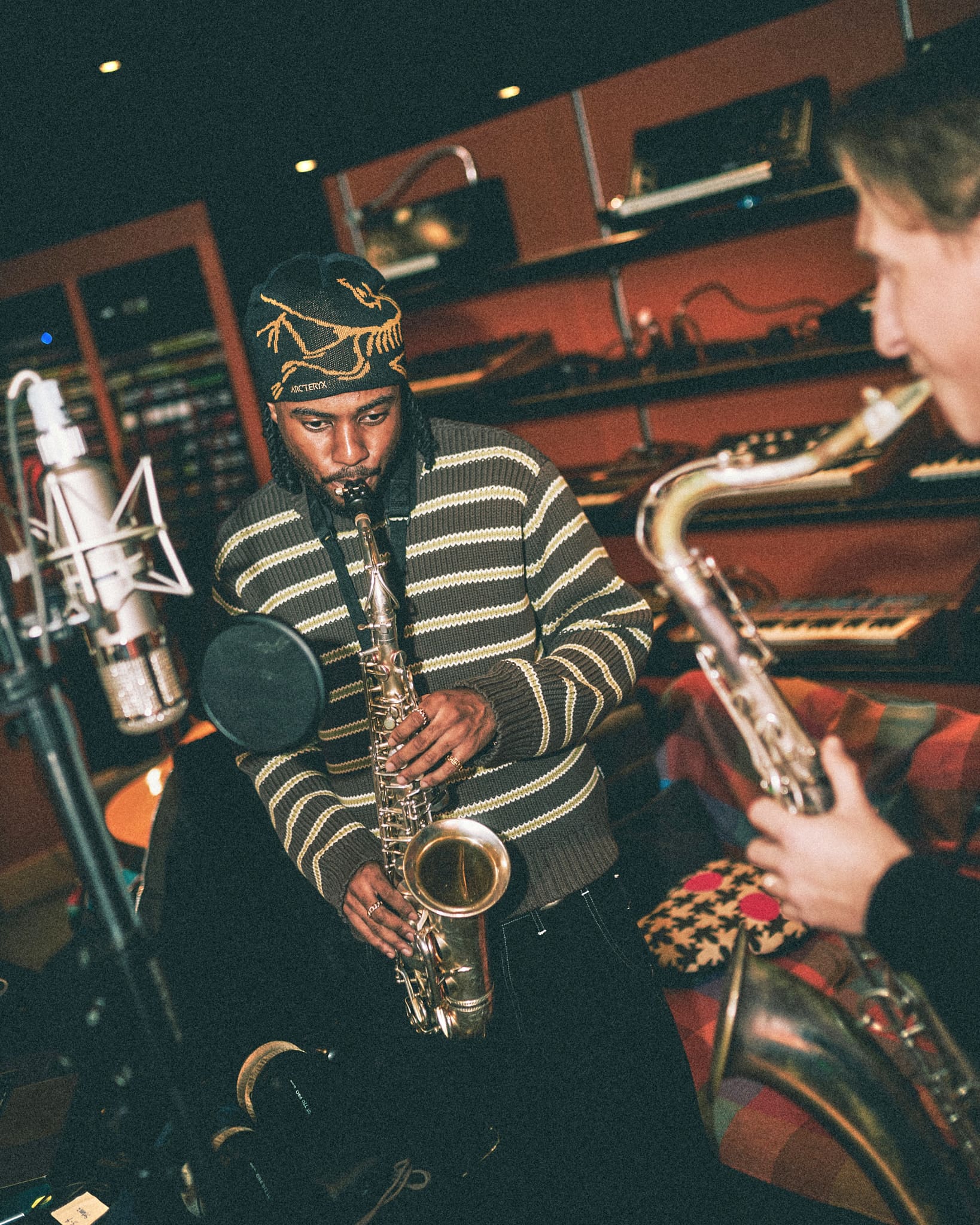
"I like to pull things in from different worlds: different people, different backgrounds and different upbringings."
When you were first then starting to make your own music, what was that process like? Was it with friends who were also interested in music? How did you end up then formulating these ideas and then putting them into practice?
I'm a big believer in collaboration. I would always make my music by myself, with or without people, but I always knew there's a limit that I can hit by myself. I can't do everything on my ones, man. Some people can do everything, and I admire them. I'm not one of those people. I like to pull things in from different worlds: different people, different backgrounds and different upbringings. I met a guy called Marco Bernardis back in 2019. Marco's been rocking with me since then. Me and Marco managed to cultivate a sound; he held me up and I held him up. We managed to blend and we listened to each other. We have a great synergy.
As time went on, I brought in more people, and more people came across us. I'm a big lover of collaboration, and that's how I make my music at least. That's how I'll forever continue to make my music.
Jazz has a long tradition of improvisation. Does that come into play when you're composing music?
Everything is off the top of my head, so the first and foremost fundamental is improvisation and seeing what sticks. But it's not going to be the improvisation of just a solo. We'll save the real jazz improvisation for the shows, where we show off, but records aren’t about showing off. Records are about creating art that sits and resonates with people, allowing them to feel a certain way, whether it's happiness, sadness, love, anger, whatever it tells them to do. It's about provoking an emotion.
I'm not about trying to make the craziest record that has all the notes in the world. I'm about being able to make something that people can remember, sing, have a good time, love and grow old to and want to show their kids to, you get me? Improvisation plays a big role, but it's just about knowing how to tame it and also knowing how to work hand-in-hand with improvisation.
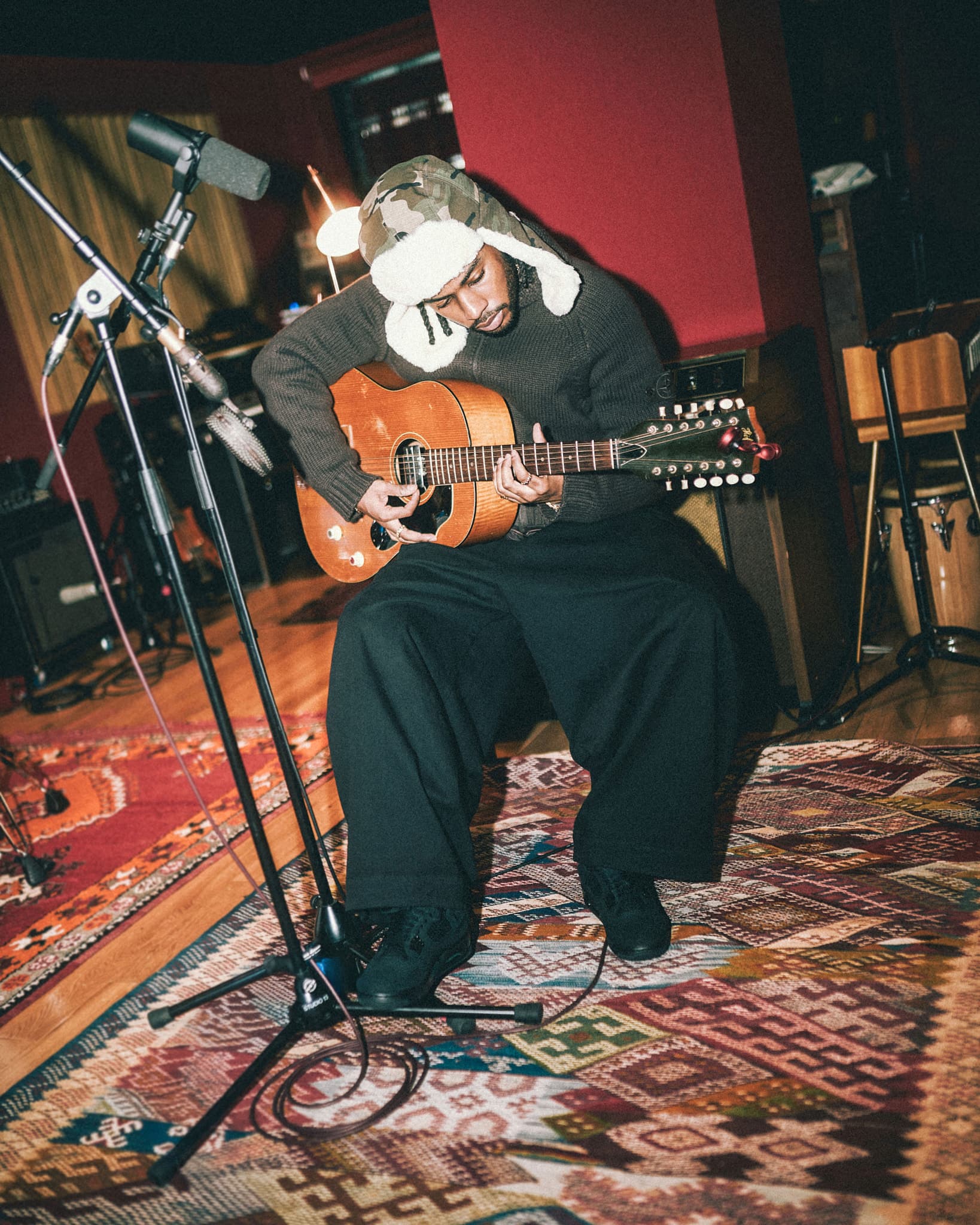
You’ve been working with specific musicians on tour, on your records, in the studio here today. Are these people who you've continually worked with when recording and playing live? Do you prefer to work with the same people?
It depends. Some people, when recording, are always the same. Live is normally a different setup because with the people that I work with in the studio, everyone has different lives, everyone has different schedules. Some are parents, some are not. But live, I'm trying to find the next superstars and the next cats that I'll probably end up making albums with in the future. I'm about finding the next gen who ain't got no kids, who ain't got no wife, who are ready to lock in and get this work done. Whereas the people I work with, Marco, AOD, Yussef, they've all been in the game a lot longer than I have and they have their own lives and their own things that they need to do. So, I respect that. We make music in the studio and if they want to pop up for a London show or if they want to hit a tour with me, they're always more than welcome. But right now, I'm on the pursuit of finding the next set of legends that will one day pursue their thing and keep the evolution of jazz going on.
Riding high on the success of MALIK earlier this year, what can we expect from your upcoming performances?
I’m still trying to figure it out myself. I start rehearsals tomorrow for the tour, so that wasn't really the PR answer that we were looking for. But I think it's just great music. Sometimes the artists may come out if they're in town, sometimes they won't. But the record is the record and the live show is the live show. One thing that I can guarantee is a feeling, whether it's happiness, sadness, love, anger, euphoria, whatever it is. That’s what I strive to hit at every show, as long as people feel something.
What kind of trips me out about shows is that I can have that one memory of that show, but 2,000 people in the crowd have their own memory of it from their own point of view and perspective. That's what keeps me going with it. So, what to expect? Feeling. Love. Just good music.
When preparing for live performances, how much space do you leave for the unexpected moments that come with jazz?
It depends. Each song is different. Sometimes it might be the head which is the chorus or the A section as we'll call it. That's always going to be the same because that's the part that everyone's going to remember. But then the verse parts or the B section that's where we just go off and just while out. It's about just being free and allowing yourself to just rock out. Not being so restricted to the rules and regulations that people apply to music. Jazz has always been an off-the-cuff thing. It's never been about following the rules. Jazz is the freest genre ever, so we do whatever we want. If one day I don't want to play the set that we play, I'll say let's improvise today, let's play a random set today. We can do that. That's the beauty of jazz. No pop star can just go and say “I don't want to sing my biggest song today. I just want to live my life today.” That can't happen. So, that's the beauty of jazz, man.
You obviously separate the recorded album material from live performances in quite a specific way. What do they each represent to you when they're kept separate?
I think they still coexist with each other because we're still playing the records. It's just that I don't want people to come to the shows and expect the singer to come out because that's not the essence of the album. The essence of the album is the music. Come to the shows and expect the music. It's not all about the features, this, that, and the other. It's about hearing the other people behind those records because it's not just me. I don't want the audience just to come for me also. I want to build the next set of superstars - that drummers will come see my drummer because they think he's the next hot guy. You get me? It's about evolution and it's about pushing the people who are just as much on the record as the vocalist or the frontman. It's about everyone getting their flowers and everyone being appreciated the way they should be appreciated.
"I've managed to make some historic moments with people who've allowed me into their space and their realm, so for that I give thanks."
In London, it feels like there really is a really thriving scene for this kind of music now that's been growing over the past few years. Why do you think now is such an important time for contemporary jazz in London?
I'll be honest. I don't know. But it's people like Yussef Dayes and I guess myself now and other amazing musicians that are flying the banner. It's beautiful that jazz can go touring. Me and Yussef have been all over the world off the back of instrumental music for the most part and we toured a lot more places and a lot more places than some of the biggest singers in this country or even in Europe. I don't know no one who's gone to India or Thailand.
Did you find when you were first starting to make music that it was quite easy to connect with other people in the scene?
Nah. But you know what? I've been blessed to be able to do it and to get things done and meet people. People have always come to me and shown me love, and I know that for other people it's not as easy but for me it's definitely come and I appreciate it. I've managed to make some historic moments with people who've allowed me into their space and their realm, so for that I give thanks. It’s hard work and perseverance… and being a pain in the arse sometimes! If you want it enough, you'll get it. That's what I believe and I'm a perseverant character to say the least.
You’ve got a very distinctive sense of personal style – have you always been interested in fashion?
I've always been interested in fashion. When I was younger it was definitely a bit more questionable than now, but as you get older you become more acclimatised to yourself and more accustomed to the shape of your body. I'm a fully grown man. I don't think I'm growing any more. I know how I like my proportions. I know how I like the cut on my t-shirts. I know how I like my trousers. I know what trousers sit on certain shoes. I've always been interested in fashion and things it's just now I guess I'm in my prime of it. I know what I'm doing now rather than just buying whatever everyone else is buying.
What were some of those first things that you were getting into when you were starting to get into fashion?
My dad is from New York, so I'd go to New York every summer and I'd come back with Jordans. This was before they were selling Jordans in the UK, so I always had the freshest Jordans. I used to think that Jordans would make me play basketball better, but I was terrible at basketball. My mum and my dad made sure I was kitted, you get me? It must have been when I was in Year 5. I was a 10-year-old. I came back with a pair of Jordans and everyone's like, “how did you get those ones? You didn't go to New York, they're fake.” But that was a good time, man. That was definitely a good time.

Release information
Air Jordan 4 Retro Sneaker
Black & Graphite
FV5029-010
11/28/2025